
The Army has added $53,859,843,289 to Lockheed Martin's PATRIOT Advanced Capability-3 (PAC-3) production contract, a firm-fixed-price modification that converts a one-year undefinitized contract action into a seven-year multiyear procurement and pushes the deal's cumulative value to $58,620,843,289, according to the Department of War's official contracts announcement for July 30, 2026.
Background
The modification, designated P00002, was added to contract W31P4Q-26-C-0013 for PAC-3 Production. The Army issued a $4.7 billion undefinitized contract action for PAC-3 MSE interceptors under the same contract in April 2026, according to Breaking Defense; the July 29 modification converts that arrangement into a firm, multiyear procurement covering all hardware, equipment and manufacturing needed to produce PAC-3 MSE missiles. Combined, the two actions bring the Army's commitment to PAC-3 production to roughly $58.6 billion in under four months — the April action authorized production before final pricing was set, while the July modification locks in firm pricing and an increased not-to-exceed ceiling for the multiyear buy.
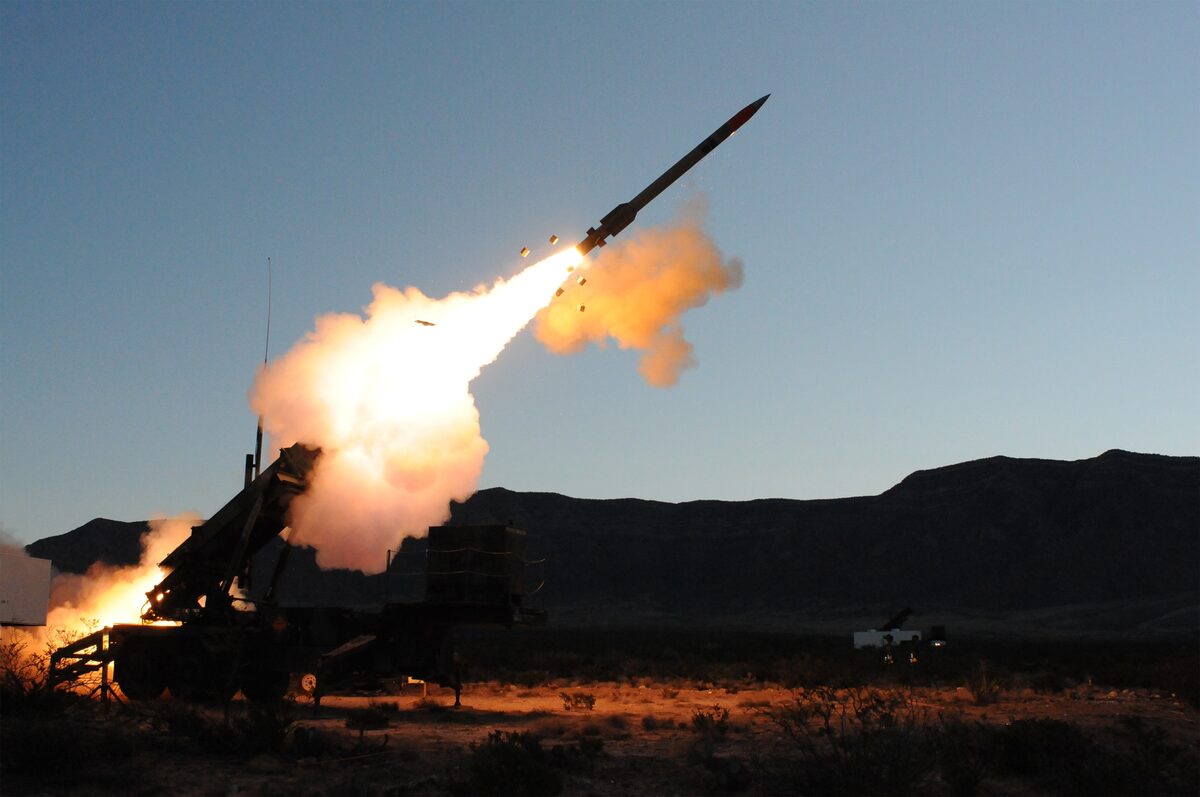
PAC-3 interceptors are hit-to-kill missiles fired from PATRIOT batteries. The variant funded by this contract, the Missile Segment Enhancement (MSE), has a larger rocket motor and dual-thrust propulsion that extends its range and altitude compared with earlier PAC-3 rounds. MSE interceptors are designed to defeat tactical ballistic missiles, cruise missiles, hypersonic threats, and aircraft. Demand for the interceptors has grown amid the war between Russia and Ukraine and U.S. operations against Iran, which have driven broader concern in Washington over munitions stockpile levels, according to Breaking Defense.
That demand pressure is part of a wider Pentagon push to expand munitions production capacity in 2026: Lockheed Martin has also signed deals this year to ramp up Precision Strike Missile (PrSM) production and, in June, a nearly $35 billion undefinitized contract action for Terminal High Altitude Area Defense (THAAD) interceptors, Breaking Defense reported — part of the backdrop against which the Army is now committing to a near-decade PAC-3 production run rather than smaller annual buys.
Key Details
Work under the modification will be performed at Lockheed Martin and supplier sites across at least a dozen states, including Huntsville, Alabama; Camden, Arkansas; Hollister, California; several Florida locations; Wichita, Kansas; Chelmsford, Massachusetts; Lincoln, Nebraska; East Aurora, New York; Archbald, Pennsylvania; Grand Prairie and Lufkin, Texas; Vergennes, Vermont; and Rocket Center, West Virginia, according to the Department of War, with an estimated completion date of March 31, 2035 — a timeline that spans nearly nine years and signals the Army's intent to lock in a long-run production base rather than fund a single lot of missiles.
Rather than an open-ended undefinitized action, the July 29 modification is structured as a firm-fixed-price contract that increases the program's not-to-exceed ceiling and formally converts the prior one-year UCA into a seven-year multiyear procurement, according to the Department of War's announcement. No funds were obligated at the time of the award; funding will follow as the Army issues individual orders against the new ceiling. That structure gives Lockheed Martin firm pricing to plan around while leaving the pace and volume of actual production tied to future funding decisions.
The Army described the arrangement as enabling a "highly resilient, 'warm' production line capable of rapidly scaling the delivery of critical PAC-3 MSE interceptors to U.S. and allied forces when and where they are needed most," according to its own release, as reported by Breaking Defense. Lockheed Martin has said the funding lets it "supercharge" PAC-3 MSE production and triple capacity by the end of 2030. Michael Duffey, the Pentagon's acquisition undersecretary, said the deal "provides industry with the long-term demand signals it needs to build a resilient supply chain," according to Breaking Defense's reporting on the award.
What It Means for Contractors
For Lockheed Martin, the award confirms PAC-3 MSE as one of the largest and longest-running munitions production lines in the current defense budget, with committed work stretching to 2035. That multiyear horizon gives the prime unusual latitude to invest in capital equipment and tooling rather than managing capacity year to year against uncertain follow-on orders.
The tripling of production capacity by 2030 that Lockheed Martin has outlined will require expanded subcontracting and supplier relationships across propulsion, guidance, seeker, and warhead components. Rather than concentrated at a single facility, production under the modification spans more than a dozen Lockheed Martin and supplier sites across at least ten states, according to the Department of War — including its Huntsville, Alabama, and Grand Prairie, Texas, hubs — so sustained sourcing activity should extend well beyond those two states as the company scales output toward its 2030 target. Companies with rocket motor manufacturing, precision guidance electronics, or missile-grade composite fabrication capabilities are the most likely candidates for new subcontract opportunities tied to the capacity expansion.
The contract's structure is also worth noting for teaming partners and subcontractors: the modification sets a not-to-exceed ceiling rather than obligating funds up front, and no money changed hands at the time of the award. Downstream subcontract funding will depend on the pace at which the Army issues individual orders against that ceiling, so contractors bidding into the PAC-3 supply chain should build in flexibility on order timing and volume rather than treating the $58.6 billion figure as funds already committed.
More broadly, the award adds to a pattern of large munitions commitments the Army and Lockheed Martin have made in 2026 amid concern in Washington over U.S. munitions stockpile levels following the Russia-Ukraine war and operations in Iran, Breaking Defense reported. Companies tracking Army munitions spending should watch for similar large-scale, multiyear production actions on other missile lines, given Lockheed's parallel PrSM and THAAD moves this year. The PAC-3 award suggests the Army is willing to commit tens of billions of dollars to lock in production capacity when it judges industrial base expansion urgent, a posture that could extend to other missile defense programs facing similar demand pressure.
Allied nations that operate or are acquiring PATRIOT systems are also likely beneficiaries of the expanded production line: the Army has said the "warm" line is intended to speed deliveries to "U.S. and allied forces when and where they are needed most." Foreign military sales customers waiting on PAC-3 MSE deliveries may see improved lead times once the expanded capacity comes online toward the end of the decade, though near-term deliveries will still compete against the Army's own restocking priorities under this contract.
