
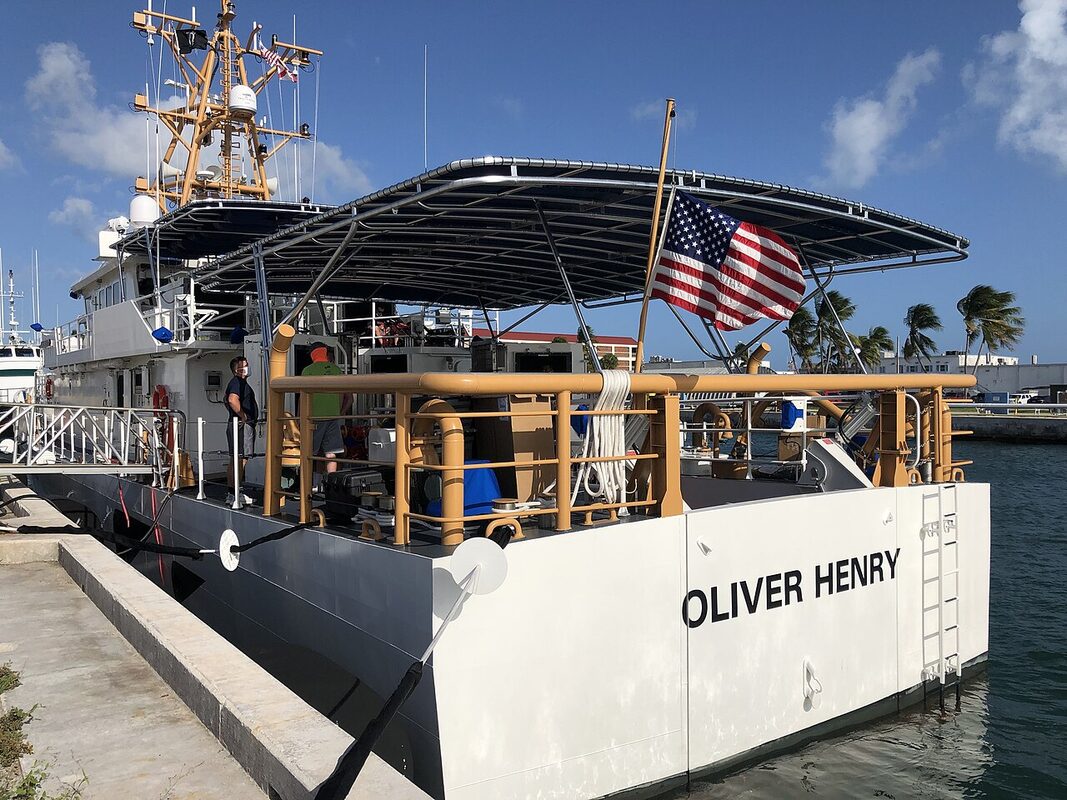
Nearly a third of the Coast Guard's 52 domestic Fast Response Cutters, the boats that chase drug runners and migrant vessels off U.S. coasts, were not fully mission capable at any given time, and the automatic feature on their engine-room fire suppression systems has been disabled fleet-wide under a Coast Guard workaround. That is the finding of a recently released DHS Office of Inspector General audit, OIG-26-32, dated September 28, 2026 and posted to the OIG site this month.
The audit covers fiscal years 2023 through 2025, with operational availability data running from October 1, 2022 to June 10, 2025. It looked at the 52 FRCs homeported in eight U.S. districts. Six cutters based in Bahrain fell outside its scope.
How Far Did FRC Availability Fall Below the 85 Percent Floor?
The Coast Guard's Operational Requirements Document for the Sentinel-class cutter sets minimal operational availability at 85 percent across the seven mission areas the boats support. The 52 domestic FRCs averaged 72 percent. All eight districts with FRCs averaged below the 85 percent mark, and in FY 2024 only 13 of the 52 cutters (25 percent) met it.
The inspector general wrote that the shortfall left "nearly one-third of the fleet not fully mission capable at any given time" and compromised Coast Guard performance in 7 of its 11 statutory mission areas, including drug interdiction, migrant interdiction and search and rescue.
The auditors tried to determine which missions went unperformed because a cutter was down, but the Coast Guard does not keep that data. They did document one case: an FRC crew in the Southeast District could not complete an interdiction of a vessel suspected of carrying drugs or migrants because the cutter broke down mid-pursuit, and the suspect vessel escaped.
Why the $9.2 Billion Sustainment Estimate Fell Short
The audit attributes the shortfall to the Coast Guard not "properly anticipating the cost of sustaining its FRC fleet." Despite evidence that operating and support costs were climbing, the program's updated life-cycle cost estimate cut projections for those expenses from $9.9 billion in 2021 to $9.2 billion in 2023. The inspector general said the reduction conflicted with actual cost increases and did not account for the cutters' many technical systems or for deferred maintenance.
The Coast Guard's own shortfall memoranda showed cutter-fleet funding shortfalls growing from $219 million in FY 2022 to $486 million in FY 2025.
The service handled the gap by deferring work. As of June 17, 2025, crews had logged more than 9,000 FRC maintenance requests that were overdue or had received a headquarters extension. Some dockside jobs were pushed into scheduled dry-dock periods, which a Coast Guard official said stretched those periods from about 90 days to 120. A 30-day dry-dock extension costs an average of $160,000 per FRC. The inspector general calculates that across a four-year maintenance cycle for roughly 50 cutters, those extensions add about $8 million.
Disabled Fire Suppression and the Unfunded $40 Million Fix
The second finding is blunter: "FRC fire suppression systems did not meet basic fire safety standards." Between 2017 and 2023, the systems randomly discharged firefighting agent into FRC engine rooms at least 22 times. Each activation also shuts off engine-room ventilation, closes fuel valves and stops the engines, so the cutter loses propulsion until crews clear the system's faults. An April 2023 Coast Guard engineering advisory traced the failures to moisture buildup that degraded components in the system's remote station box.
The advisory's workaround was to disable the automatic feature by disconnecting the electrodes and zip-tying the discharge pin, and the Coast Guard disabled it in all FRCs. That ended the random discharges, but it also disabled the controls on the pilothouse panel, so the crew can no longer activate the system manually from there. In an engine fire, a Coast Guardsman would have to walk to the back of the ship and climb down a hatch to discharge the system by hand, and the report says those extra steps would delay release of the agent. The audit's conclusion warns that failing to resolve the problem "could also lead to injury or death."
Responsibility for the fix now sits with the Coast Guard. According to the report, the selected system complied with all applicable requirements when the cutters were built, but the FRCs have since moved into the sustainment phase. "The Coast Guard estimates that resolving the faulty fire suppression system across the FRC fleet will cost $40 million, but it has yet to identify or validate a solution," the report says. As of FY 2025 the replacement was not in the service's formal budget request, and the Coast Guard told the inspector general it would at best be a Tier II project, which has a low likelihood of being funded.
What the Coast Guard Promised on Each of the Three Recommendations
The inspector general made three recommendations: update the FRC life-cycle cost estimate to reflect actual operation and support costs; develop and implement a plan to work down deferred maintenance; and repair or replace the faulty fire suppression system. The Coast Guard concurred with all three.
On cost, the service said a revised estimate now incorporates deferred maintenance, with an estimated completion date of September 30, 2026, which has now passed; the report does not say whether it was met. The OIG rates that recommendation open and resolved. On maintenance, the Coast Guard pointed to about $20 million in FY 2026 and another $30 million in FY 2027 for FRC depot work, covering five dry docks, five docksides and nine annual inspections. The OIG called that response not responsive because it lacks a plan for how the money will clear the backlog, leaving the recommendation open and unresolved.
On fire suppression, the Coast Guard said FRC #59, delivered in March 2025, and all later hulls come with different fire alarm panels and upgraded suppression systems, and that its Surface Forces Logistics Center is retrofitting the first new system onto an earlier cutter. It estimates the fleet-wide retrofit will take at least three years and has given no completion date, so the OIG keeps that recommendation open and unresolved.
What It Means for Contractors
The fleet is still growing. The program's life-cycle cost exceeds $9 billion, the Coast Guard received $24.5 billion in the July 2025 One Big Beautiful Bill Act, and in September 2025 it exercised a $507 million contract option that raised the number of FRCs ordered from 67 to 77.
For ship repair yards and marine maintenance firms, the more than 9,000 deferred requests, the $20 million and $30 million depot plus-ups, and the OIG's demand for a concrete backlog plan could translate into steadier dry-dock and dockside work on Sentinel-class hulls, though the report does not say how the money will be awarded. Fire-protection and marine-systems vendors should watch the retrofit program: the Coast Guard has a $40 million estimate and a multi-year timeline, but until a solution is validated and funded, procurement timing remains uncertain.
