
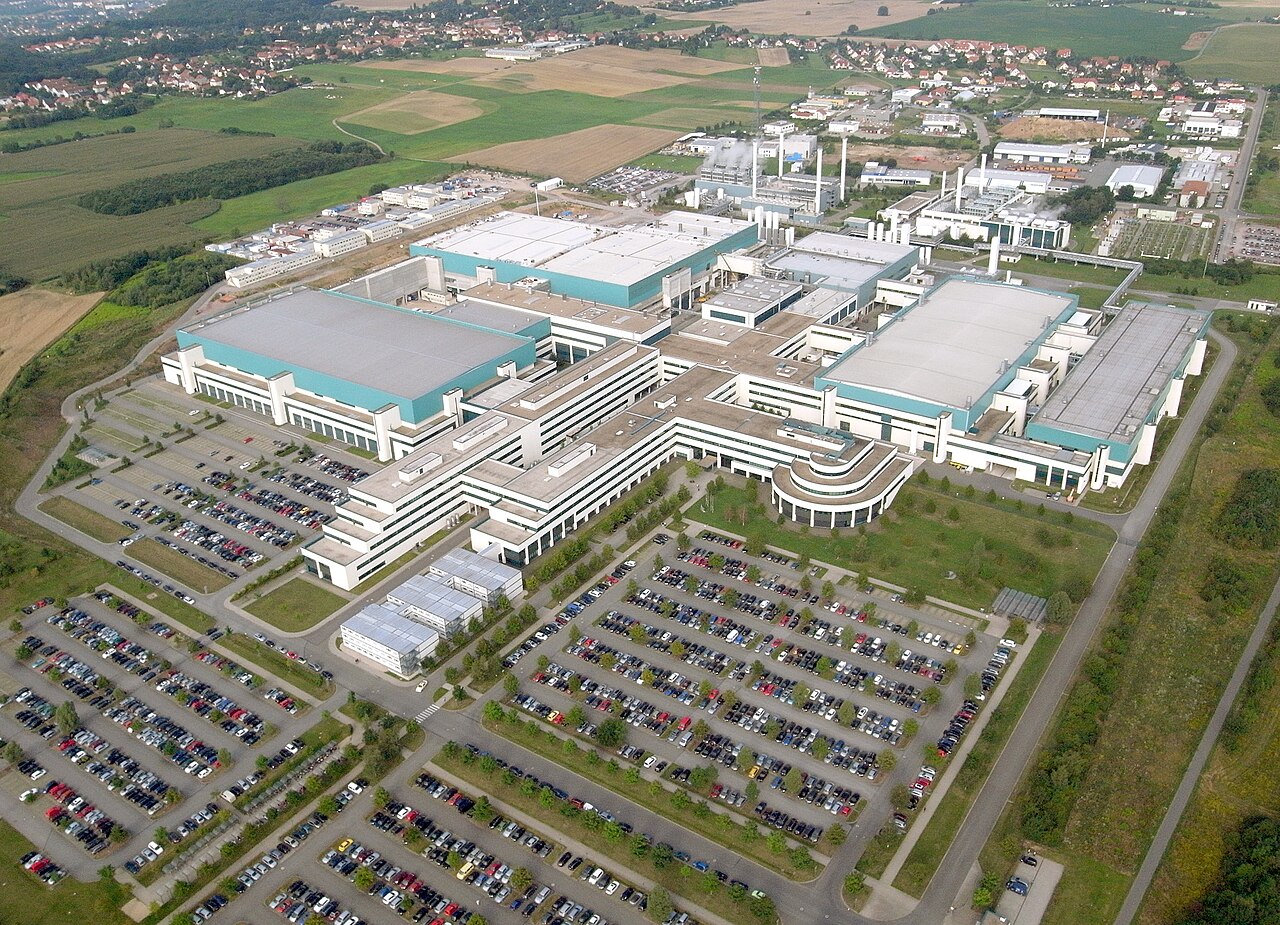
GlobalFoundries will put more of its federal chip money into silicon photonics, silicon-germanium and advanced packaging at its New York and Vermont plants, without the government adding a dollar to the deal. The Department of Commerce's CHIPS Program Office agreed with GlobalFoundries to amend its existing award and reallocate up to $955 million in incentives under the CHIPS and Science Act, steering that money toward the company's facilities in Malta, New York, and Burlington, Vermont. In exchange, GF agreed to expand its capital investment at those two sites to $5 billion, according to the October 14 release.
The change is a reallocation, not new spending. "The total amount of the existing CHIPS Program award will not be increased," the release states. What moves is the internal split: a larger portion of the award now goes to modernizing and expanding the Malta and Burlington fabs.
Where the $955 Million Goes in Malta and Burlington
The release ties the reallocated incentives to three technology lines that Commerce describes as "increasingly critical to communications infrastructure and data centers": silicon photonics, silicon-germanium, and what it calls "the first U.S.-based source of silicon interposers supporting advanced packaging technologies."
Each serves a different part of the data center supply chain. Silicon photonics moves data with light rather than electrical signals, an approach chipmakers are pushing into networking gear and co-packaged optics. Silicon-germanium processes support high-frequency radio and communications chips. Silicon interposers sit beneath multiple dies in an advanced package and route signals between them; the release's claim that GF will host the first domestic source of them suggests a gap in U.S. packaging capacity that the CHIPS program is meant to help close.
Bill Frauenhofer, Executive Director for Semiconductor Innovation and Investment at the Department of Commerce, framed the amendment around compute demand. "GlobalFoundries is expanding its investment to develop and manufacture critical semiconductor technologies enabling data center and high-performance compute infrastructure," he said. "The CHIPS Program award supports GlobalFoundries efforts to onshore and accelerate the development of these important semiconductor components."
How the Amendment Changes GF's Original $1.5 Billion CHIPS Deal
The amendment reshapes an award that was already large. ExecutiveGov reported that Commerce previously selected GF for up to $1.5 billion in direct funding under the CHIPS Incentives Program to modernize its New York and Vermont sites and build a new facility in New York. That funding was tied to GF's planned $13 billion investment over roughly 10 years, which was expected to create about 9,000 construction jobs and 1,000 manufacturing jobs, according to the outlet.
Because the total ceiling does not move, putting up to $955 million toward Malta and Burlington modernization means a larger share of that original package now backs upgrades to existing lines. The NIST release does not say how the rest of the award is now allocated or whether the timeline for the separately planned new New York facility changes. Contractors tracking the program should treat those questions as open until Commerce or GF publishes more detail.
ExecutiveGov also reported that GF is slated to receive up to $300 million in CHIPS research and development incentives for co-packaged optics, covering next-generation silicon photonics and advanced packaging for AI and high-performance computing. That award is one of seven letters of intent, totaling up to $874 million, that Commerce signed to support domestic semiconductor R&D, according to the outlet. The production-side reallocation and the R&D letter of intent point at the same technology area from two directions.
Why the Reallocation Came Alongside a $21 Billion U.S.-Japan Fab Plan
The award change did not arrive alone. ExecutiveGov reported that it was announced alongside GF's selection as technology provider and operator for two new fabs at its Malta site under a U.S.-Japan initiative providing up to $21 billion. Japan will finance that project under President Donald Trump's trade and investment agreement with the country, while GF supplies the technology and runs operations, the outlet said.
Citing GF, ExecutiveGov reported that about $10 billion will go toward a first 300 mm fab expected to come online in 2029, with groundbreaking planned for later this year, and that a second fab would require roughly another $10 billion. Each fab is expected to add about 900,000 wafers of annual capacity when fully operational, and the project is projected to create some 27,000 construction and ecosystem jobs and more than 1,000 manufacturing jobs.
Under a separate agreement, Commerce will take an equity stake of about 4 percent in GF, ExecutiveGov reported. The NIST release on the award amendment does not mention the equity stake or the Japan-financed fabs. GF CEO Tim Breen, quoted by ExecutiveGov, said: "GF was selected because fabs of this scale require more than capital. They require differentiated technology, operational excellence and a proven ability to execute."
Taken together, Malta is now the focus of three overlapping arrangements: the amended CHIPS manufacturing award, the Japan-financed fab program, and the Commerce equity position.
What It Means for Contractors
The most direct effect lands on the construction, tooling and facilities supply chain around Malta and Burlington. A $5 billion capital commitment at two operating fabs translates into equipment installation, cleanroom work, utility upgrades and process qualification, much of it subcontracted. Firms already qualified on GF sites are best placed, but the scale of the expansion, plus the Japan-financed fab work ExecutiveGov describes at Malta, suggests demand for regional trades and specialty integrators over several years.
Defense and aerospace buyers should watch the interposer and silicon-germanium lines closely. GF describes itself in the release as serving "aerospace and defense" among its markets, and a domestic interposer source could matter to programs that need trusted, U.S.-based packaging for radio frequency and high-performance compute parts. The release does not name any defense customers or trusted-foundry arrangements tied to the amendment, so primes should not assume capacity is earmarked for them.
For companies negotiating their own CHIPS awards, the deal offers a template: Commerce was willing to rebalance an existing award toward new technology priorities, with the recipient raising its investment commitment, rather than enlarge the federal share. Recipients whose original plans have shifted may have room to propose similar amendments, on the evidence here, provided they put more private capital on the table.
Finally, the equity stake ExecutiveGov reports changes the relationship between Commerce and GF beyond grant oversight. Contractors and competitors should follow how that arrangement is documented, since it could shape how the agency treats future GF requests.
