
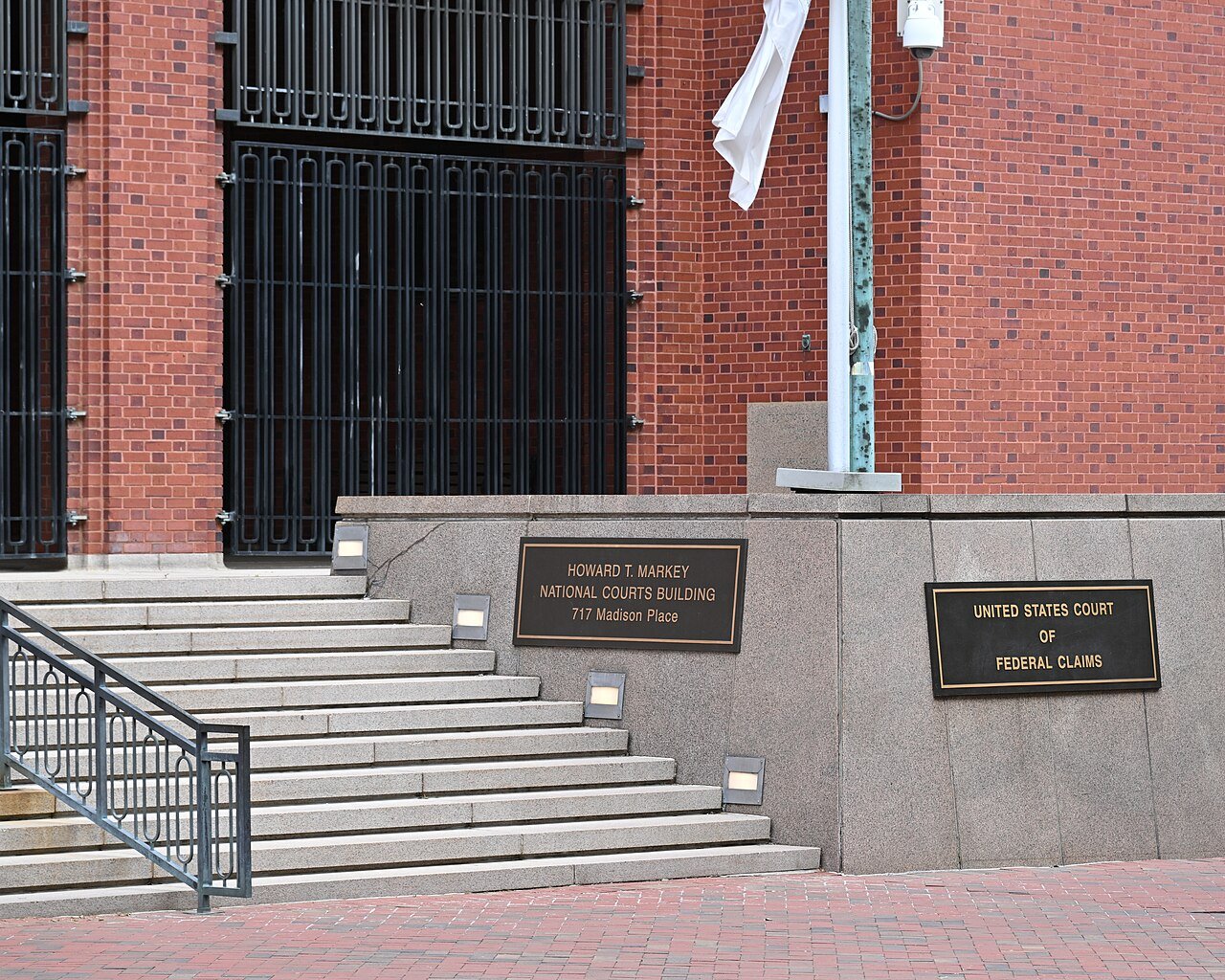
Contractors who bid as primes on brand-name procurements now have a clear warning: if the government names a required subcontractor, that subcontractor can charge rival primes different prices, and a protest court may decline to step in. In a redacted opinion released for publication Oct. 3, 2026, Judge Marian Blank Horn of the U.S. Court of Federal Claims rejected 22nd Century Networks, Inc.'s challenge to the Defense Information Systems Agency's award to By Light Professional IT Services LLC. The award covers a managed browser-isolation service built on Menlo Security's Cloud Browser. Bloomberg Government's headline put the contract at $345 million; the opinion's price chart lists By Light's total evaluated price as $344,654,988.32.
The court filed the decision on Sept. 14, 2026, in case No. 26-718C. A footnote says it was first issued under seal on Sept. 13. The court denied the protest and entered judgment for the government and By Light.
What DISA Bought Under RFP HC108426R0005
The solicitation, Request for Proposals No. HC108426R0005, covered the Pentagon's Cloud-Based Internet Isolation (CBII) service. CBII runs web browsing in an isolated cloud environment so threats on the internet stay off Department of War networks. DISA's acquisition plan, quoted in the opinion, says the service "currently protects approximately 3.05 million DoW users." Another passage describes an environment "supporting up to 3.4 million DoW users worldwide."
The department has used Menlo's product under an Other Transaction Authority agreement. The plan states: "Since 2020, DoW has leveraged the MSCB solution via the production OTA agreement to protect DoW users from evolving cyber threats." DISA then executed a brand-name justification for other than full and open competition. According to the protester, DISA required offerors to use Menlo's service agreements and licenses, which in effect made Menlo a mandatory subcontractor for whichever integrator won.
Award was to be made on a lowest-priced technically acceptable (LPTA) basis. The solicitation said the government anticipated awarding "from initial contractor responses, without engaging in exchanges with respondents." In practice, according to the source selection decision quoted in the opinion, the government did conduct discussions with all offerors and requested final proposal revisions from the four offerors, who submitted final revised proposals on April 20, 2026. Offerors were also not prohibited from negotiating with Menlo, a point the agency clarified in answers to offeror questions.
Did Menlo Pick the Winner?
22nd Century's argument started from a simple fact. According to the opinion, Menlo quoted By Light a lower net price than it quoted 22nd Century. Because Menlo's pricing fed into each prime's proposal, the protester argued that the price difference decided the outcome of the LPTA competition.
"While it may be true that DISA made the award, Menlo certainly picked the winner," 22nd Century argued in a filing the court quoted. The company said that by making Menlo a "required subcontractor" without guardrails or oversight, "DISA essentially ceded source selection authority to Menlo." It also told the court its point "was never" that DISA should have ordered Menlo to give everyone the same price. Instead, it said, "The point is that DISA did absolutely nothing."
The government answered that the agency kept control of the process. "DISA established the same solicitation requirements for all offerors, allowed offerors to negotiate with Menlo, evaluated all proposals under the same criteria, and made the final award decision itself," the Justice Department argued in its cross-motion. By Light, represented by Morrison Foerster LLP, argued that DISA evaluated proposals and made the award "in strict accordance with the LPTA terms" of the solicitation.
Why Judge Horn Held That Different Menlo Prices Were Allowed
The court found nothing in the solicitation that required Menlo to give every offeror the same price. "Although protestor is frustrated by the actions of Menlo, Menlo was not required to provide protestor with the same exact pricing as Menlo provided By Light," Judge Horn wrote.
The court also held that 22nd Century had not shown that the price gap meant Menlo chose the winner, "given the unrelated technical evaluation conducted on each offeror's proposal." The opinion then adds a single short sentence: "The letter of the law and best practices are not always the same." The opinion also says there were "plenty of things DISA could have done to ensure fairness," including directing Menlo to offer comparable pricing, while finding that the law did not require it.
At oral argument, Judge Horn pressed DOJ trial attorney Ioana C. Meyer on whether the contracting officer knew the offerors had received different Menlo prices. According to the opinion, government counsel represented, and the contracting officer confirmed, that "the agency apparently was not aware that Menlo had charged different prices to different offerors."
Declarations About Menlo Negotiations Stayed Out of the Record
22nd Century also asked the court to add declarations to the administrative record, including one from its own counsel, describing its negotiations with Menlo and the price Menlo gave By Light. The court refused. It found that the declarations and their exhibits "were not before the agency" when the Source Selection Authority made the award. The judge did not consider them in deciding the merits.
The procedural result was mixed but ended in a clear loss for the protester. The court denied the government's and By Light's motions to dismiss, so it reached the merits. It then denied 22nd Century's motion for judgment on the administrative record, denied its motion to supplement the record, and granted the cross-motions from the government and By Light.
Maynard Nexsen PC represented 22nd Century. Susan Chagrin, associate general counsel at DISA, appeared as agency counsel alongside the Justice Department's Civil Division.
What It Means for Contractors
The ruling puts the burden on bidders to deal with required-subcontractor pricing before proposals are due. Nothing in this solicitation required Menlo to offer every prime the same price, and the court would not read that requirement into it. A prime that worries about uneven pricing from a brand-name manufacturer should ask questions or consider a pre-award challenge to the solicitation's terms. In this case the government argued that 22nd Century had waived exactly that kind of challenge by not raising it before bidding closed, although the court denied the motions to dismiss and reached the merits.
The decision also shows how hard it is to prove that a subcontractor took over a source selection when the agency ran its own technical evaluation and made the award decision itself. In an LPTA buy, the price a manufacturer quotes each prime can weigh heavily in the outcome. Even so, Judge Horn found that the solicitation's terms controlled.
Finally, evidence about private negotiations between a prime and a manufacturer will likely stay out of a Court of Federal Claims protest if the agency never saw it. Bidders that want this kind of evidence considered need to put it in front of the contracting officer during the competition.
