
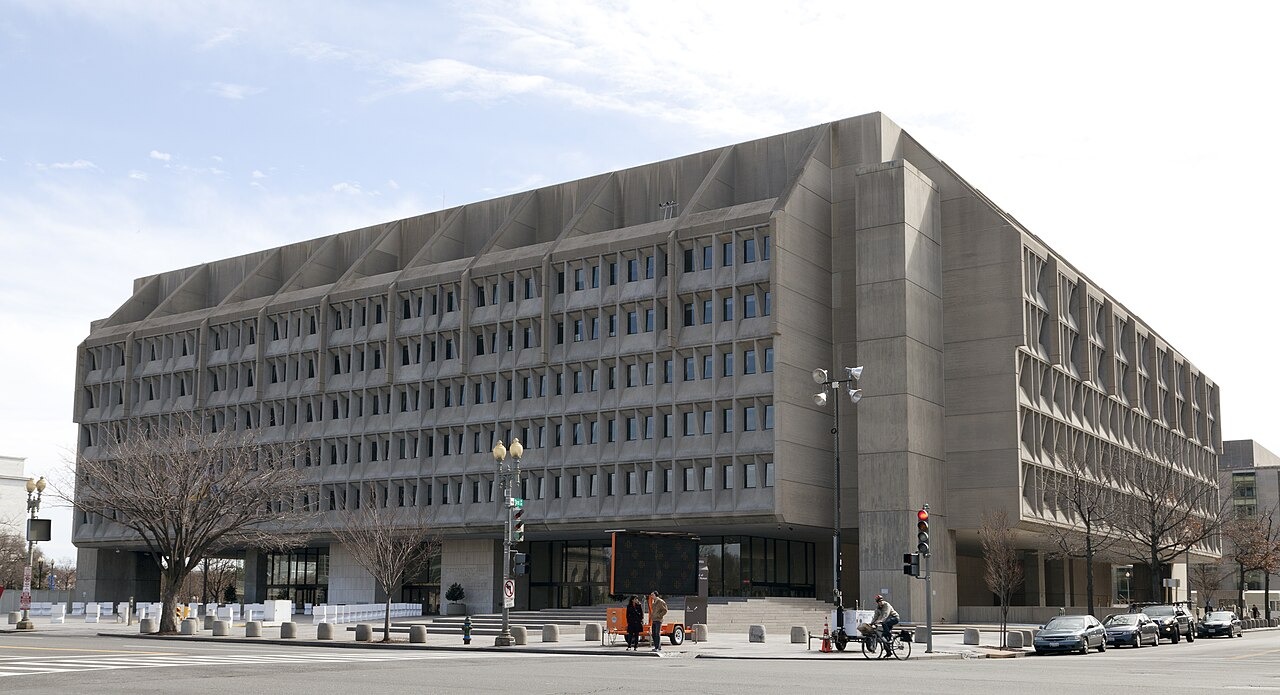
Healthcare companies that find False Claims Act problems in their own billing now have a fixed price for settling them, and the offer expires in six months. The Justice Department's Civil Division and the Department of Health and Human Services on Thursday, Oct. 22, 2026, launched a Healthcare False Claims Act Self-Disclosure Pilot Program (FCA SDPP). Under the pilot, a company that self-reports pays back its calculated base repayment times a multiplier of 1.25 to 1.6. In return it gets a coordinated civil release from FCA liability and from certain HHS administrative authorities.
The department says the civil pilot gives healthcare companies "a way to quickly resolve past misconduct" and lets the government put its resources toward "recalcitrant actors." DOJ will accept submissions through April 22, 2027, and the release says that "Late and incomplete submissions will not be reviewed."
How the 1.25-1.6 Multiplier Is Set
Treble damages are the usual reference point in FCA litigation. The pilot instead sets a narrow repayment band, and DOJ lists the factors that move a company within it. In the release's words, the multiplier "will vary based on factors such as the timeliness of the self-disclosure, the duration and scope of the misconduct, the involvement of senior leadership, the financial benefit to the disclosing company, and whether the disclosing company has successor liability for the misconduct but promptly remediated."
Those factors reward speed and penalize misconduct that ran a long time or reached the executive suite. A company that disclosed early, found a short-lived problem, and took no meaningful financial gain from it should land near the bottom of the band. Long-running schemes that senior leadership knew about would push toward 1.6. The successor-liability factor applies to acquirers. A buyer that finds problems inherited from a target and fixes them quickly is credited for that response.
What a Complete Disclosure Must Contain
The pilot asks for more than a summary letter. Participants must "describe all relevant details relating to the disclosing company's conduct that potentially violates the federal FCA and produce documents sufficient to fully reflect the nature, terms, and operation of the disclosed potential FCA violations," according to the release. They must also describe the remedial steps already taken and make the repayment at the applicable multiplier. Sidley's summary of the protocol adds that a submission must supply financial information that lets DOJ calculate the base repayment, plus a certification from an authorized representative that the submission is truthful and complete.
Submissions go electronically to [email protected]. Because DOJ will not review incomplete filings, a company cannot hold its place with a partial report. It needs the internal investigation finished, the documents assembled and the remediation under way before it files.
Assistant Attorney General Brett A. Shumate of the Civil Division described the trade in plain terms. "Voluntary self-disclosure is a powerful indicator of a company's commitment to compliance and accountability," he said. He also warned the companies that choose to stay quiet: "But for companies unwilling to take accountability, the Civil Division, in partnership with whistleblowers, will root out the fraud."
Deputy Assistant Attorney General Brenna Jenny tied the pilot to how DOJ resolves cases. "When companies identify misconduct and take meaningful steps to fix the problem and repay the government plus penalties, the Department will take those actions into account in determining appropriate resolutions," she said.
Who Qualifies, and Who Is Locked Out
Sidley Austin's False Claims Act blog published an analysis of the program on the day it launched. It reads eligibility broadly: providers, suppliers, manufacturers, payors and related entities whose products or services are paid for, directly or indirectly, with federal health care program dollars. The key limit is timing. Sidley notes that the disclosed conduct must be "previously unknown" to the government. If the government already knew of the issue, the company cannot obtain a resolution under the pilot. It can still seek cooperation credit under Justice Manual 4-4.112, but that credit is a different route from the pilot's fixed band.
That limit raises the stakes on timing. Sidley itself advises companies to consider whether a whistleblower or data analytics may already have surfaced the issue, which gives companies a reason to file early.
What the Coordinated HHS Release Covers
The release says companies receive a coordinated civil release covering both the FCA and "certain HHS administrative authorities." According to Sidley's analysis, those authorities are Medicare enrollment revocation and permissive exclusion. HHS-OIG will not require a Corporate Integrity Agreement, and CMS will not impose civil monetary penalties or seek revocation. Sidley adds that participants do not have to submit the same conduct again under the HHS-OIG or CMS self-disclosure protocols, and that the resolution includes no factual admissions.
For many providers, avoiding a Corporate Integrity Agreement may be worth as much as the lower multiplier. Such agreements typically impose multi-year compliance obligations, which carry their own costs.
Criminal Exposure Takes a Separate Track
The pilot is civil only. According to the DOJ release, a company seeking to self-disclose potential criminal conduct related to health care must take it to the Justice Department's National Fraud Enforcement Division under that division's joint policy with HHS-OIG on coordinating voluntary self-disclosure in health care fraud matters. The two tracks do connect. A company that makes a voluntary criminal self-disclosure to the Fraud Division under the Corporate Enforcement Policy does not need to file a duplicate submission to the pilot mailbox. If it also wants a civil FCA release through the pilot, DOJ will ask it to supplement the Fraud Division disclosure "only to the extent necessary."
What It Means for Contractors
The pilot is written for healthcare companies, and some federal contractors may fit that description. The eligibility test Sidley describes follows the money: any entity whose products or services are paid for, directly or indirectly, with federal health care program dollars. A contractor that bills a federal health program, or makes and supplies products paid for with those funds, should check whether its commercial healthcare lines fall inside that definition rather than assume they do not.
The practical steps are concrete. Compliance teams sitting on unresolved billing, coding or kickback questions have until April 22, 2027 to decide whether to disclose under fixed terms. Deal teams buying healthcare-adjacent businesses should treat the successor-liability factor as a reason to finish post-closing diligence fast. Any company considering disclosure should assume a whistleblower could reach the government first, since the pilot is limited to conduct the government does not yet know about.
Sources
- Justice Department's Civil Division and the Department of Health & Human Services Announce Anti-Fraud Healthcare Self-Disclosure Pilot Program (DOJ Office of Public Affairs, Oct. 22, 2026)
- DOJ and HHS Launch Healthcare FCA Self-Disclosure Pilot Program with Fixed Repayment Multiplier (Sidley Austin False Claims Act Blog, Oct. 22, 2026)
