
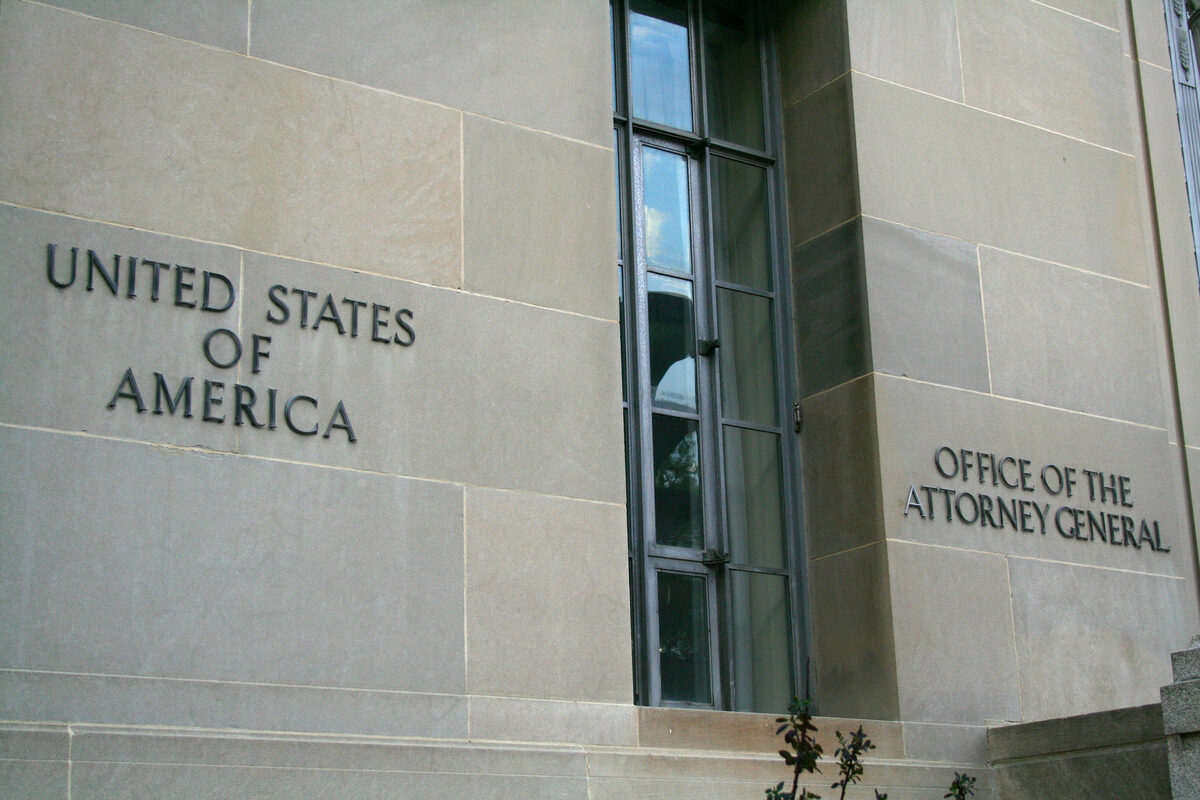
The Department of Justice has stood up a new division dedicated exclusively to prosecuting fraud against taxpayer dollars, and government contractors are squarely in its crosshairs. Acting Attorney General Todd Blanche established the National Fraud Enforcement Division by memorandum on April 7, 2026, consolidating the Criminal Division's Tax Section, Health Care Fraud Unit, and Market, Government, and Consumer Fraud Unit under a single organizational roof. The Senate confirmed AAG Colin McDonald on March 24, 2026, to lead the new division, and by May 8 the NFED had already announced sentencing and indictments covering fraud schemes representing more than $1 billion across healthcare, government procurement, tax, benefits, and financial sectors.
What the NFED Is and Why It Was Created
The National Fraud Enforcement Division is the first unified DOJ division dedicated exclusively to fraud against taxpayer dollars. Before its creation, fraud cases touching multiple domains — a contractor who submitted false cybersecurity certifications, overbilled on healthcare subcontracts, and understated taxable income — required coordination across multiple Criminal Division units that operated independently, with separate chains of command and separate budget lines. That structural fragmentation slowed case development, complicated grand jury strategy, and gave defense counsel opportunities to exploit jurisdictional gaps between units.
The NFED eliminates those gaps. By consolidating the Tax Section, the Health Care Fraud Unit, and the Market, Government, and Consumer Fraud Unit under AAG McDonald's command, DOJ has created a single authority that can investigate and prosecute a contractor's entire fraud profile in one coordinated effort. A qui tam relator who files a False Claims Act suit alleging cybersecurity attestation fraud can now expect that DOJ investigators will simultaneously look at the contractor's tax filings, healthcare billing practices, and pricing representations — all within the same division, coordinated from the outset rather than assembled piecemeal after separate investigations converge.
The context for the NFED's creation matters as well. FY2025 False Claims Act recoveries exceeded $6.8 billion — the highest single-year total in FCA history. That record figure reflects both an enormous volume of fraud and an enforcement apparatus that was already generating significant results before the NFED existed. The consolidation is designed to make an already productive enforcement machine more efficient, not to rescue a struggling one. Pandemic-era procurement fraud cases remain a significant portion of the active docket, and the NFED will continue pursuing those matters alongside newly initiated investigations in emerging priority areas.
Enforcement Focus Areas for Government Contractors
The NFED's initial enforcement output and its stated priorities identify several specific risk categories that government contractors must understand. Cybersecurity compliance fraud is at the top of the list. The Cybersecurity Maturity Model Certification program requires contractors to attest that they have implemented specific cybersecurity controls as a condition of receiving certain DoD contracts. Contractors who attest compliance they have not actually achieved face False Claims Act liability — and the NFED now has dedicated resources to pursue exactly that theory of fraud. Whistleblowers with knowledge of falsified CMMC self-assessments or System Security Plan representations have a well-resourced enforcement partner in the new division.
Tariff and country-of-origin fraud is a second high-priority category. Buy American requirements and specialty metals restrictions in defense contracting create legal obligations that some suppliers have historically managed through misrepresentation of where components were manufactured or what percentage of value was added domestically. As tariff enforcement has intensified across the executive branch, the NFED is positioned to prosecute procurement fraud in this area using both FCA theories and criminal statutes. Contractors relying on supply chain representations from foreign subcontractors should verify those representations now, before an NFED investigation does it for them.
Defective pricing — submitting cost or pricing data that does not accurately represent the contractor's actual costs — remains a core government procurement fraud theory that the NFED inherits from the Market and Government Fraud Unit. The Truth in Negotiations Act requires contractors to certify that cost or pricing data submitted during negotiations is accurate, complete, and current. False certifications expose contractors to treble damages under the FCA and criminal liability. The NFED's consolidation means that a defective pricing referral from DCAA can now be routed directly to a division with the Tax Section resources to examine whether the same financial misrepresentations appear in the contractor's tax filings.
What It Means for Contractors
The NFED changes the risk calculus for government contractors in a specific and important way: it accelerates the speed at which a whistleblower complaint in one domain can expand into a multi-theory criminal and civil investigation. Previously, a qui tam relator alleging healthcare billing fraud on a government contract would file in a DOJ district, and the DOJ attorneys handling that case might or might not be aware of parallel DCAA findings in an entirely separate investigation. Under the NFED, the institutional architecture is designed to surface those connections immediately.
Contractors should treat the NFED's creation as a trigger for reviewing compliance programs across every domain the division covers. Cybersecurity attestations in CMMC-related contracts should be verified against actual implementation. Supply chain documentation for Buy American and specialty metals compliance should be audited for accuracy. Forward pricing rate agreements and TINA certifications should be reviewed to ensure that cost representations remain accurate and defensible. Healthcare billing practices on any government-funded subcontracts should be assessed against applicable regulations.
The FCA whistleblower provisions are the specific mechanism that makes the NFED dangerous for non-compliant contractors. Any employee, subcontractor, or competitor with knowledge of fraud can file a qui tam complaint, receive a share of any government recovery, and benefit from strong anti-retaliation protections. The NFED's consolidated structure means that a relator who knows about one compliance failure is now filing into a division that will look for all of them. Contractors whose compliance programs are genuinely strong have little to fear. Those who have been managing compliance as a checkbox exercise rather than a substantive practice should recognize that the NFED represents a materially more capable adversary than the fragmented enforcement structure it replaced.
