
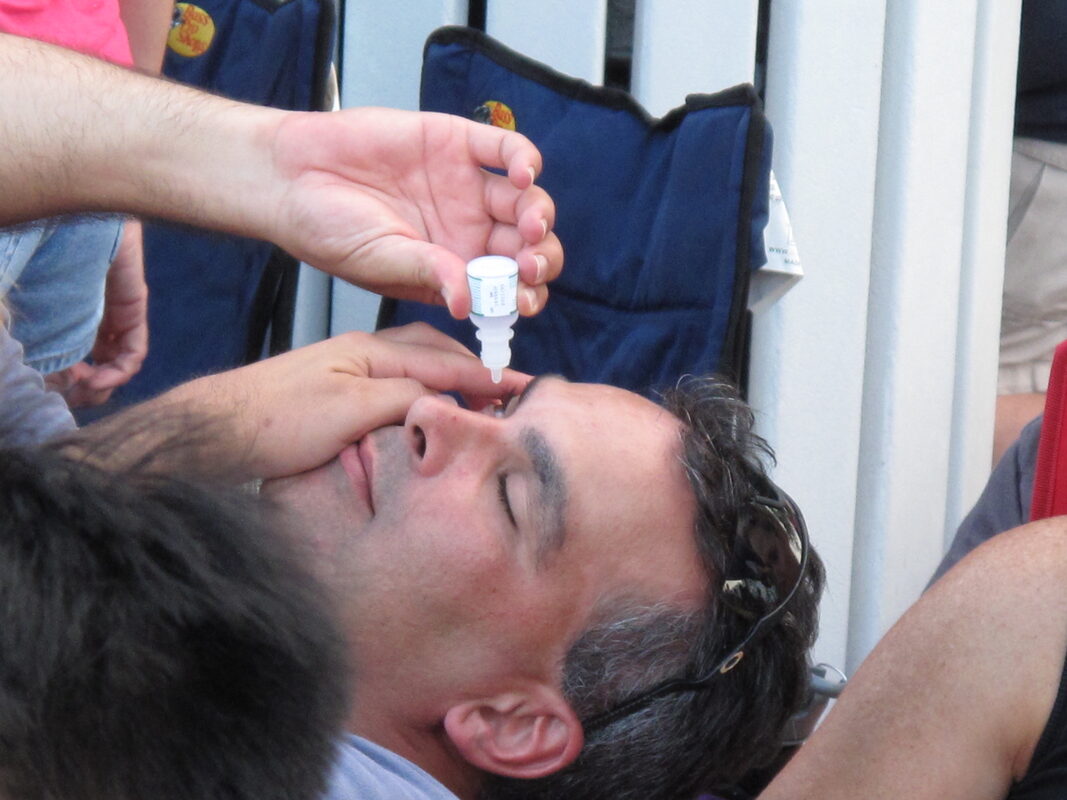
Dompe U.S. Inc., the American subsidiary of Italian drugmaker Dompe farmaceutici S.p.A., has agreed to pay $32 million to resolve False Claims Act liability tied to a scheme that used third-party patient assistance foundations to cover Medicare beneficiaries' co-pays for its eye drug Oxervate, the Department of Justice announced on September 10, 2026.
The settlement grew out of a voluntary self-disclosure by Dompe's Italian parent company, and covers conduct that DOJ says ran from 2018 through 2021.
How the Co-Pay Scheme Worked
According to DOJ, Dompe U.S. made payments to two independent patient assistance foundations that in turn covered the Medicare co-pay obligations of patients prescribed Oxervate, a treatment for a rare corneal condition. Medicare's cost-sharing structure — co-pays and deductibles — exists in part to give patients a financial stake in weighing whether a costly drug is worth taking, and to keep prescribers and manufacturers from steering patients toward more expensive options without any check on demand. When a manufacturer quietly finances a foundation that then covers those same co-pays for its own drug, DOJ treats the arrangement as a disguised kickback, because it removes the patient's cost exposure specifically for that company's product while leaving the government to pay the rest of the bill.
The Anti-Kickback Statute generally bars payments intended to induce the purchase of drugs reimbursed by federal health programs, and a violation of that statute can independently support a False Claims Act case because claims submitted to Medicare in connection with an illegal kickback are considered false claims. DOJ's announcement makes clear the government views indirect routing through a foundation as no different, legally, from a direct payment to patients or prescribers.
Officials Frame the Case as a Warning on Patient Assistance Programs
DOJ officials used pointed language in describing the case. U.S. Attorney Leah B. Foley said "Kickbacks to beneficiaries undermine the purpose of the Medicare co-pay system and drive up the cost of drugs." HHS-OIG Acting Deputy Inspector General for Investigations Miranda L. Bennett added that "Pharmaceutical manufacturers that attempt to disguise kickbacks as charitable patient assistance are engaging in blatant misconduct."
That framing matters because patient assistance foundations occupy a legally gray area: they can operate lawfully when they are genuinely independent of the manufacturers whose drugs they help patients afford, and when they don't function as a pass-through for a single company's product. DOJ and HHS-OIG have pursued a string of similar cases against pharmaceutical companies over the past decade, and the Dompe settlement signals the government continues to scrutinize the funding structure and independence of these foundations closely, even years after the underlying conduct occurred.
Self-Disclosure Likely Shaped the Outcome
DOJ's announcement credits Dompe's parent company with voluntarily disclosing the conduct, a factor the department has said in other cases can reduce penalties relative to what a company would face if the government uncovered the same conduct through a whistleblower suit or its own investigation. The Justice Department has repeatedly urged companies doing business with federal health programs to self-report compliance failures, framing voluntary disclosure as a path to more favorable resolution terms — a message this settlement reinforces even as it imposes an eight-figure penalty.
Oxervate's Market Position Made It a Target for Scrutiny
Oxervate treats neurotrophic keratitis, a rare degenerative corneal disease, and occupies a narrow but high-value niche within ophthalmology — the kind of specialty drug market where a manufacturer's ability to reduce a patient's out-of-pocket cost can meaningfully influence prescribing decisions and market share. Rare-disease and specialty drugs often carry price tags well above common medications precisely because they serve small patient populations without competing generic alternatives, which increases the incentive for a manufacturer to find ways to insulate patients from the co-pay burden that price creates. That dynamic is exactly what DOJ's kickback theory targets: when a manufacturer's own money effectively neutralizes the patient's cost-sharing obligation for that manufacturer's product specifically, the government argues the co-pay assistance functions as a sales inducement rather than genuine charity.
DOJ's press release does not indicate that any individual executives at Dompe U.S. face personal liability in connection with this settlement, and the resolution appears to be a civil, not criminal, matter — consistent with how DOJ typically resolves Anti-Kickback Statute and False Claims Act violations tied to co-pay assistance programs when a company proactively discloses the conduct rather than the government uncovering it independently.
Settlements resolved through self-disclosure also typically avoid the additional exposure that comes with a qui tam whistleblower suit, where a private relator can share in any recovery and where litigation costs and reputational risk tend to run higher than in a government-initiated resolution following voluntary disclosure.
What It Means for Contractors
For life-sciences companies and any federal contractor operating patient assistance or reimbursement-support programs, the Dompe settlement is a reminder that the line between legitimate charitable support and an illegal kickback often comes down to control and specificity — whether a foundation's funding structure allows a single manufacturer's contributions to functionally underwrite co-pay relief limited to that manufacturer's own product. Compliance programs that fund third-party assistance foundations should be able to demonstrate genuine independence, including that funds aren't earmarked or tracked in a way that ties a company's contribution to coverage of its own drug's co-pays.
The case also reinforces that self-disclosure remains a live strategic option with a demonstrated payoff, at least in DOJ's own account of how it resolves these matters. Government contractors and healthcare companies alike should treat voluntary disclosure as part of a broader compliance and enforcement-risk calculus, particularly since the eight-figure settlement here still likely reflects a discount from what the government could otherwise have sought over a multi-year period of alleged false claims.
