
The Federal Communications Commission's Public Safety and Homeland Security Bureau and Office of Engineering and Technology on August 3, 2026 proposed prohibiting the continued importation and marketing of certain foreign-produced "military-grade" uncrewed aircraft systems and the critical components that go into them, extending a supply-chain crackdown that began with a Covered List designation late last year.
Background
The proposal builds directly on action the bureaus already took. On December 22, 2025, PSHSB added all foreign-produced UAS and UAS critical components to the FCC's Covered List, the roster of communications equipment and services deemed to pose an unacceptable risk to U.S. national security. That addition rested on a National Security Determination issued by an executive-branch interagency body that includes the Department of War, which found the risk from unauthorized surveillance, sensitive data exfiltration and supply-chain vulnerabilities serious enough to warrant the designation across the category rather than model by model.
Placement on the Covered List does not, by itself, stop a device from being imported or sold in the United States. To close that gap, PSHSB and OET issued a Public Notice on July 21, 2026 in PS Docket No. 26-189 laying the groundwork for further restrictions, and the August 3 notice is the direct follow-on. The bureaus are relying on Section 2.939(e) of the FCC's rules, which lets them limit an existing equipment authorization to block continued importation and marketing without going through the more involved process under Section 2.939(a) of formally revoking that authorization outright. The mechanism implements the framework the Commission adopted in October 2025 under what the bureaus refer to as the EA Security Second Report and Order.
Comments on the new proposal are due September 2, 2026. The notice was filed under DA 26-758 and FR ID 359960, and carries the Federal Register citation 91 FR 48870. The roughly one-month window between publication and the comment deadline mirrors the pace PSHSB and OET have used on prior Covered List follow-through actions, leaving affected companies a narrow window to weigh in before the bureaus move toward a final prohibition.
Key Details
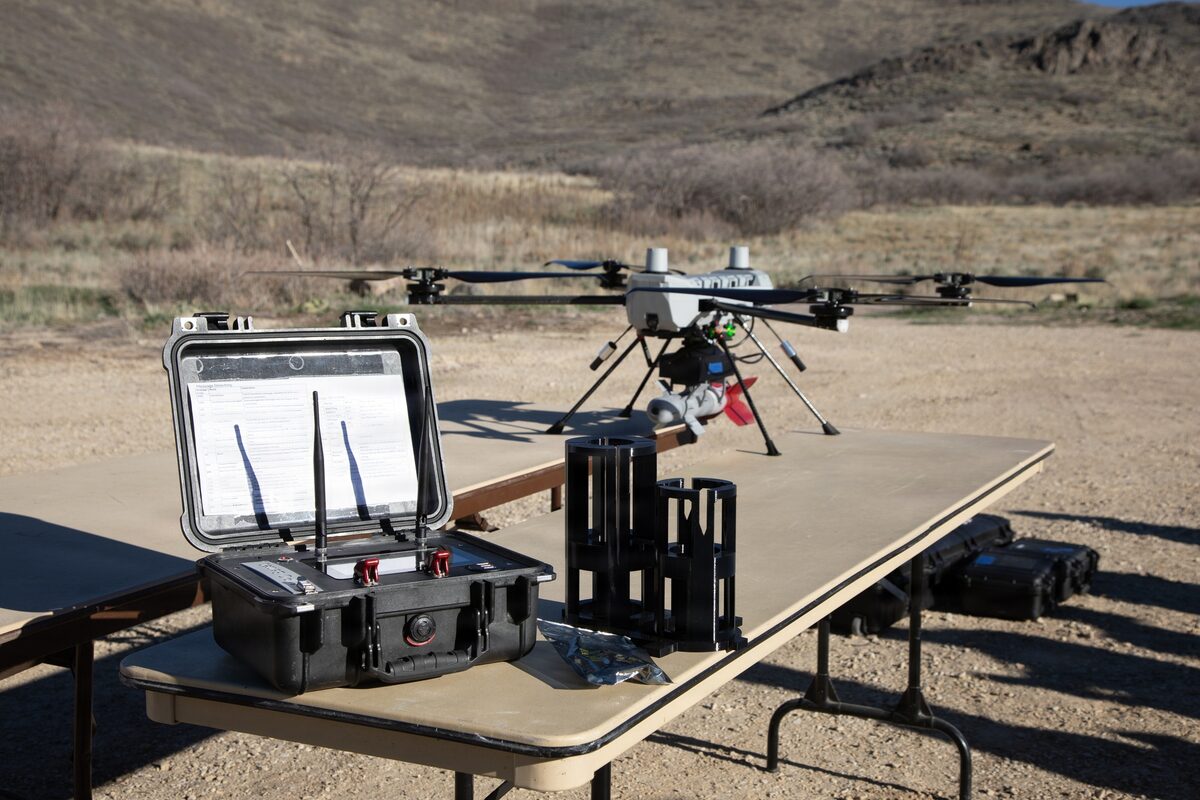
The notice targets a specific slice of the drone market: UAS that weigh 55 pounds or more at takeoff, which places them outside the FAA's "small unmanned aircraft" category. The bureaus describe these larger platforms as built for deep-strike operations, persistent wide-area surveillance, electronic warfare and cargo resupply, and note that some are capable of dispensing what FAA rules classify as "economic poison" — a term covering pesticides and similar agents. The proposed prohibition also reaches UAS critical components, meaning subsystems and parts that go into military-grade platforms even when sold separately from a complete aircraft.
The bureaus frame the risk explicitly in swarm terms, stating that UAS weighing 55 pounds or more, "operating individually or in a swarm," have the capability to carry out "a significant attack on the United States homeland." That framing echoes the reasoning behind the original Covered List designation — risks from unauthorized surveillance, data exfiltration and supply-chain vulnerabilities — and signals that the FCC views coordinated multi-drone operations as a distinct threat category from single-aircraft incidents.
Because the action proceeds under Section 2.939(e) rather than a full revocation proceeding, PSHSB and OET can limit the scope of an existing equipment authorization to bar future importation and marketing while leaving the authorization otherwise intact. That is a narrower, faster tool than revocation, and it is the same approach the bureaus used as the follow-through mechanism once a category lands on the Covered List.
What It Means for Contractors
Any contractor whose supply chain includes foreign-produced UAS platforms or components in the 55-pound-and-up class should treat the September 2, 2026 comment deadline as the operative date to track. Filing comments is the direct avenue for contractors, integrators and component suppliers to flag technical or operational concerns — including cases where a "critical component" definition might sweep in parts used in systems that are not themselves weapons-adjacent — before the prohibition is finalized. Because the mechanism operates through Section 2.939(e) rather than a notice-and-comment rulemaking that amends the Covered List itself, the practical effect for industry arrives quickly once the comment period closes, leaving little runway between a final decision and enforcement against new imports.
Federal buyers and their suppliers already had to account for the Covered List addition when sourcing UAS platforms for government work; this proposal would convert that designation into an enforceable import and marketing bar for the military-grade segment specifically. Contractors building or integrating large fixed-wing or heavy-lift UAS for defense, homeland security or critical-infrastructure customers should inventory where foreign-produced airframes, propulsion, avionics or payload components appear in their bills of materials now, rather than waiting for a final rule to force a scramble. Suppliers who depend on foreign sourcing for components used in platforms over 55 pounds face the most direct exposure, since the rule would block bringing new units or parts into the country even if an existing FCC equipment authorization otherwise remains valid for other purposes.
The rulemaking also reinforces a broader signal from the FCC and its interagency partners: further category-wide Covered List actions against foreign UAS look likely, rather than one-off enforcement against individual manufacturers. Companies that have already begun qualifying domestic or allied-nation alternatives for critical UAS components are better positioned than those still relying on the same foreign suppliers the December 2025 determination was built around. Program managers evaluating UAS acquisitions with defense or homeland security end users should also expect any solicitation touching platforms in the affected weight class to reference Covered List compliance explicitly going forward, given how closely this proposal tracks the interagency national security findings behind the original listing.
For contractors without a stake in heavy UAS platforms, the more relevant takeaway is procedural: the FCC is showing it will use Section 2.939(e) as a standing tool to convert Covered List determinations into concrete import and marketing bars, on a compressed comment timeline. That precedent is likely to extend to other equipment categories the Commission has flagged as national security risks, making the FCC's rulemaking docket a channel worth monitoring alongside the more familiar DFARS and NDAA supply-chain restrictions contractors already track.
