
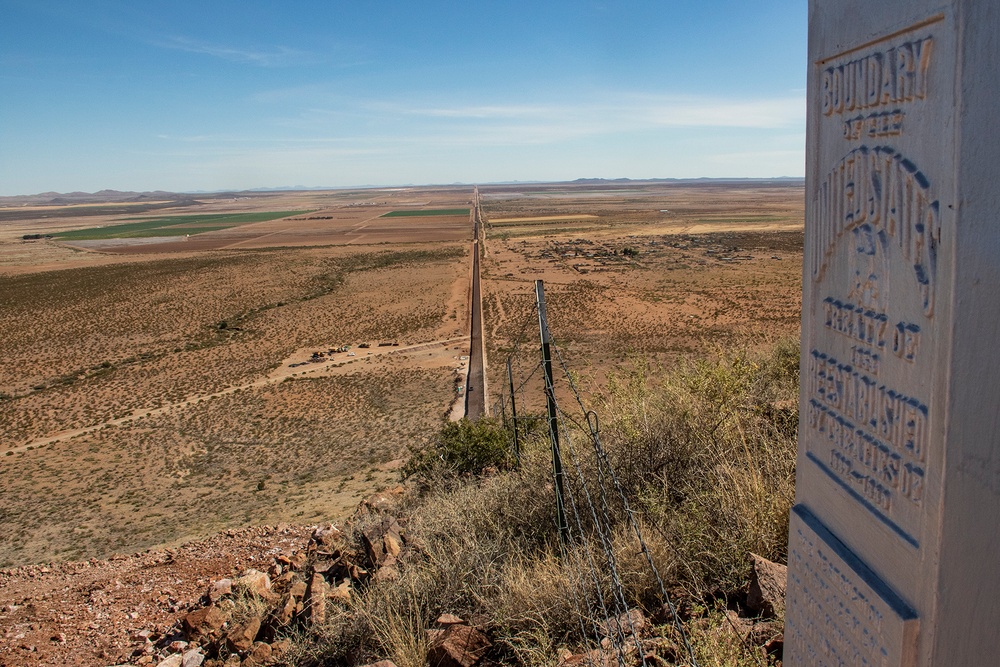
The Government Accountability Office has dismissed a challenge to a $1.6 billion border wall construction task order, leaving Barnard Construction Company, Inc. in control of the award. In a decision issued July 29, 2026, GAO rejected SLS Federal Services, LLC's protest of a U.S. Customs and Border Protection task order for secondary vertical barrier work in the El Paso Sector, ruling that the protester never had standing to challenge the award in the first place. The full decision is available on GAO's website.
Background
CBP issued task order EPT-5 to Barnard Construction Company, Inc., of Bozeman, Montana, for secondary vertical barrier design-build construction in the El Paso Sector. The order carries a value of $1,585,324,926, making it one of the larger single task orders awarded under the agency's ongoing border infrastructure program. SLS Federal Services, LLC, of Galveston, Texas, filed a protest arguing that CBP should have opened the requirement to competition among the multiple contractors holding the relevant indefinite-delivery, indefinite-quantity contract vehicle, rather than directing the work to Barnard on a sole-source basis. SLS contended that the award lacked adequate justification, raised potential conflicts of interest, and that CBP had failed to properly document either price reasonableness or a best-value tradeoff analysis before committing more than a billion and a half dollars to a single contractor.
The protest put GAO in the position of examining not just the merits of CBP's sourcing decision but a threshold question that often proves decisive in bid protest litigation: whether the protester qualified as an interested party entitled to bring the challenge at all. GAO's bid protest regulations restrict standing to actual or prospective offerors whose direct economic interest would be affected by the award or failure to make an award, and the agency's decision in this case turned heavily on that requirement.
Key Details
GAO dismissed the SLS protest on two independent, threshold grounds, neither of which reached the merits of CBP's sole-source decision. The first was timeliness. The multiple-award IDIQ contracts underlying the task order — held by eleven firms, including SLS itself — were awarded after the Department of Homeland Security Secretary published a waiver of fair-opportunity requirements under the Illegal Immigration Reform and Immigrant Responsibility Act, a statute that gives DHS broad authority to waive procurement and other legal requirements deemed necessary to ensure expeditious construction of barriers and roads at the border. Those IDIQ contracts expressly stated that fair-opportunity procedures did not apply to task orders issued under them. GAO held that SLS's objection to that competition-limiting language came far too late: SLS had reviewed and executed its own IDIQ contract months earlier without raising the issue, and a challenge to terms a firm has already accepted cannot be revived after a task order competition it was excluded from turns out unfavorably.
The second ground was standing. GAO determined that CBP never invited SLS to compete for task order EPT-5. The record showed no solicitation, no request for proposals, and no communication from CBP inviting SLS to submit an offer for the barrier work. SLS had instead submitted an unsolicited proposal on its own initiative, and GAO held that such a voluntary submission does not automatically confer offeror status or interested-party standing under the bid protest regulations. Without having been solicited, and without another basis for showing a direct economic interest in the award decision, SLS could not establish that it was an interested party eligible to protest CBP's award to Barnard. GAO issued the decision under case numbers B-424472 and B-424472.2, formally dismissing rather than denying the protest, a distinction that reflects the threshold, procedural nature of the ruling — untimeliness and lack of standing — rather than a substantive review of whether CBP's sole-source justification was adequate.
Because GAO resolved the case on timeliness and standing grounds, it did not need to reach SLS's substantive arguments about conflicts of interest, sole-source justification, or price reasonableness documentation. Those claims remain untested by GAO, though the dismissal means Barnard Construction retains the task order without further procedural challenge at this venue.
What It Means for Contractors
The decision offers a pointed reminder that IIRIRA's fair-opportunity waiver authority gives CBP wide latitude to direct large border-barrier task orders to a single IDIQ holder without running a competition among the full pool of contract holders. Firms holding IDIQ contracts for border infrastructure work should not assume that fair-opportunity procedures will apply to every task order issued under those vehicles, particularly when DHS has published a waiver covering the relevant program. Reading the specific terms of an IDIQ contract before committing resources to trying to compete for or protest a task order under it is essential; in this case, the contracts themselves already disclosed that fair-opportunity procedures would not govern task order awards.
The timeliness ruling adds a second, related lesson. Contractors who accept an IDIQ contract's terms — including provisions permitting the agency to bypass fair opportunity on future task orders — should raise any objection to those terms promptly, before a later task order competition renders the issue moot. GAO treated SLS's months-late challenge to language it had already agreed to as untimely, not as a live legal question on the merits.
The ruling also underscores a recurring trap for contractors who were not solicited for a requirement but believe they should have been. Submitting an unsolicited proposal, on its own, does not create the offeror status needed to protest at GAO. Contractors who want standing to challenge an agency's decision to limit or bypass competition generally need to be invited to compete, or need some other independent basis establishing a direct economic interest in the outcome. Firms that suspect they were wrongly excluded from a competitive pool have stronger footing if they can show the agency had an obligation to solicit them — for example, by holding the same type of IDIQ contract the agency used to make the award — rather than relying on having volunteered a proposal after the fact.
For companies pursuing border-security infrastructure work generally, the case is a useful data point on how much of that spending continues to flow through sole-source and directed task orders backed by statutory waivers rather than open competitions. Contractors positioning for future border-wall or barrier-related opportunities should track which IDIQ vehicles carry fair-opportunity waivers and focus business-development efforts on securing a seat on those vehicles directly, since standing to challenge later awards may depend on holding the underlying contract rather than simply being capable of performing the work.
