
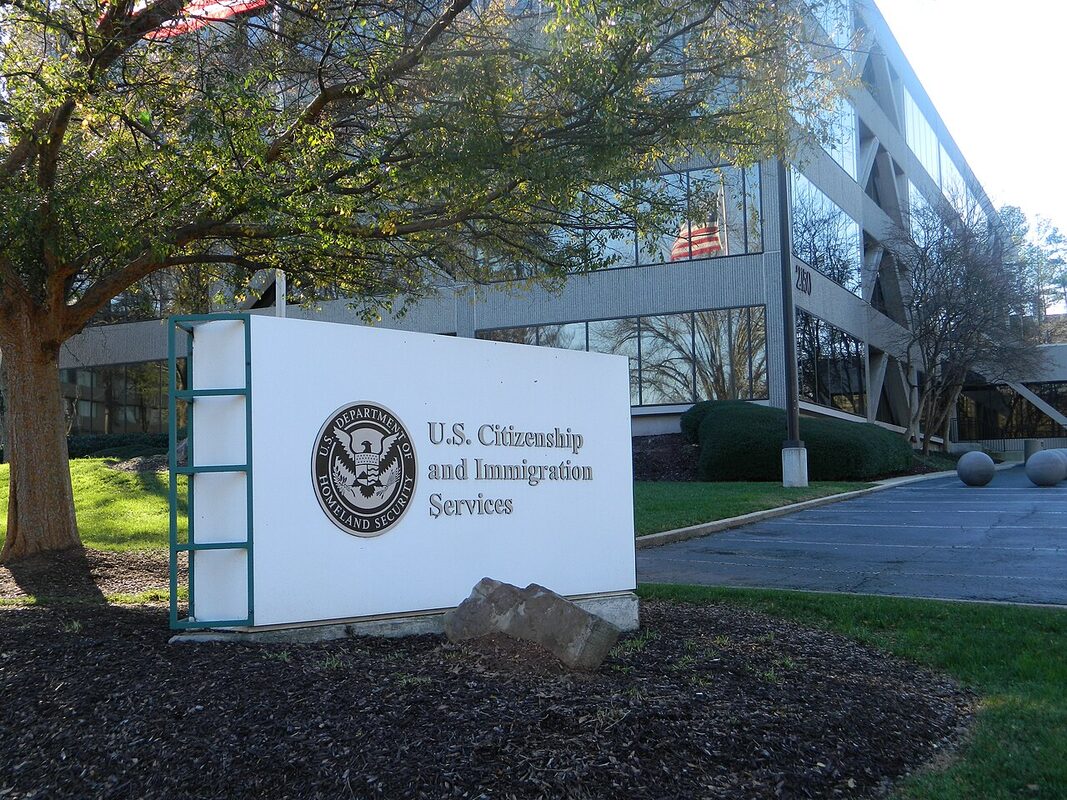
Octo Metric, LLC has lost its bid to hold on to U.S. Citizenship and Immigration Services' PLANXS II IT support work, after the Government Accountability Office rejected the incumbent's protest of a task order issued to AEX Digital, LLC. The decision, B-424623, was issued Oct. 8, 2026, and released publicly after protective-order review. It leaves AEX, of Bethesda, Md., in place on a single fixed-price task order at an evaluated price of $88,090,259, more than $12.5 million below the incumbent's evaluated price of $100,598,462.
The case turned on a hands-on code challenge, the most important evaluation factor in the competition. USCIS concluded that Octo, based in Atlanta, fell short in three areas during that exercise, and GAO found each of the agency's judgments reasonable and consistent with the solicitation. "We deny the protest," the decision states.
How USCIS Structured the PLANXS II Competition
USCIS, a component of the Department of Homeland Security, competed the requirement under request for quotations 70SBUR26Q00000052, issued March 16, 2026. The agency set the work aside entirely for small businesses, limited it to vendors holding GSA multiple award schedule 54151S contracts, and ran the procurement under FAR subpart 8.4, the rules for ordering from Federal Supply Schedule contracts. That framework gives agencies a streamlined path to a single task order, and GAO reviews such evaluations to ensure they are reasonable and consistent with the solicitation's terms rather than reweighing them.
Six vendors submitted quotations on March 31. The solicitation called for confidence ratings, with the agency making assessments of high confidence, some confidence, or low confidence regarding the vendors' understanding of the requirements, proposed approach and potential for successfully performing the task order. The RFQ listed two non-price factors in descending order of importance, code challenge first and corporate experience second, and weighed them against price in a best-value tradeoff.
The two finalists split the non-price factors. AEX earned high confidence on the code challenge and some confidence on corporate experience. Octo, the incumbent, received the reverse: some confidence on the code challenge and high confidence on corporate experience. USCIS judged AEX the highest-technically-rated and lowest-priced quotation, and therefore the best value to the government. The agency issued the task order to AEX on June 22, 2026.
Three Code Challenge Weaknesses That Sank the Incumbent
The code challenge had two parts: a take-home exercise and a live demonstration in which each vendor implemented the same new requirements during a three-hour window. Octo's protest attacked each of the three weaknesses USCIS assigned to its performance.
The first was that Octo did not deploy all of the new requirements to a production environment. According to GAO, Octo itself acknowledged during the demonstration that it had not deployed anything to production. Octo argued the failure was beyond its control, blaming a Terraform software update and a related Databricks update. GAO sided with the agency: the solicitation required Databricks but not Terraform, so Octo's choice to use Terraform made it responsible for staying apprised of changes affecting its solution. The agency also noted that Octo spent more than two hours of the three-hour window on the issue, and GAO found no basis to question the agency's view that Octo's inability to resolve it in a timely manner justified decreased confidence.
The second weakness concerned program management and methodology. USCIS evaluators found Octo did not demonstrate strong program management practices or a sufficient methodology, and the firm disputed that finding, pointing to its experience under the incumbent task order. The agency responded that the solicitation did not provide for evaluating incumbency. GAO reviewed the record, including transcripts of the challenge, and found that Octo's team vacillated between saying everything had been deployed and acknowledging it had not. GAO concluded that "we find no basis to question the agency's evaluation with regard to Octo's program management and methodology."
The third weakness was that Octo's solution lacked practical, cost-effective platform methods because its cost tracking dashboard showed high operational costs. The agency said Octo chose to run its pipeline continuously. GAO noted that Octo did not dispute that its approach would carry higher infrastructure costs, and that the solicitation directed vendors to incorporate cost-effective platform methods and techniques. In GAO's view, Octo's complaint reflected disagreement with the agency's judgment.
Across all three points, GAO applied its standard rule for evaluation disputes: a protester's disagreement, by itself, is "insufficient to establish that an agency acted unreasonably."
Why the $12.5 Million Price Gap Closed the Door on a Tradeoff Challenge
Octo also challenged USCIS's best-value decision. But that argument rested on its evaluation challenges. In a footnote, GAO explained that because the allegation was based on challenges it had rejected, it did not provide an independent basis of protest.
The numbers left little room for a different outcome. AEX came in $12,508,203 below Octo, roughly 12 percent less than Octo's $100.6 million price, while also holding the higher rating on the most important factor. When a single vendor is both the top-rated and the cheapest, a protester has to knock out the technical ratings themselves to change the result. Octo could not do that.
No USCIS or AEX statement on the decision was found. The decision does not describe a transition schedule for the PLANXS II work.
What It Means for Contractors
The Octo Metric decision is a reminder that live technical demonstrations can carry real weight in federal IT buys, and that incumbency offers little protection when the solicitation does not evaluate it. USCIS made the code challenge its most important factor, and the outcome of a single exercise helped decide a task order priced at roughly $88 million.
Several practical lessons follow for firms competing in similar procurements:
- Finish the deployment. An incomplete production deployment drew a weakness, and a third-party update was no defense. Vendors should scope demonstrations to what they can reliably push to production in the time allowed, and own any tooling choices they make, since GAO held Octo responsible for tracking changes to a tool it chose.
- Answer evaluators directly. GAO relied on challenge transcripts to support the agency's program-management concerns. Equivocal answers become part of the record and can be used to defend a weakness at GAO.
- Price the operating model, not just the labor. When a solicitation asks for cost-effective methods, evaluators can count high infrastructure and operating costs against a technical solution, separate from the quoted price.
- Weigh protest odds carefully. A tradeoff challenge does not succeed on its own when it depends on evaluation challenges that fail. Protesters need a concrete flaw in the underlying evaluation, not disagreement with the ratings.
For small businesses chasing schedule-based task orders at DHS and elsewhere, the case shows how quickly a performance demonstration can decide a recompete. Incumbents should prepare for code challenges as rigorously as new entrants do, because evaluators score what they see during the exercise.
