
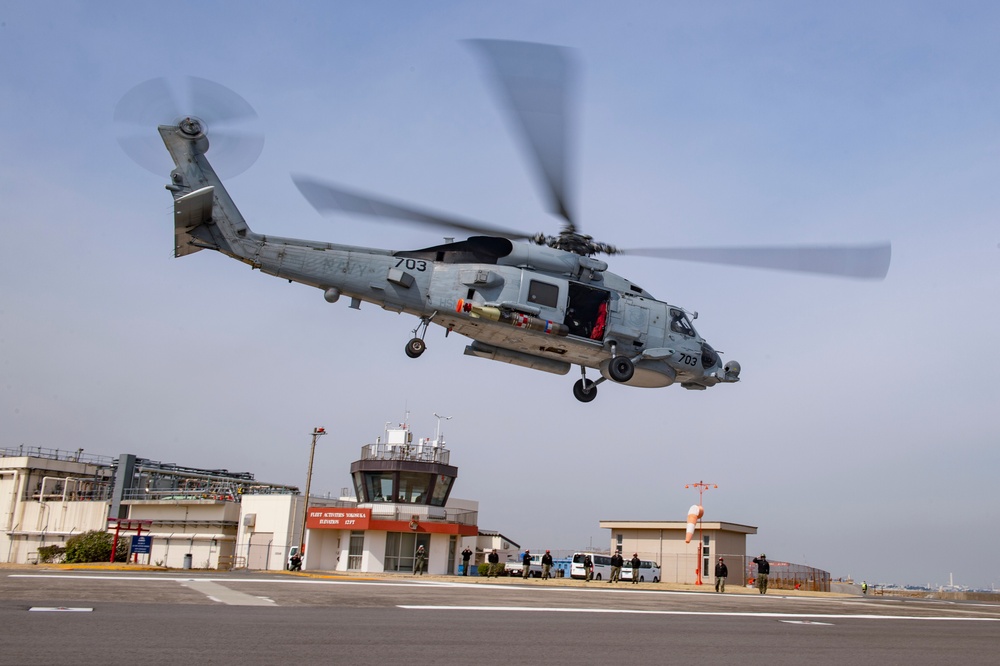
Naval Sea Systems Command awarded General Dynamics Mission Systems Inc. a $116,636,577 contract modification on June 17, 2026, exercising options for production of MK 54 MOD 1 lightweight torpedo sonar assembly kits, fleet exercise section instrumentation subsystems, test equipment, spares, and engineering and hardware support for the MK 54 Lightweight Torpedo Program. The award, announced in the Department of Defense daily contracts listing for June 17, 2026, keeps one of the Navy's most critical anti-submarine warfare production lines running with a performance completion date of April 2029.
Award Details
The modification covers continued production and sustainment work distributed across six facilities. Canonsburg, Pennsylvania leads with 62 percent of the contracted labor, followed by Salt Lake City, Utah at 20 percent, Andover, Massachusetts at 14 percent, Bloomington, Indiana at 2 percent, Manassas, Virginia at 1 percent, and Port Orchard, Washington at 1 percent. Naval Sea Systems Command in Washington, D.C., serves as the contracting activity for the program.
The contract structure is a hybrid arrangement combining fixed-price-incentive, firm-fixed-price, cost-plus-fixed-fee, and cost-only elements — a vehicle type used for defense production programs where different components of the work carry different cost risk profiles. The fixed-price-incentive portions are well-suited to hardware production where tooling, materials, and labor rates are established across prior lots, while cost-type elements address areas of remaining technical or schedule uncertainty. Under fixed-price-incentive components, the final price is determined by a formula comparing actual costs against a negotiated target, with the contractor absorbing a defined share of overruns up to a ceiling price. This structure allows the Navy to manage cost exposure across a complex, multi-site production effort.
The modification exercises options built into an existing base contract (N00024-25-C-6401), a standard approach for multi-year defense production programs that allows the Navy to maintain predictable deliveries while preserving annual budget flexibility. Option exercises avoid the timeline and administrative overhead of a new competitive procurement when the requirement is continuous and technical specifications remain stable between successive production lots. The Navy's ability to lock in pricing across several years of hardware through pre-negotiated options is a key cost management tool for mature weapons systems.
Background
The MK 54 Lightweight Torpedo is the U.S. Navy's primary air-launched and surface-launched anti-submarine warfare weapon. Introduced in the early 2000s as a successor to older lightweight torpedo variants, it features a sonar assembly kit central to the weapon's effectiveness: the sonar head acquires and tracks submarines at range during the terminal attack phase, and upgrades in the MOD 1 sonar assembly improve performance against quiet diesel-electric submarines operating in shallow, acoustically complex littoral environments.
The Navy operates the MK 54 from a broad platform base including maritime patrol aircraft, helicopters, and surface combatants, making production continuity a logistics priority across multiple strike groups and patrol squadrons. Allied navies also operate the MK 54 through foreign military sales arrangements, and several of the facilities named in this modification have previously supported both domestic production runs and allied FMS deliveries.
General Dynamics Mission Systems serves as the MK 54 integration contractor, managing the geographically distributed supplier network across the six sites named in the award. The Canonsburg, Pennsylvania facility holds the largest share of work at 62 percent. The modification's funding draws from multiple fiscal years: FY2025 Navy weapons procurement funds cover 93 percent of the value ($94,024,718), FY2024 funds cover 5 percent ($4,654,328), and FY2026 funds cover 2 percent ($2,098,385), reflecting the multi-year nature of the production options being exercised.
The fleet exercise section instrumentation subsystem included in the modification scope provides the data-recording and scoring capability used during live-fire torpedo exercises, where training weapons are tracked and recovered rather than detonating on contact. Maintaining adequate exercise instrumentation hardware is operationally necessary for anti-submarine warfare readiness, particularly as the Navy increases exercise tempo in response to growing underwater threats across both the Pacific and Atlantic fleet areas.
The MK 54 program has received sustained investment as part of the Navy's broader undersea warfare modernization effort. Shallow-water performance of lightweight torpedoes is a recognized priority, and the MOD 1 sonar assembly addresses this requirement through updated signal processing and transducer designs intended to maintain target discrimination in reverberant, shallow-water environments where older guidance systems lose effectiveness.
What It Means for Contractors
- The options-exercise approach confirms the Navy intends continuous production through at least April 2029, providing multi-year visibility for General Dynamics and its subcontractors at all six named facilities.
- The geographic distribution of work across Canonsburg, Salt Lake City, Andover, Bloomington, Manassas, and Port Orchard reflects a deliberate supplier resilience strategy that limits new competitor entry points but creates durable subcontract relationships for established performers already integrated into the production network.
- The hybrid contract structure — combining fixed-price-incentive, firm-fixed-price, cost-plus-fixed-fee, and cost-only elements — signals that the government views core production costs as mature while retaining cost-type coverage for areas of remaining risk. Cost control and schedule predictability are the primary performance differentiators at this stage of the program.
- The fleet exercise instrumentation subsystem is a frequently overlooked segment of torpedo program contracts. Companies with expertise in data-recording hardware, telemetry systems, or underwater instrumentation for training applications should monitor the Naval Sea Systems Command program office for future competition when the current vehicle eventually recompetes.
- Allied navies using the MK 54 through foreign military sales create potential follow-on demand beyond the domestic modification. Suppliers at the named facilities should track FMS case activity for additional subcontract opportunities tied to allied procurement cycles.
- Small business access is limited but defined. The six named performance locations include facilities in Utah, Virginia, Indiana, and Washington State, each representing an established industrial cluster. Small businesses seeking entry should focus on component-level subcontracting opportunities in acoustic transducer materials, precision machined housings, and electronics integration — the areas most likely to be sourced from the regional supplier base surrounding each facility rather than manufactured in-house by General Dynamics. Vendors should register their capabilities in the relevant NAICS codes on SAM.gov before the next options period opens.
