
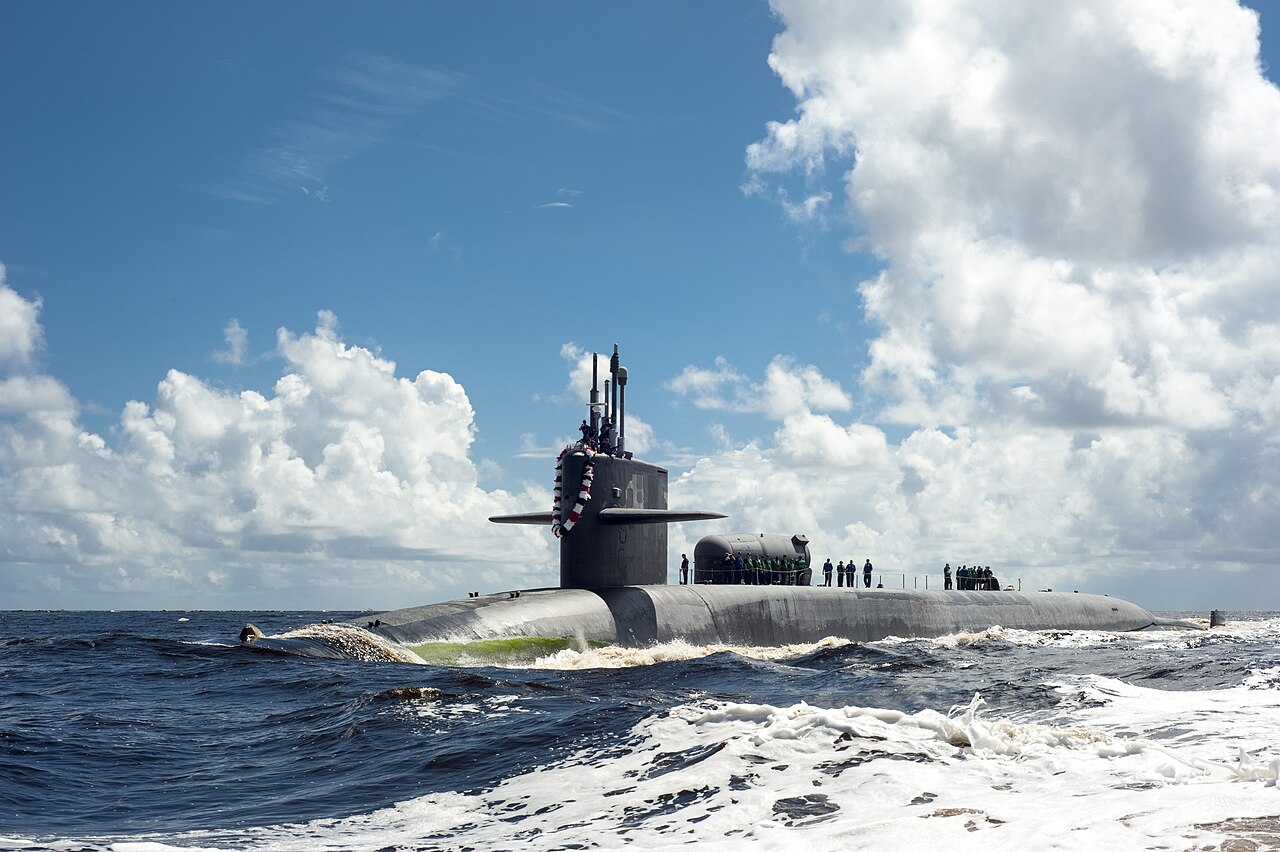
The Navy has handed Fairbanks Morse Defense another four years of work keeping the emergency power plants on six aging nuclear submarines running, betting that the original equipment maker can turn overhauls around faster than the fleet's shrinking hull count allows it to wait. FMD, a portfolio company of Arcline Investment Management, received a $99.09 million Naval Sea Systems Command contract to provide repair, parts and labor through 2030 for Emergency Diesel Generator (EDG) overhauls, Ocean News & Technology reported. The award is a follow-on, sole-source contract, and it supports multiple EDG overhauls per year across the period of performance.
The work sits inside a larger Navy plan. According to Ocean News, the contract is part of a mitigation strategy the service developed to extend the service life of Ohio- and Los Angeles-class submarines by up to 14 years by working with OEMs to overhaul critical systems. That puts a relatively small dollar figure at the center of a much bigger question: how long the Navy can keep its oldest attack and ballistic missile boats in service while new construction catches up.
What the $99 Million NAVSEA Award Covers
The contract is narrowly scoped. FMD will supply repair work, parts and labor for EDG overhauls on six nuclear submarines through 2030. Defense Daily described the award as a $99 million four-year contract and reported that "The company and Navy did not specify which submarines will get the EDG overhauls."
Ocean News frames the purpose in plain terms: the contract is meant "to ensure the availability of US attack submarines (SSNs) and ballistic missile submarines (SSBNs) into the 2030s by enacting critical life extension services." Emergency diesel generators provide backup power aboard nuclear-powered boats, and keeping them in working order is a prerequisite for keeping a hull in the operational rotation.
This is not FMD's first pass at the job. Under a previous NAVSEA contract, the company completed EDG overhauls on two Ohio-class submarines and one Los Angeles-class submarine, according to Ocean News. The new award scales that effort to six boats and makes the work recurring through the end of the decade.
Reported values differ slightly: Ocean News gives the value as $99.09 million and Defense Daily as $99 million, and GovConFeed uses the $99.09 million figure here. No NAVSEA or Department of War contract announcement was available to confirm the exact value at publication.
Why the Navy Is Stretching Ohio- and Los Angeles-Class Boats
The timing reflects a fleet-size problem. Ocean News reports that fulfilling the contract addresses "the geopolitical risk of a post-2029 submarine deficit resulting from scheduled decommissionings and delays in new construction of Columbia- and Virginia-class vessels." In other words, the Navy is planning around a gap: older boats are scheduled to leave service before their replacements arrive in sufficient numbers.
Extending service life by as much as 14 years requires keeping every critical system on those hulls supportable. Going back to the OEM for components such as the EDGs is the approach the Navy describes for doing that, by working with original equipment manufacturers to overhaul critical systems.
Keith Haasl, FMD's President of Services and Technology, tied the contract to a broader competition under the sea. "This contract is part of the ongoing investment in undersea power projection that we have seen not only from the United States and our friends in Europe, Australia and Canada, but also from Russia and China, who are actively growing and modernizing their submarine fleets," Haasl said.
Can Robotic Welding and Pit Stop Shrink Depot Periods?
The more interesting part of the award for industry is how FMD says it will execute. The company plans to use its robotic welding platform for improved precision and speed, and Ocean News reports that robotic welding "has proven to reduce manual welding times by up to two-thirds."
FMD is also applying what it calls the Pit Stop methodology to shrink depot maintenance periods from months to weeks. Co-developed with the Navy and inspired by NASCAR and Formula One, Pit Stop removes "open and inspect" bottlenecks by pre-staging the OEM parts needed for routine overhauls, according to the Ocean News account, creating a continuous cycle of component refurbishment rather than waiting to discover what a system needs after it has been torn down.
"Because the timely delivery of critical components dictates fleet availability, we are moving quickly to scale our capabilities," Haasl said. He added that the company's work with the Navy "actively demonstrates principles of rapid submarine maintenance and overhaul that we can share with allies, so we can ensure operationally ready submarines faster."
Ocean News reports that FMD's use of robotics, automation and Pit Stop offers a model that U.S. and allied navies could apply more broadly to reduce depot-level maintenance delays and improve parts availability. FMD says it anticipates future opportunities to support the Navy's submarine service life extension programs through the next decade.
What It Means for Contractors
OEM sole-source paths are widening in sustainment. This award is a follow-on, sole-source contract that grew from three completed overhauls to a six-boat, multi-year scope. For companies that built the original equipment on legacy platforms, the Navy's stated strategy of working with OEMs to overhaul critical systems suggests that proprietary design knowledge and parts access remain a strong basis for non-competitive sustainment work.
Speed is now a selling point, not just price. FMD's pitch centers on cutting depot periods from months to weeks and reducing welding time. Vendors pursuing ship and submarine maintenance work may find turnaround time and parts pre-staging matter alongside cost, and should be ready to document measurable throughput gains.
Subtier suppliers should watch the parts pipeline. Pre-staging OEM parts for routine overhauls could mean steadier, more forecastable demand for components and refurbishment services through 2030. Machine shops, welding specialists and parts suppliers in the submarine industrial base may find openings as FMD scales capacity; Haasl said the company is "moving quickly to scale our capabilities."
Life extension is a multi-year market. With the Navy planning to keep Ohio- and Los Angeles-class boats in service for up to 14 additional years, sustainment of their critical systems is likely to generate recurring contract actions. Firms with capabilities in diesel power systems, electrical backup systems and depot-level repair should track NAVSEA solicitations tied to submarine service life extension.
Allied demand is part of the story. Haasl's comments point to allied navies as potential adopters of the same maintenance approach. Contractors with foreign military sales experience or allied partnerships may find the methods proven on this contract marketable beyond the U.S. fleet.
