
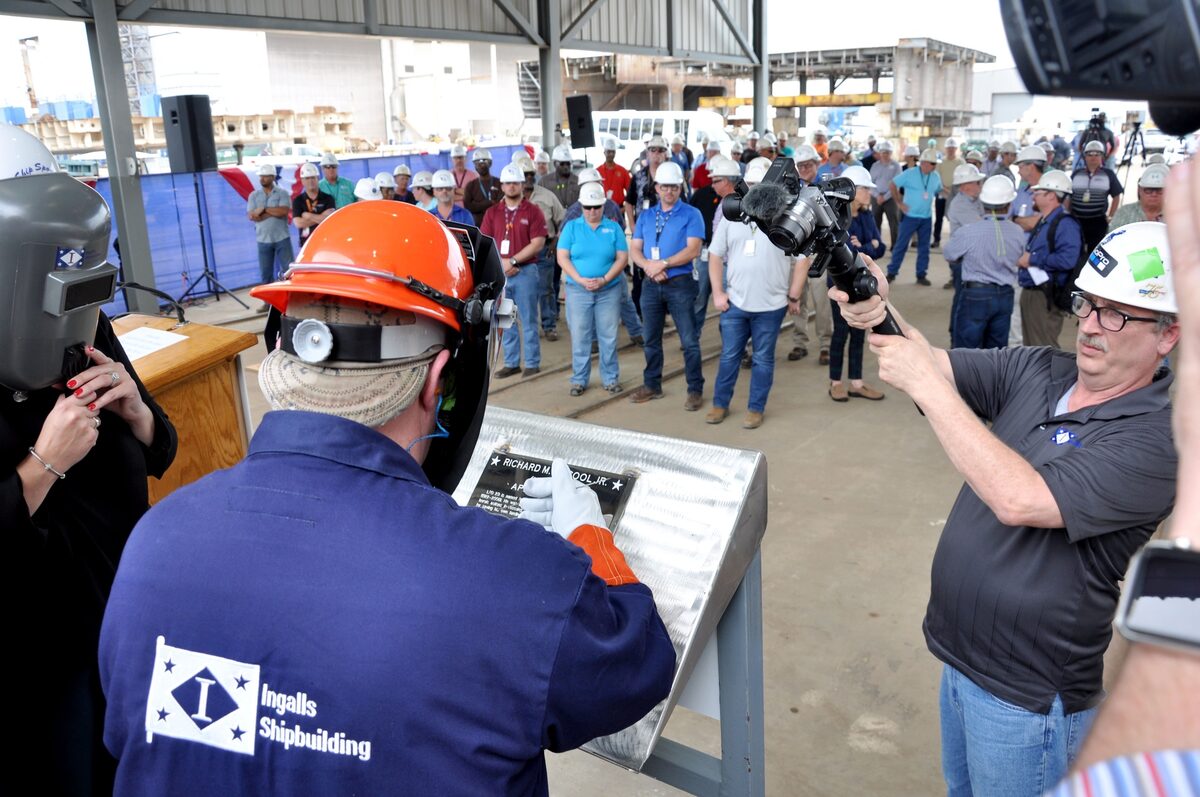
The House has attached the most sweeping rewrite of federal maritime law in a generation to its annual defense bill, teeing up a fight that will define shipyard, sealift, and Coast Guard contracting for the next two decades. On July 22, 2026, the House passed the Fiscal Year 2027 National Defense Authorization Act (H.R. 8800) by a narrow 216-212 vote. In a statement released the same day, House Armed Services Committee Chairman Mike Rogers (R-AL) said the bill "revitalizes America's defense industrial base," adding that "Peace Through Strength begins long before the battlefield—it is forged in America's factories, depots, and shipyards." Buried in the floor amendments is a maritime package that law firm K&L Gates, writing in the National Law Review, calls "the most significant overhaul of federal maritime law in decades."
Background
The push reflects bipartisan alarm over a shrinking U.S.-flag commercial fleet and a shipbuilding base that has lost ground to foreign yards. Seapower and Projection Forces Subcommittee Chairman Trent Kelly (R-MS) has framed the effort as an urgent bid to "turn the tide on shipbuilding," pointing to a maritime industrial base that struggles to build and repair vessels at the pace the Navy and commercial carriers require. Rather than move standalone legislation through a crowded calendar, House members folded two major maritime bills into the must-pass NDAA during floor consideration, a vehicle that historically clears both chambers every year. Pairing long-stalled maritime reform with the defense authorization gives it a legislative engine that rarely sputters.
Two amendments carry the weight. The first, offered by Kelly, incorporates the SHIPS for America Act of 2026. The second, from Rep. Mike Ezell (R-MS), rebuilds the federal government's principal maritime lending program and layers domestic-sourcing mandates onto Coast Guard buying. Together they reach from the Executive Office of the President down to individual fishing-vessel loans, and they wire Buy America conditions into new grant money aimed squarely at the industrial base.
Key Details
The Kelly amendment's SHIPS for America Act establishes a maritime security advisor inside the Executive Office of the President to coordinate policy across agencies, signaling an intent to elevate maritime affairs to the White House level. It creates a $20 billion Maritime Security Trust Fund to underwrite fleet and infrastructure investment, and it raises the government cargo-preference requirement from 50% to 100%, meaning all eligible government-impelled cargo would move on U.S.-flag vessels. The amendment stands up a new "Shipbuilding Financial Incentives" federal grant program that carries Buy America restrictions, adds more than 20 sections devoted to maritime workforce development, and rewrites the 1851 Limitation of Liability Act in ways that affect foreign vessel owners operating in U.S. waters.
The Ezell amendment overhauls the Federal Ship Financing Program, known as Title XI, so that its loan guarantees cover vessel retrofitting rather than new construction alone, and it expands eligibility for fishing-vessel financing. It raises funding for the U.S. Center for Maritime Innovation from $15 million to $20 million and establishes a Coast Guard Corrosion Control Assistance Team pilot. Critically for suppliers, it imposes domestic-sourcing requirements on Coast Guard procurement. The amendment also creates a new commercial cargo-preference regime for containerized and roll-on/roll-off cargo, beginning at 3% participation and escalating through 2042, and it introduces Maritime Special Security Agreements governing foreign-controlled vessels.
The 216-212 margin underscores how narrow the House majority's hold on the package is. The maritime amendments now travel with the broader NDAA into Senate consideration, where the two chambers must reconcile their versions. Conference negotiations are expected in September 2026, and the maritime provisions are not final law until a reconciled bill passes both chambers and is signed.
What It Means for Contractors
For the maritime industrial base, the package converts long-discussed policy ambitions into concrete acquisition mechanics. The new Shipbuilding Financial Incentives grant program arrives with Buy America strings attached, so shipyards and their suppliers positioning for that money will need to document domestic content and structure supply chains accordingly. Firms that have leaned on foreign-sourced components should begin mapping where those inputs sit relative to Buy America thresholds now, because grant eligibility will hinge on it. Because program criteria will follow the trust fund's rollout, early engagement with the Maritime Administration could shape how those rules get written.
The jump to 100% cargo preference reshapes the sealift and logistics market. Carriers operating U.S.-flag tonnage stand to capture government-impelled cargo that previously could move on foreign bottoms, while shippers and freight forwarders that route defense and civilian-agency cargo will need to reconfigure around an all-domestic requirement. The new commercial-preference regime for containerized and roll-on/roll-off cargo, phasing up from 3% through 2042, signals a long runway of demand growth for U.S.-flag operators and a planning horizon that rewards fleet investment made now.
Coast Guard vendors face the most immediate procurement change. Domestic-sourcing mandates on Coast Guard buying will flow into solicitations and contract clauses, raising compliance stakes for anyone supplying hulls, systems, or components. The Corrosion Control Assistance Team pilot opens a discrete services opportunity, and the expanded Title XI program, now covering retrofitting and a wider fishing-vessel base, broadens the pool of projects that can reach federal loan guarantees. Innovation-focused firms should note the U.S. Center for Maritime Innovation's larger $20 million footprint as a channel for technology development dollars.
None of this is settled. The provisions rode a two-vote House margin and must survive Senate conference, where cargo-preference economics and the Limitation of Liability rewrite could draw amendments. Contractors should treat the current text as the House's opening position, track the September conference closely, and hold implementation planning to the reconciled language. The direction of travel, however, is unambiguous: Congress intends to steer more federal money, and more domestic-content conditions, into American shipyards, U.S.-flag carriers, and the Coast Guard supply base.
