
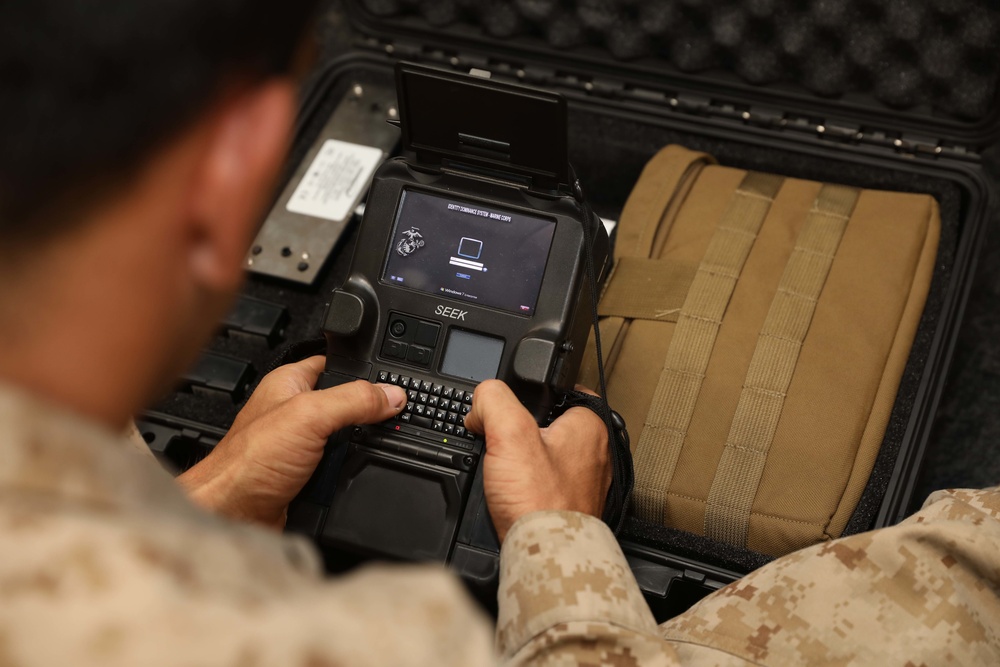
Immigration and Customs Enforcement awarded Massachusetts-based BI2 Technologies a $25,148,150 sole-source contract for 1,570 handheld iris scanning units and associated support services, according to contract award data on SAM.gov. The award was made without competition, with ICE citing BI2 Technologies as the only source capable of providing handheld iris scanning equipment meeting the agency's operational requirements for portability, durability, identification speed, and integration with ICE's existing biometric identity management infrastructure. The contract covers hardware acquisition, software licenses, installation, training, and multi-year maintenance for the scanner fleet to be deployed across ICE field offices and detention facilities nationwide.
BI2 Technologies specializes in biometric identification systems with a particular focus on iris recognition technology. The company has built a substantial installed base in law enforcement and corrections markets, providing iris scanners used by state and local agencies to identify detained individuals and verify identity in criminal justice contexts. BI2's technology allows rapid iris capture from a handheld device at close range, generating a biometric template that can be matched against enrolled databases to verify or establish identity in seconds. For ICE, iris recognition offers advantages over fingerprint-based identification in field settings where fingerprint quality may be degraded by the work or environmental conditions encountered by the detained population.
Sole-Source Justification and FAR Requirements
Federal acquisition regulations require competition for government contracts as a general rule, but provide exceptions that allow sole-source awards under specific circumstances. The most commonly used exception for technology sole-source awards is FAR 6.302-1, which permits non-competitive awards when only one source is available for the supplies or services required. To use this authority, the contracting officer must execute a written justification for other than full and open competition explaining why competition is not available, approved at the required level based on contract value.
ICE's justification for the BI2 award under FAR 6.302-1 rests on the assertion that BI2 Technologies is the only source for handheld iris scanning equipment meeting ICE's specific operational requirements. This type of justification requires the contracting officer to document the specific technical requirements driving the sole-source determination, explain why competing products do not meet those requirements, and certify that the requirements are legitimate operational needs rather than specifications drafted to favor a specific vendor. At a $25 million contract value, the justification requires approval at a senior contracting official level within ICE or DHS.
Sole-source justifications involving claimed unique technical capability are among the most scrutinized by the GAO in bid protest proceedings. Potential competitors who believe they could offer compliant products often challenge the sole-source determination, arguing that stated requirements are either not genuine operational needs or that their products do in fact meet those requirements. BI2's established position in ICE's biometric infrastructure — including existing database integration, agency training, and familiarity with the product — may contribute to a genuine sole-source case beyond mere hardware specifications. Switching costs and integration complexity can legitimately factor into sole-source determinations when an agency has made substantial investment in a specific biometric ecosystem architecture.
Iris Recognition in Immigration Enforcement
Iris recognition has gained adoption in immigration and border security contexts globally, driven by its resistance to deliberate fingerprint alteration that has been attempted in some cases to defeat fingerprint-based biometric systems. Unlike fingerprints, which can be chemically altered or physically abraded, iris patterns are internal to the eye and cannot be practically altered without medical procedures with visible external effects. This characteristic makes iris recognition attractive for law enforcement applications where deliberate biometric evasion is a documented concern.
ICE's 1,570-unit procurement suggests the agency is integrating iris recognition into standard field operations rather than limiting it to specialized units. Field-deployable iris scanners allow agents to check detained individuals against ICE's biometric databases without transporting them to facilities with fixed equipment, expanding contexts in which iris-based verification can be used. Integration with ICE's broader identity management infrastructure means captures from field units populate the same databases queried by facility-based systems, creating a more comprehensive biometric record for individuals who interact with the agency across multiple encounters over time.
The scale of the purchase — 1,570 units at approximately $16,000 per unit for the hardware component — indicates a substantial fleet deployment rather than a pilot program. This scale of investment reflects ICE's assessment that iris recognition delivers sufficient operational value to justify wide deployment, and suggests the agency views biometric verification as a standard operational tool rather than a specialized capability reserved for specific program areas. The multi-year maintenance component of the contract reflects the agency's commitment to sustained operational capability rather than a one-time purchase without lifecycle support.
What It Means for Contractors
The ICE BI2 award illustrates several practical realities about sole-source biometric technology contracting in the law enforcement and immigration enforcement market. First, companies that invest early in building integrated biometric ecosystems with government agencies — database connections, software integration, certified enrollment processes, and trained agency workforces — build competitive advantages that extend well beyond the initial product sale. Once an agency's biometric infrastructure is built on a particular technology platform, the switching costs and integration risks create genuine barriers to competition supporting future sole-source awards. This is a deliberate market positioning strategy, not merely good fortune.
Second, the biometric technology market for federal law enforcement and immigration enforcement is a substantial and growing market segment as agencies invest in biometric verification capabilities across wider ranges of operational contexts. Firms with proven biometric technologies — iris recognition, facial recognition, fingerprint systems — should evaluate DHS and law enforcement programs as target markets, recognizing that early adoption wins tend to generate multi-year revenue streams through follow-on maintenance, expansion, and upgrade contracts. Building a federal installed base requires sustained investment in compliance, integration, and customer support, but the resulting revenue visibility is substantially more stable than pure competitive market dynamics.
Third, the sole-source determination process for technology contracts creates both risk and opportunity for market participants on both sides. Incumbent sole-source vendors benefit from resulting contracts but must continuously maintain technical superiority to defend against competitive challenges. A competitor who can demonstrate equivalent capability and successfully protest a sole-source determination may succeed in opening competition in future procurements, so sole-source technology vendors must never become complacent about their technical position or their customer relationships. Continuous innovation, responsive support, and proactive engagement with agency requirements are the sustainable practices that protect a sole-source market position over time.
