
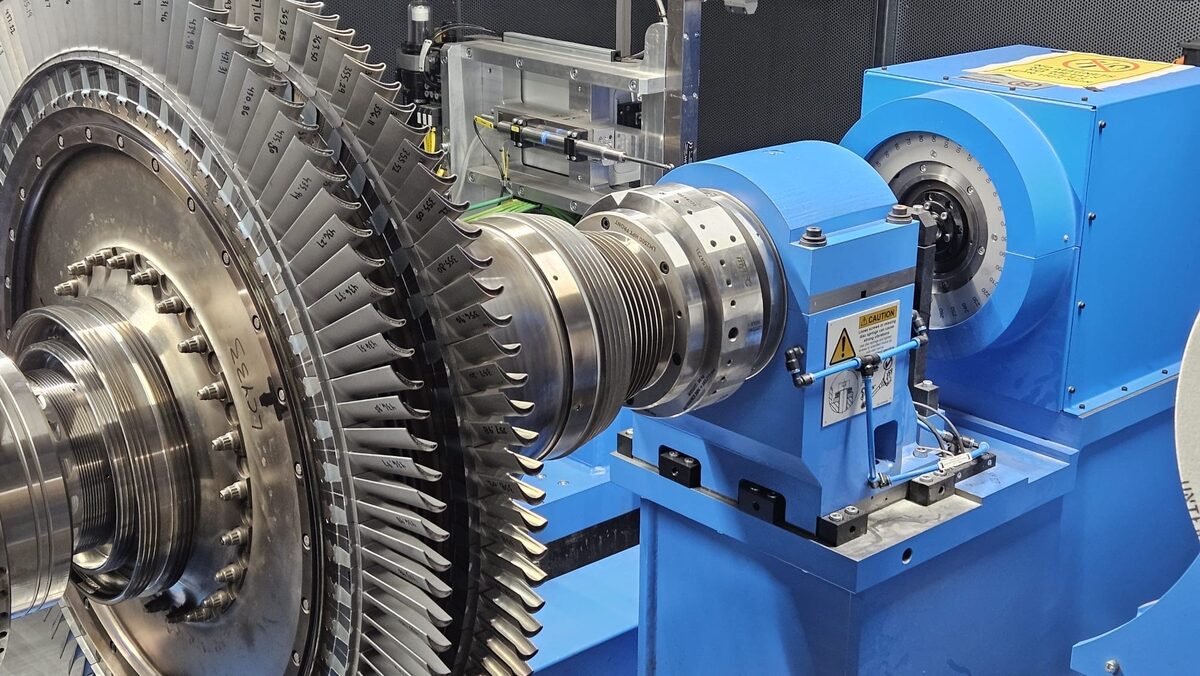
The Navy has awarded a combined $370,226,037 firm-fixed-price, indefinite-delivery/indefinite-quantity contract to three international turbine-repair specialists for the commercial depot-level overhaul of LM2500 and LM2500+ marine gas turbine engines that power much of the Navy and Coast Guard surface fleet.
Background
The LM2500 is the workhorse propulsion engine for Navy destroyers, cruisers, and littoral combat ships, as well as Coast Guard national security cutters. Derived from a commercial jet engine design, the LM2500 and its higher-output LM2500+ variant have powered the bulk of the surface combatant fleet for decades, which means the Navy cannot let its overhaul pipeline lapse without risking ship availability. Keeping the fleet's turbines running requires a steady cycle of depot-level maintenance, work that falls outside the Navy's own public shipyards and is instead contracted out to specialized commercial turbine repair houses equipped with the test cells, borescope tooling, and technical data needed to service the engine.
The Naval Surface Warfare Center Philadelphia Division, which manages surface ship machinery programs for the fleet, issued this award on July 13, 2026, covering engines belonging to the Navy, Coast Guard, Military Sealift Command, and Foreign Military customers. Bundling all four customer types into one vehicle lets the Navy consolidate overhaul demand across the services and allied partners rather than running separate contracting actions for each.
Rather than picking a single overhaul provider, the Navy split the award three ways among Canadian Commercial Corp./TransCanada Turbines of Airdrie, Alberta; MTU Maintenance Berlin-Brandenburg of Ludwigsfelde, Germany; and TEI-Tusas Engine Industries, Inc. of Eskisehir, Turkey. TransCanada Turbines operates a depot that tests and overhauls GE LM2500 gas turbines and maintains worldwide field service offices for the engine line, underscoring the kind of specialized commercial infrastructure the Navy is tapping for this work.
Key Details
The IDIQ carries a combined ceiling of $370,226,037, structured as a five-year vehicle running through an expected completion date of July 2031. Work is split evenly across the three contractors, with 33 percent performed in Ludwigsfelde, Germany; 33 percent in Airdrie, Alberta, Canada; and 33 percent in Eskisehir, Turkey.
As is typical for IDIQ vehicles, the initial obligation is minimal: each awardee receives a $500 minimum-guarantee payment at contract award, and Fiscal 2026 Navy operations and maintenance funding of $1,500 total is obligated up front. The bulk of the contract's value will flow later, as individual task orders are issued and funded over the life of the vehicle.
The Navy did not run a competitive solicitation for this work. The contract was justified under a Class Limited Sources Justification and Approval for use of other-than-full-and-open competition, citing authority under 10 U.S. Code 3204(a)(1). That statute permits sole- or limited-source awards when only a specific set of sources can meet the government's needs — in this case reflecting the specialized nature of LM2500 overhaul capability that resides with a narrow set of established providers.
The Naval Surface Warfare Center Philadelphia Division in Philadelphia, Pennsylvania is the contracting activity overseeing the award. As with most IDIQ vehicles, the $370,226,037 figure represents a ceiling the Navy can draw against over the life of the contract rather than a guaranteed spend; actual overhaul volume will depend on how many engines the fleet rotates through depot maintenance and how task orders are distributed among the three awardees as work is funded over the life of the vehicle.
What It Means for Contractors
The award underscores how dependent the Navy's surface fleet sustainment pipeline is on a small number of specialized international turbine overhaul houses rather than domestic small-business competitors. For companies eyeing entry into Navy gas turbine MRO work, the limited-sources justification signals that the government considers TransCanada Turbines, MTU Maintenance, and TEI-Tusas to be the qualified pool for this class of work today — a high bar for new entrants absent a demonstrated LM2500 overhaul track record and facility qualifications matching NAVSEA standards.
For established players in the marine gas turbine MRO space, the structure is worth studying: three firms sharing one IDIQ with equal 33 percent work splits suggests the Navy is deliberately diversifying its overhaul base across allied nations rather than consolidating with a single provider. That approach reduces single-point-of-failure risk in sustaining a fleet-critical engine but also means task order competition, when it occurs, will likely stay confined to these three incumbents for the five-year period of performance.
Companies that supply LM2500 parts, tooling, or test equipment should note the geographic distribution of the work — Germany, Canada, and Turkey — when planning subcontracting or logistics support strategies, since depot throughput will be split across three separate overseas facilities rather than concentrated domestically.
The minimal up-front obligation is also a reminder that IDIQ ceiling values do not equal near-term cash flow. Contractors tracking this vehicle for market-sizing purposes should watch for individual task order announcements over the coming years rather than treating the $370 million figure as committed spending in Fiscal 2026.
Finally, the award illustrates a broader dynamic worth watching: sensitive Navy and Coast Guard engine overhaul work routed simultaneously to firms based in three different NATO countries rather than to a domestic depot. That pattern reflects how consolidated the commercial LM2500 overhaul market has become — a handful of shops worldwide hold the engine-specific tooling, technical data packages, and workforce certifications required to service the type, and the Navy's Class Justification and Approval effectively acknowledges that no broader domestic competitive field currently exists for this scope. Companies bidding on future limited-sources justifications for engine sustainment work should expect the Navy to continue leaning on this same pool of internationally based specialists unless and until new domestic depot capacity is built out and qualified to compete on equal footing.
Firms that do hold LM2500 depot qualifications elsewhere in the world, meanwhile, have a five-year window to demonstrate performance on this vehicle before the Navy revisits the sourcing decision — a track record that could matter heavily whenever NAVSEA next opens a full and open competition for follow-on turbine sustainment work.
