
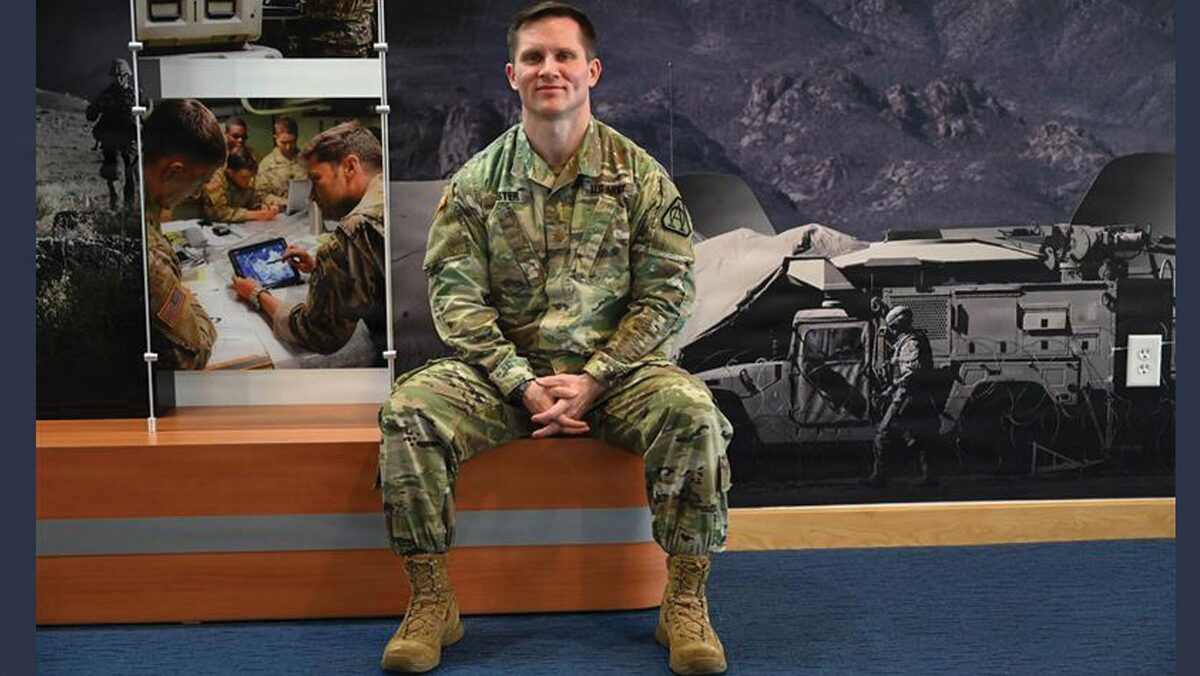
Soldiers testing the Army's newest battlefield intelligence system are about to get production hardware instead of prototypes. The Army has announced the move to production for TITAN, the Tactical Intelligence Targeting Access Node, awarding a combined $192 million to Palantir USG and Anduril Industries to build the first eight production units. Palantir, the program's lead systems integrator, received $127 million, while Anduril was awarded $65 million to handle hardware components and shelter integration.
TITAN is an expeditionary, AI-enabled ground station designed to pull targeting data from space-based, high-altitude, aerial and terrestrial sensors and fuse it into actionable intelligence for commanders through deep sensing, analysis, exploitation and dissemination. It is a core piece of the Army's push toward Multi-Domain Operations, Joint All-Domain Command and Control and Long-Range Precision Fires, giving units the ability to identify and geolocate threats faster than legacy intelligence-processing systems allow. The Army has already fielded nine TITAN prototype units to soldiers for operational testing and will keep those in the field even as production begins.
What the $192 Million Buys: Eight Systems in 18 Months
The initial production order covers eight systems split evenly between two configurations: four TITAN Advanced and four TITAN Basic variants. The Advanced variant is built for greater processing capability, while the Basic variant is optimized for mobility and rapid deployment, giving commanders a choice between raw fusion horsepower and a lighter footprint depending on the formation it supports. The Army has given the contractor team 18 months to deliver the full order, a compressed timeline that reflects the program's push to get fielded capability out of developmental testing and into soldiers' hands. A follow-on TITAN production order is already anticipated in fiscal year 2027, meaning this award is the opening installment of a multiyear buy rather than a one-time purchase.
"TITAN is a key solution that enhances the speed of target recognition and geolocation from multiple sensors," said Col. Jonathan Lipscomb, project manager for Intelligence Systems and Analytics, in the Army's announcement. The statement gets at why the program matters operationally: TITAN is not a single sensor but a data-fusion node meant to compress the time between spotting a target with any available sensor and generating a strike-quality coordinate for it. Lipscomb's fuller remarks tie that speed directly to four years of Soldier feedback behind the award, crediting TITAN with drastically reducing sensor-to-shooter timelines through automated target nominations while fusing the common intelligence picture.
Why Palantir Leads and Anduril Builds the Boxes
The award structure splits the program along each company's core strength. Palantir, as lead integrator, is responsible for the software and data-fusion architecture that makes sense of feeds from disparate sensors, and it is bringing subcontractors L3Harris Technologies, Sierra Nevada Corporation, Strategic Technology Consulting and World Wide Technology onto the team to cover additional hardware, engineering and systems-integration work. Anduril's $65 million share covers the physical side of the program: the hardware components and shelters that house the processing equipment in the field. Announcing the award, Palantir USG president and chief technology officer Akash Jain said, "We are honored by the Army's trust, grateful for a partner team that shared the same commitment, and clear-eyed about the work still ahead."
That division mirrors how the two companies have positioned themselves across other Army modernization efforts, with Palantir supplying analytics and command-and-control software and Anduril increasingly serving as a hardware and systems-integration partner on programs that used to go exclusively to traditional primes. TITAN's production award is a signal that the Army is comfortable running that same software-plus-hardware pairing at scale, not just in a prototype competition.
From Prototype OTA to a Program of Record
TITAN's path to this award ran through an Other Transaction Agreement rather than a conventional acquisition program: Palantir's earlier OTA, worth $178.4 million, funded development and delivery of the TITAN prototypes now fielded to soldiers. This new award converts that prototyping effort directly into a production contract rather than restarting the process with a fresh, multiyear competition. The nine prototypes already fielded gave the Army four years of operational data across multiple configurations and diverse operating environments before commanders committed production dollars. Moving to an initial production order of eight systems, with a second order already expected in FY2027, is the clearest evidence yet that the Army considers the prototyping phase a success and intends to scale TITAN into a program of record rather than let it wind down after demonstration.
For an Army that has struggled in the past to convert promising prototypes into fielded programs — often losing years to requirements rewrites or new competitions — a straight-line handoff from nine prototypes to a production contract with a follow-on order already anticipated is a notable departure from the norm. It also gives both Palantir and Anduril a funded pipeline into next year's budget cycle rather than a single award with no visibility beyond it.
What It Means for Contractors
The TITAN production award is a case study in how an Other Transaction Agreement can convert directly into production: field prototypes, gather performance data, and move to a production contract without a fresh competition. For companies chasing Army intelligence and targeting work, the structure of this award is instructive. Palantir's role as lead integrator did not shut traditional hardware and integration players out — L3Harris, Sierra Nevada, Strategic Technology Consulting and World Wide Technology all have subcontract roles, and Anduril holds a distinct prime share of its own for hardware and shelters. Companies positioning for the anticipated FY2027 follow-on order should expect the same team-based structure to persist, with software integration and hardware production treated as separate, biddable lanes rather than a single monolithic contract. Firms with sensor-fusion, edge-processing or ruggedized-shelter capabilities have a concrete opening to join the supply chain on the next tranche, particularly if they can show compatibility with the data architecture Palantir has already established on the program. The 18-month delivery window for this order also signals that the Army wants production capacity proven quickly, which favors contractors who can demonstrate manufacturing throughput now rather than promise it for a future order.
