
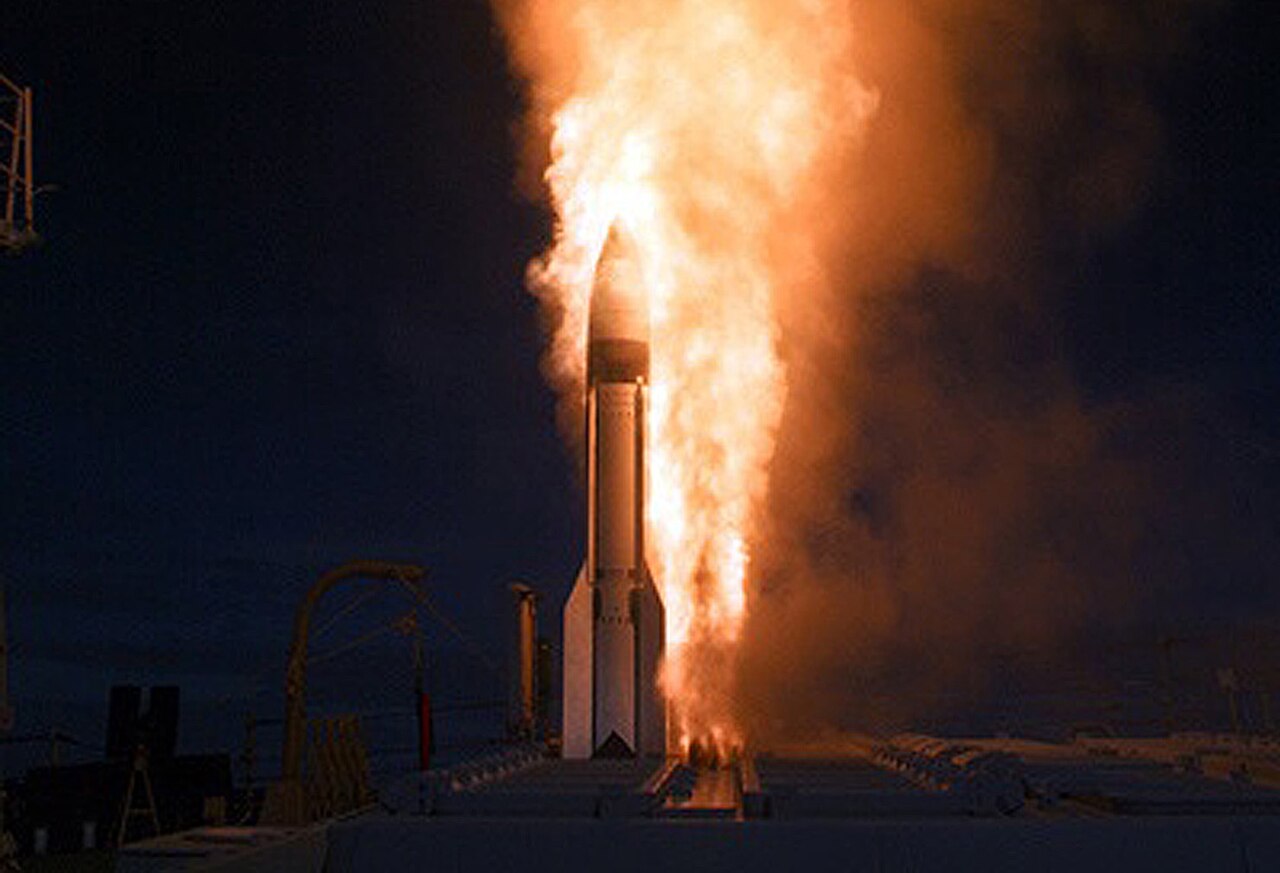
The Navy and its partners will get a long-term supply line for the interceptor that has already been spent in combat against ballistic missiles. Raytheon has secured a five-year contract, with two additional option years, valued up to $6.3 billion for the production and sustainment of Standard Missile-3 Block IB (SM-3 IB) interceptors, the RTX business announced on Oct. 8, 2026. The award gives the Missile Defense Agency a multi-year path to rebuild stocks.
The Missile Defense Agency (MDA) structured the deal as an undefinitized contract action with a base value of $4.4 billion, Defense Daily reported. Options could lift the total to $6.3 billion and extend the work two more years. Most of the production will run through Raytheon facilities in Tucson, Ariz., and Huntsville, Ala.
What the $6.3 Billion SM-3 IB Ceiling Buys
According to Defense Daily, the agreement covers procurement of SM-3 Block IB "All-Up Rounds," the complete, ready-to-fire missiles. The outlet put the base value at $4.4 billion over five years, with options capable of raising the total to $6.3 billion. The difference between those two figures, $1.9 billion, would ride on the options if the government exercises them.
Defense Daily said the work "is expected to be finished by October 2034." Its account also cites a $454 million figure at the time of award; the remainder of the story sits behind a subscriber wall, so the full obligation details and any additional terms were not available for review.
RTX framed the deal as both production and sustainment. The company said the contract "supports urgent replenishment of missile defense inventory that has been successfully used in combat and remains central to protecting U.S. forces, allies and critical infrastructure."
The company also tied the award to a larger set of deals. RTX described the contract as "part of the recent landmark agreements between Raytheon and the Department of War." The same RTX news page lists a separate Oct. 1, 2026 announcement of a $24.4 billion multi-year contract for SM-6 interceptors, which points to a broader shift toward long-horizon munitions buys across the Standard Missile family.
Why Combat Use Drove the SM-3 Block IB Replenishment
RTX describes the SM-3 IB as a ship- and land-based interceptor built to defeat short- to intermediate-range ballistic missiles during the midcourse phase of flight. The company said the missile "was first used in combat in 2024" and works alongside the SM-3 IIA as part of the Navy's extended-range integrated air and missile defense.
Interceptors fired in combat have to be replaced, and the production lines that build them do not scale overnight. Raytheon President Phil Jasper pointed directly at that pressure in the company's announcement.
"This award underscores Raytheon's commitment to increasing production of critical munitions, ensuring our customers have the defensive capabilities they need, when they need them," Jasper said.
He added: "SM-3 Block IB has proven its relevance in combat and this contract helps ensure we can replenish inventories and keep pace with the evolving threats the U.S. Navy, MDA and their partners face around the world."
RTX said it "has made significant investments to expand capacity and accelerate production of critical munitions including the Standard Missile Family." A five-year commitment gives the company a firmer demand signal to justify that capacity, and gives MDA more confidence that rounds will arrive on a predictable schedule.
How the Undefinitized Contract Action Shapes the Deal
An undefinitized contract action lets the government start work before it and the contractor have agreed on final prices and terms. Agencies typically use the tool when a requirement is urgent enough that waiting for full negotiations would delay delivery. Definitization, the step in which the parties settle the final price, comes later.
That structure fits the replenishment language RTX used. MDA can get the line moving now and lock in final terms afterward. For readers tracking the contract's value, the practical point is that the $4.4 billion base and $6.3 billion ceiling reported by Defense Daily reflect the award as announced; definitization could adjust the specifics.
A five-year base plus two option years gives both sides a planning horizon that stretches well past a single budget cycle, which matters for suppliers that need to order long-lead parts and hire workers ahead of demand.
Tucson and Huntsville Carry the Production Load
RTX said production "will be primarily completed at Raytheon facilities in Tucson, Ariz. and Huntsville, Ala." Defense Daily likewise placed the work at the company's facilities in those two cities.
Work concentrated at two sites means the throughput of those facilities, and of the suppliers feeding them, will set the pace of deliveries. Any capacity constraint at either location would ripple through the replenishment schedule MDA is counting on.
What It Means for Contractors
For the missile defense supplier base, the award signals sustained demand. A multi-year SM-3 IB commitment means Raytheon will need components, materials and services over a period that Defense Daily says runs to October 2034. Subcontractors that supply rocket motors, seekers, electronics, machined parts or test support should expect purchase orders that reflect longer horizons than a single-year buy would allow.
Firms in the Tucson and Huntsville areas stand closest to the work. Local machine shops, engineering services providers and logistics companies may find openings as Raytheon expands output at those sites.
The undefinitized structure also deserves attention from lower-tier suppliers. Because final terms come after award, flow-down pricing and quantities may shift during definitization. Suppliers negotiating with Raytheon should build that uncertainty into their own quotes and capacity commitments.
More broadly, the SM-3 IB deal and the SM-6 award listed on RTX's news page point to a Pentagon willing to sign longer munitions contracts to rebuild inventories drawn down in combat. Companies positioned in munitions production, energetics and missile components should watch for similar multi-year vehicles across other interceptor and weapons programs, and should be ready to show they can scale.
