
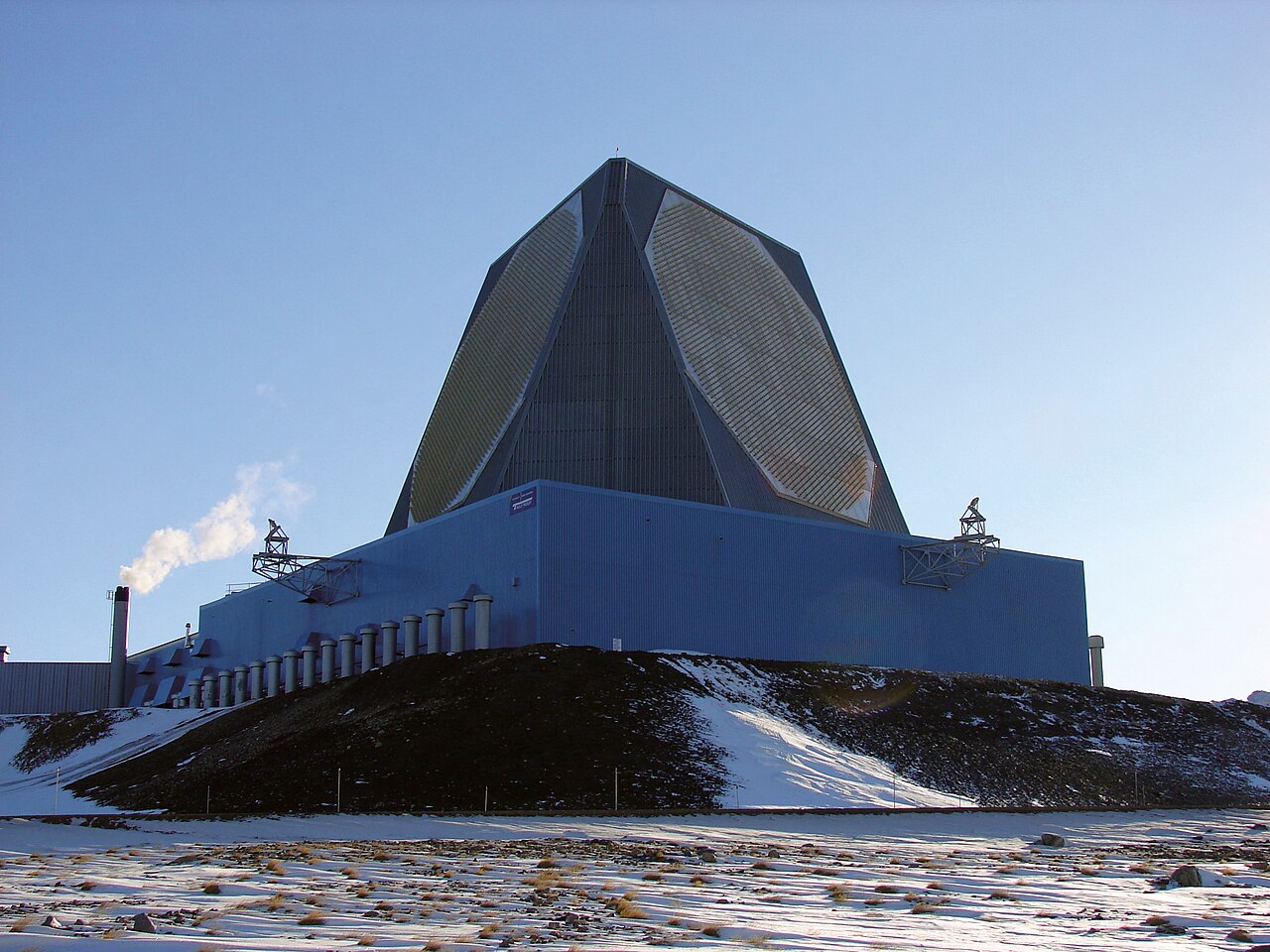
The Space Force's missile-warning radars are getting new digital brains, and Raytheon now says publicly that it will build the first ones. On Oct. 15, RTX's Raytheon business said the service had selected it for the Ground-Based Radar Digitization (GBRD) program, an effort to replace the analog back ends of long-serving early-warning radars while keeping the arrays themselves in place. The announcement follows a set of prototype agreements the Space Force awarded in July, which HigherGov reported were worth a combined $423.4 million across Raytheon, SciTec Innovations and WildStar.
That sequence matters for anyone tracking the market. Raytheon's October statement did not carry a dollar figure. As Defense Daily put it, "RTX did not disclose the value of an award." The money already on record comes from the July prototype agreements, not from a new contract action this month.
What the $309.5 Million Raytheon Prototype Agreement Covers
According to HigherGov, Raytheon received agreement FA8723-26-9-B0003 for $309.5 million, with work performed in Woburn, Massachusetts. SciTec Innovations of Princeton, New Jersey, received $93.7 million, and WildStar of Arlington, Texas, received $20.2 million. All three are firm-fixed-price prototype other transaction agreements, and the award notice states that work is expected to be completed by April 21, 2028.
The competition drew eight offers, HigherGov reported, and Space Systems Command obligated $107.4 million at the time of award. The command's contracting office in Colorado Springs, Colorado, manages the agreements.
Interesting Engineering drew the same distinction between the two events, noting that the Space Force awarded Raytheon a prototype agreement worth about $309.5 million in July 2026 and that this figure relates to the earlier award rather than a new value disclosed in the October announcement. The outlet also reported that the announcement did not identify which radar sites would receive the initial prototypes or provide a schedule for completing the work.
Why the Space Force Is Digitizing Instead of Replacing Its Radars
The radars in question detect and track ballistic missile launches and also watch satellites and other objects in orbit. Rather than build new sites, the service wants to swap out the processing equipment behind them. Interesting Engineering summarized the approach this way: the program "will upgrade existing systems rather than replace the radar network outright, while establishing a common technical architecture designed to make future improvements easier to deploy."
HigherGov's account of the award puts it more plainly: "The Ground-Based Radar Digitization program will create a common architecture and design for upgrading critical missile warning and space-surveillance radars." The Space Force intends to keep the radars' front-end high-power radio-frequency components and external communications paths. What changes is the back end: data and signal processing, command and control, signal generation, receiving systems and related elements.
The design will rely on a government-owned modular open system architecture, digital engineering and DevSecOps practices, according to HigherGov, with a high degree of commonality between the back ends of the Upgraded Early Warning Radars (UEWR) and the Perimeter Acquisition Radar Attack Characterization System (PARCS). The service expects the work to improve tracking capacity, range, object classification, data integration and cybersecurity while cutting sustainment costs and reliance on obsolete parts.
Raytheon framed the open architecture as a way to reduce dependence on a single vendor and simplify future performance upgrades, according to Interesting Engineering's reading of the company announcement. Raytheon said it will work alongside the Space Force and other industry partners on that architecture.
Six Sites or Eight Radars? How Many Systems GBRD Touches
Accounts of the program's scope differ. HigherGov describes the modernization as covering the back ends of five UEWR sites plus PARCS at Cavalier Space Force Station, North Dakota. It lists the broader program's locations as Pituffik Space Base in Greenland, Beale Air Force Base in California, Cape Cod Space Force Station in Massachusetts, Clear Space Force Station in Alaska, RAF Fylingdales in the United Kingdom and Cavalier.
Defense Daily and Interesting Engineering both describe the program as modernizing eight radars. Interesting Engineering, citing an earlier report on the July awards, said the count adds the Cobra Dane radar in Alaska and the Eglin Site C-6 radar in Florida to the five UEWRs and PARCS. Contractors sizing the follow-on work should treat the exact site list as unsettled until the Space Force publishes a definitive scope.
From Prototypes in 2028 to Full Capability in 2030
GBRD runs under a Middle Tier Acquisition rapid-prototyping approach. HigherGov reports that initial prototypes are planned for one UEWR location and the PARCS site, followed by potential rapid-fielding production for the remaining UEWR locations. Raytheon's announcement described the same order of events, with prototype solutions first and rapid fielding at the remaining locations afterward.
Earlier planning information in the GBRD sources-sought notice set initial operational capability targets of 2028 for a UEWR site and 2029 for PARCS, with full operational capability across all six sites in 2030, HigherGov reported. The solicitation describes a broader program schedule that extends through October 2029.
The funding line is substantial. Defense Daily reported that the Space Force's fiscal 2027 budget includes $783 million in the future years defense plan for GBRD, and that the service released its request for prototype proposals in May.
What It Means for Contractors
The July agreements split the prototype work three ways, but Raytheon holds roughly three-quarters of the $423.4 million total. Its October announcement suggests the company is well placed heading into production decisions, though none of the cited sources says who will field the remaining sites.
The open-architecture requirement cuts the other way. A government-owned reference architecture with common UEWR and PARCS back ends is designed to reduce dependence on a single vendor for future upgrades. Firms that specialize in radar signal processing, mission software, cybersecurity and DevSecOps pipelines have a plausible route in as subcontractors or future competitors, particularly once the reference architecture matures.
The $783 million FYDP figure gives business developers a planning ceiling for the next several years, though the prototype agreements account for only part of it. Because the plan calls for potential rapid-fielding production at the remaining UEWR locations after the first prototypes, the results at the initial UEWR site and PARCS will likely shape who builds the rest.
Firms tracking the program should watch for three signals: the prototype site selections Raytheon has not yet disclosed, any Space Force clarification on whether Cobra Dane and Eglin fall inside GBRD, and production decisions as the prototypes approach their April 2028 completion date.
