
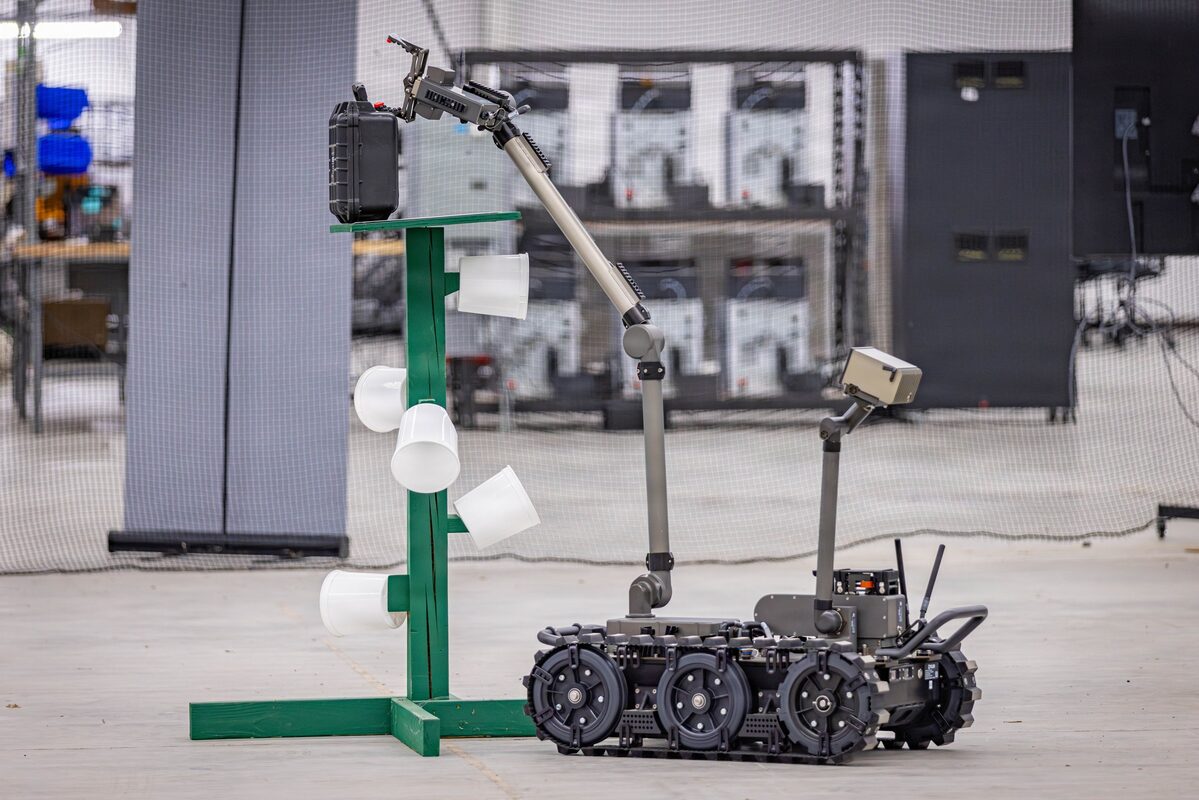
The Senate Armed Services Committee passed its fiscal year 2027 National Defense Authorization Act on June 11, 2026, by an 18-9 vote — and buried inside the $1.14 trillion authorization is a structural change that could reshape how the Pentagon buys, tests, and fields unmanned and autonomous systems for years to come. The bill calls for establishing a new Robotic and Autonomous Systems Combatant Command, a four-star-led headquarters that would mark the first new dedicated combatant command stood up in recent memory. The total authorization covers $1 trillion for the Department of Defense and $41 billion for the Department of Energy, making it one of the largest defense policy authorizations in recent memory.
What the New Command Would Do
The proposed Robotic and Autonomous Systems Combatant Command — sometimes referred to in markup discussions as a COCOM — would carry a mission profile that deliberately blurs the traditional lines between acquisition and operations. According to the bill, the command's authorities would include limited acquisition authorities to experiment and buy from the commercial marketplace, special test and evaluation functions, and force generation and delivery of autonomous systems to combatant commanders in the field. Unlike most combatant commands, it would hold active buying power from its inception rather than relying solely on the service branches to resource it.
That combination — buying power plus operational delivery — is unusual for a combatant command structure, which traditionally sits downstream of acquisition decisions made by the service branches and the Office of the Secretary of Defense. A senior SASC majority staffer explained the committee's intent directly: "What we ended up with is a four-star combatant command that we think will help integrate and go fast and transition the force generation" of unmanned systems. Speed-to-field is the explicit design goal, not just oversight or coordination between existing bureaucratic layers.
The legislation arrives in the wake of the Biden administration's Replicator initiative, which was dissolved in 2025 after struggling with technical hurdles and procurement roadblocks that prevented capability delivery at scale. The new COCOM concept is positioned to fill that institutional gap while complementing existing structures, including the Pentagon's $1.1 billion Drone Dominance Program and the Defense Autonomous Warfare Group, both of which have been advancing the military's unmanned systems agenda under the current administration. The new command is designed to provide the organizational permanence and acquisition reach that Replicator lacked.
What It Means for Contractors
For defense contractors, the creation of a dedicated four-star command with its own acquisition authority is a significant signal. It means a new funding address — a command-level customer with both budget authority and operational pull — for unmanned aerial vehicles, autonomous ground systems, undersea vehicles, and the software stacks that tie them together. The command's limited direct-purchase authorities, specifically designed to allow experimentation and marketplace buying, suggest an opening for non-traditional vendors and commercial technology companies that lack the infrastructure to navigate standard defense acquisition channels.
The broader FY2027 NDAA context adds texture to the opportunity landscape. The bill authorizes multiyear procurement contracts for the F-35 and F-15EX, which stabilizes revenue pipelines for established prime contractors on those platforms. It also requires the Air Force to maintain a minimum inventory of 1,800 fighter aircraft, a floor that has direct implications for sustainment and readiness contracts across the industry. At the same time, the bill removes $1 billion in advance procurement funding for Trump-class battleships, signaling a reallocation of shipbuilding dollars that surface warfare contractors should factor into their forward planning cycles.
Two provisions with broad contractor implications go beyond platforms. The prohibition on defense contractor share buybacks and dividends — subject to waiver for documented investment plans — reflects congressional pressure to redirect profits toward production capacity and workforce development. Right-to-repair language in the bill could also affect long-term service contracts on major weapon systems, depending on how implementing regulations are eventually written. Neither provision is final until bicameral reconciliation is complete, but both are worth tracking closely in the months ahead.
The bill also creates a new Undersecretary of Defense for Cyber, Information, and Networks, codifies the DoD review process for autonomous weapons and artificial intelligence, and establishes an AI incident and vulnerability reporting system. Companies developing AI-enabled defense products should pay close attention to the codified review process — it will define what the regulatory burden looks like for autonomous weapons programs going forward, and the incident reporting requirement represents a new compliance layer for fielded systems that primes and subcontractors alike will need to budget for accordingly.
Legislative Path and Timeline
The SASC bill passed along largely party lines. Committee Chairman Sen. Roger Wicker (R-Miss.) highlighted manufacturing revival as a central theme of the legislation, describing the bill as paving the way for a reindustrialization of the American economy at a scale not seen since World War II. Sens. Tim Kaine (D-Va.) and Tammy Duckworth (D-Ill.) voted against the measure. Sen. Jack Reed (D-R.I.), the ranking member, described advancing the bill as a necessary step in a multi-step process, while signaling he intended to keep pushing for changes in the months ahead.
The legislation still requires full Senate and House floor passage, followed by a bicameral conference to reconcile differences between the two chambers, and both chambers must address the autonomous systems command before any implementation action can begin. Final enactment is not expected before the fall, and the autonomous systems command provisions would require separate implementation action from the Department of Defense before any contracting activity begins under the new authority.
For contractors tracking the autonomous systems market, the committee vote is the starting gun for positioning, not the finish line. The period between now and final passage is when early-stage outreach to the nascent organizational structure — and to the SASC and HASC professional staff who shaped the underlying language — will carry the most weight with the offices that ultimately write the requirements.
