
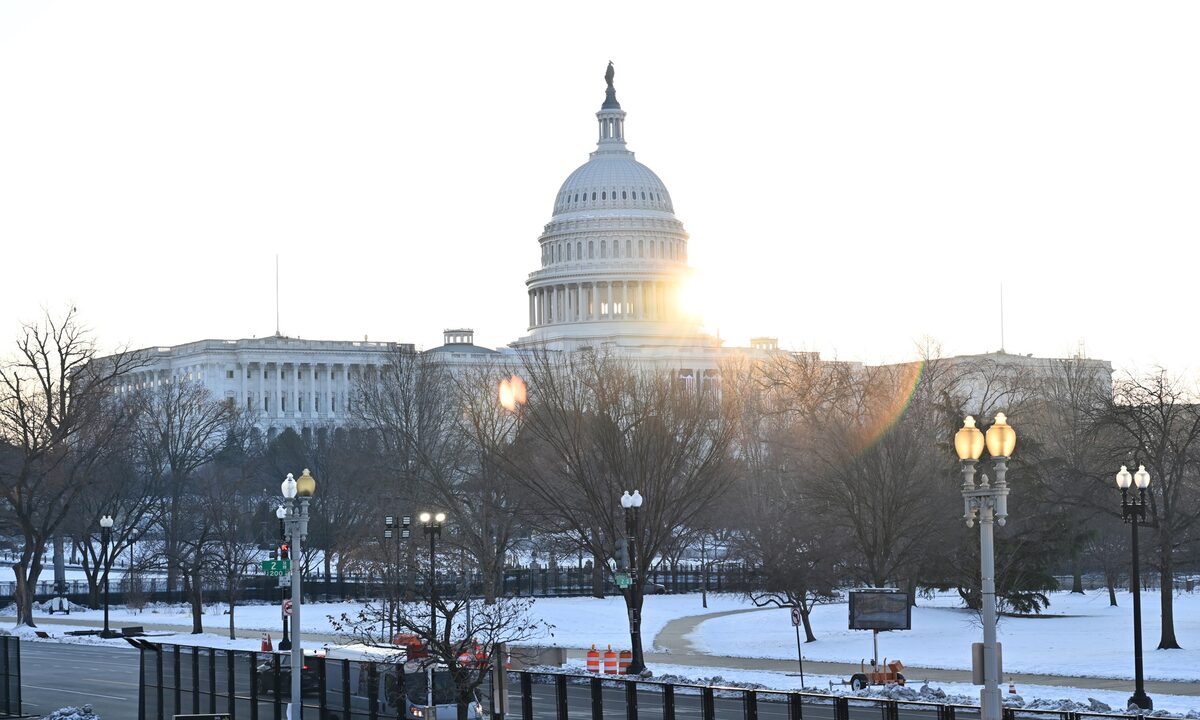
The Senate fell 10 votes short of advancing the fiscal 2027 National Defense Authorization Act on July 14, according to the official roll call record, as Senate Democrats blocked a cloture vote for the second time in two weeks over the ongoing U.S. military campaign against Iran and the bill's record defense spending topline. The 50-46 vote on the motion to proceed to S. 4784 left the roughly $1.14 trillion authorization bill stalled outside the 60 votes needed to open floor debate, and largely broke along party lines.
Background
The FY2027 NDAA advanced out of the Senate Armed Services Committee earlier this year as an original bill, S. 4784, setting up what was expected to be a routine path to the floor for legislation that authorizes military pay, weapons programs, and defense policy for the coming fiscal year. Instead, Senate Democrats blocked the same cloture motion once before, roughly two weeks earlier, over the same underlying dispute. The July 14 vote, recorded as Roll Call Vote 195 of the 119th Congress' second session at 2:41 p.m., produced the same 50-46 result as that earlier attempt: Democrats withheld the votes needed to invoke cloture, and the bill remains stuck at the motion-to-proceed stage rather than moving into open amendment and debate.
Majority Leader John Thune, R-S.D., voted "no" on the tally, but for procedural reasons rather than substantive opposition. Under Senate rules, a senator who votes on the prevailing side of a defeated motion can file a motion to reconsider it later, which preserves Thune's ability to bring the cloture vote back to the floor at a time of his choosing. That maneuver means the July 14 defeat is not necessarily the final word on this cloture attempt.
The repeated failure to reach 60 votes underscores how narrowly the annual defense policy bill's usual bipartisan momentum has broken down this cycle. In most years, the NDAA advances through the Senate with wide bipartisan margins after committee markup, since it authorizes troop pay raises, housing allowances, and equipment programs that senators from both parties support. The floor fight since then has instead centered on issues outside the bill's traditional scope: the legal basis for continued strikes on Iran and the overall size of the defense budget relative to non-defense spending.
Key Details
Democrats tied their opposition directly to the state of the U.S. military campaign against Iran, which has stretched into its fifth month after a ceasefire broke down and American forces resumed strikes. Senate Minority Leader Chuck Schumer, D-N.Y., told colleagues on the floor that "the NDAA cannot become a permission slip for that recklessness that we see occurring in Iran," arguing that President Trump "does not get to drag the American people deeper into a war he cannot explain."
Sen. Tammy Duckworth, D-Ill., cited 15 U.S. servicemembers killed and billions of dollars already spent in the Iran conflict as her rationale for withholding support unless the bill includes an amendment barring authorized funds from being used to support continued Iran operations. Sen. Angus King, I-Maine, focused his objection on the budget split embedded in the bill, saying the defense spending increase runs "four times the increase on the domestic side."
The dollar figures at stake go beyond the NDAA's roughly $1.14 trillion baseline authorization. The Pentagon has separately sought about $350 billion in additional spending through a budget reconciliation bill, a track that would not require 60 votes or any Democratic support. If both figures are enacted, combined defense spending authorized for the year could approach $1.5 trillion, a scale Democrats say is disproportionate to non-defense funding growth.
With the cloture path blocked twice, Republican leaders are weighing alternatives. One option is to move the Pentagon's reconciliation request as a stand-alone vehicle that sidesteps the 60-vote threshold entirely, since reconciliation bills are governed by separate budget rules and can pass the Senate on a simple majority. In the House, Republicans are considering advancing their own version of the authorization bill before the August recess, which would let the chamber establish its negotiating position even while the Senate bill remains stalled. Neither path resolves the underlying disagreement over the Iran campaign, since a reconciliation bill focused on funding levels would not carry the policy language, including any war-powers provision, that Democrats say they want attached to the NDAA itself.
What It Means for Contractors
For defense contractors, the immediate effect is delay rather than cancellation. The NDAA sets policy and authorizes spending ceilings; it does not appropriate funds on its own, so a stalled Senate bill does not by itself halt current-year contract execution. But an authorization bill that has now failed cloture twice pushes back the timeline for the policy provisions, program authorizations, and acquisition-reform language that shape next year's contracting environment, and it raises the odds that final passage slips closer to, or past, the start of fiscal 2027.
Contractors tracking the roughly $1.14 trillion topline should watch both tracks Republicans are now pursuing. A reconciliation bill carrying the Pentagon's $350 billion request would move through a different process with different rules on what can be included, potentially separating war-related and general modernization funding from the broader policy provisions still sitting in S. 4784. A House vote on its own version of the NDAA before August recess would also give contractors an early read on where the two chambers diverge, ahead of the conference negotiations that typically resolve differences between House and Senate versions late in the year.
The dispute itself is also a signal worth tracking independent of the vote count. Democrats have now twice made an NDAA cloture vote a vehicle for war-powers objections tied to Iran, and Sen. King's complaint about the four-to-one gap between defense and domestic spending increases suggests the funding fight extends beyond this single bill. Contractors planning around FY2027 budget assumptions should treat the topline figures in S. 4784 as provisional until the Senate resolves how, or whether, it revisits cloture through Thune's motion to reconsider.
