
The Space Force awarded $615 million in new Other Transaction Agreements on August 4, 2026, to build a second batch of satellites that track aircraft from orbit, with Space Systems Command splitting the work among three vendors to avoid depending on a single company or sensor design.
Background
The Space-Based Airborne Moving Target Indicator program, known as SB-AMTI, is the Space Force's answer to a hard problem: tracking aircraft, cruise missiles and other airborne threats in contested airspace where crewed radar planes like the E-3 Sentry or E-7 Wedgetail cannot safely fly. Moving that surveillance function into orbit lets the service watch large swaths of airspace continuously, without risking pilots or tankers over defended territory.
Space Systems Command built its SB-AMTI vendor base in stages. An April 2026 indefinite-delivery, indefinite-quantity contract vehicle qualified nine companies to compete for task orders, including L3Harris, Lockheed Martin, Northrop Grumman, Visto 360 AI, Wildstar and York Space Systems. The first major task order followed in May 2026, when SpaceX won a $4.16 billion OTA to build the initial SB-AMTI constellation. The August 4 awards are the second task order under that same framework, and they intentionally spread the work to companies outside the initial award.
Key Details
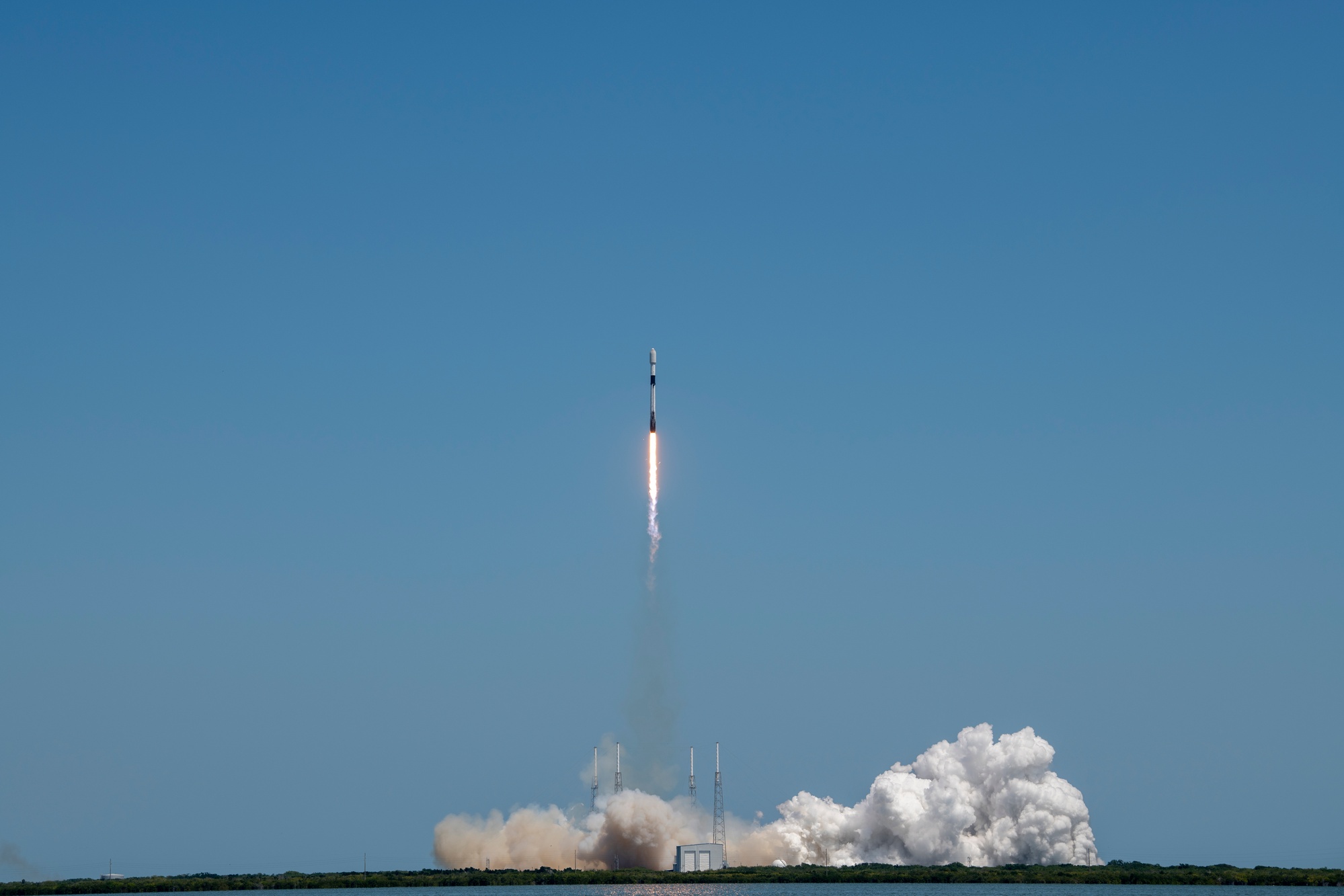
Space Systems Command divided the $615 million second task order among three companies. Rocket Lab received the largest share at $397 million to develop, launch and operate multiple satellites the company calls "Flatellites" — a flat-panel satellite design built for large constellations that carries space-based sensors alongside low-latency, high-bandwidth communications links. Rocket Lab plans to launch its Flatellites on its own Neutron rocket, a medium-lift vehicle expected to make its debut flight between October and December 2026 from Wallops Island, Virginia.
The second awardee is STR, a Woburn, Massachusetts-based technology firm. Space Systems Command withheld the identity of the third vendor and the size of its award, citing operational security. Reporting from Aviation Week notes that Rocket Lab and STR both drew from the same eight-company vendor pool the Space Force had already selected for SB-AMTI-related work.
Col. Ryan Frazier of Space Systems Command framed the split-vendor approach as deliberate risk management rather than simple industrial-base spreading. "The core focus of this second task order is diversifying our capabilities and ensuring we don't rely on a single technical solution," Frazier said. That statement points to a program office wary of putting the entire tracking mission on one sensor architecture or one company's supply chain, a lesson reinforced across other Space Force constellations where a single vendor's delay or design flaw can stall an entire capability.
Rocket Lab's award is notable for tying satellite production to a launch vehicle the company still has not flown. Neutron, Rocket Lab's answer to medium-lift competitors like SpaceX's Falcon 9, has slipped its debut date multiple times since the program was announced. Winning a $397 million satellite contract that depends on Neutron reaching orbit on schedule adds pressure to a launch vehicle program the company has treated as central to its shift from a small-satellite launcher into a full-spectrum space and defense contractor.
The Flatellite design itself is a departure from the boxier satellite buses that have historically dominated national security space programs. A flat-panel form factor lets a single rocket fairing carry more spacecraft per launch, stacking satellites like plates rather than fitting bulkier cubes and appendages around each other. That density matters for a constellation-scale program like SB-AMTI, where the Space Force needs enough satellites in orbit simultaneously to maintain persistent coverage rather than intermittent passes over any given patch of sky.
Rocket Lab's selection also continues the company's rapid climb from a dedicated small-launch provider into a prime contractor for national security space missions. A $397 million task order covering both satellite development and launch services is one of the largest national security space contracts Rocket Lab has won to date, and it arrives while the company is also trying to prove out Neutron as a credible medium-lift alternative to SpaceX.
What It Means for Contractors
The SB-AMTI second task order confirms that Space Systems Command intends to run this program as a genuine multi-vendor competition rather than settling into a sole-source relationship after the SpaceX-led first award. For companies still holding a slot on the April 2026 IDIQ but left out of this round — L3Harris, Lockheed Martin, Northrop Grumman, Visto 360 AI, Wildstar and York Space Systems among them — the message is that additional task orders remain open, and that the program office is actively looking to diversify sensor and bus designs rather than consolidate around whichever vendor won first.
For Rocket Lab, the award is a significant vote of confidence tied directly to Neutron's success. Contractors watching the launch market should note that Space Systems Command was willing to award a nine-figure satellite development contract contingent on a rocket that has yet to fly, a bet that reflects both the Space Force's urgency to field SB-AMTI capability and Rocket Lab's track record of delivering on smaller Electron missions. A Neutron slip beyond the fourth-quarter 2026 window would ripple into Rocket Lab's satellite delivery schedule and could invite scrutiny of how the Space Force manages launch-dependent development contracts going forward.
Smaller and mid-size firms competing for future SB-AMTI work should also take note of STR's inclusion. A Woburn, Massachusetts-based technology firm landing a task order alongside a company as prominent as Rocket Lab — though STR's award amount was not disclosed — signals that Space Systems Command is willing to fund less household-name contractors when their sensor or systems approach fits the diversification goal. Companies with relevant radar, RF-sensing or space-domain awareness technology, even without prior large-constellation experience, have a credible path into this program if they can show a design that differs meaningfully from what SpaceX and Rocket Lab are already building.
The withheld third award also matters for market intelligence. Contractors tracking the competitive landscape should expect that Space Systems Command will continue protecting vendor identities on at least some task orders when operational security is a factor, which limits how completely the industrial base for SB-AMTI can be mapped from public releases alone. Firms bidding on future rounds should plan around incomplete visibility into who else is already funded, rather than assuming award announcements will fully reveal the competitive field.
Sources
- Space Force accelerates SB-AMTI capabilities with multi-vendor awards (Space Systems Command)
- Space Force awards $615M in deals for second batch of aircraft-tracking satellites | DefenseScoop
- Space Force awards 3 firms $615M to track airborne targets | Breaking Defense
- Pentagon Awards More Space-Based Airborne Target Tracking Contracts | Aviation Week
