
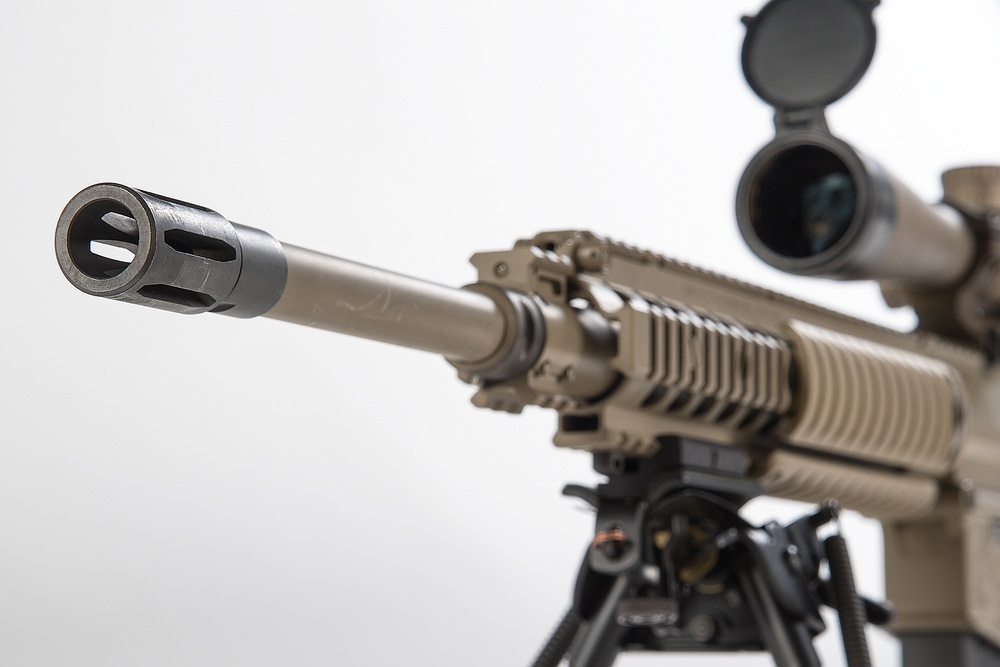
The State Department will strip most firearm suppressors from the U.S. Munitions List and shift their export licensing to the Commerce Department under an interim final rule published July 23, 2026. The Directorate of Defense Trade Controls (DDTC) rule removes silencers, mufflers, and sound suppressors built for non-automatic and semi-automatic firearms from USML Category I(e), while a companion Commerce Department rule folds the same items into the Export Administration Regulations (EAR). Both changes to jurisdiction take effect November 20, 2026, and the public has until August 24, 2026 to comment.
Background
The two rules implement Executive Order 14268, "Reforming Foreign Defense Sales to Improve Speed and Accountability," signed April 9, 2025. That order directed agencies to accelerate defense-trade decisions and to move commercial items off the tightly controlled munitions list where full ITAR treatment is no longer warranted. Firearm suppressors have sat on USML Category I since the list's inception, subjecting their exporters to the International Traffic in Arms Regulations (ITAR): mandatory DDTC registration, State Department licensing, and the broader compliance regime that governs defense articles.
In its rule, State argues the technology no longer justifies that treatment. "Barriers to acquiring the instructions, materials, and skills to effectively manufacture these items have become appreciably lower" around the world, the department wrote, undercutting the case that keeping suppressors under ITAR meaningfully restricts foreign access. The move continues a long-running effort, begun in the first Trump administration, to migrate commercial firearms and related parts from State to Commerce jurisdiction. That earlier migration took effect March 9, 2020, when parallel State and Commerce rules transferred jurisdiction over most commercial firearms, ammunition, and related articles in USML Categories I, II, and III to the Commerce Control List. Suppressors for non-automatic and semi-automatic firearms were left behind on Category I after those transfers; these rules complete the shift for those variants.
Key Details
The State rule removes "firearm silencers, mufflers, and sound suppressors for non-automatic and semi-automatic firearms" from USML Category I(e). Suppressors "specially designed for fully automatic firearms" stay on the USML and remain subject to ITAR, preserving State's control over the items with the clearest military application. State grounds the reclassification in several findings: the growing global adoption of suppressors for civilian uses, the reported benefits of reduced firearms noise, the existence of numerous foreign manufacturers, and negligible reliance interests among regulated U.S. persons. By contrast, the department found that suppressors built for fully automatic firearms still confer a critical military or intelligence advantage, citing design features such as increased heat dissipation to handle sustained fire.
The companion Commerce rule, issued by the Bureau of Industry and Security (BIS), confirms that the removed items "remain subject to U.S. export controls under the jurisdiction of the EAR." BIS classifies them under Export Control Classification Numbers 0A501.f and 0A502.f, the entries that already cover the parts and accessories of the firearms families Commerce controls. On the Commerce side, suppressors under 0A501.f carry national security, regional stability, firearms-convention, United Nations-embargo, and antiterrorism controls, while 0A502.f items carry firearms-convention, UN-embargo, antiterrorism, and a new regional-stability control that lets them ship to certain allied and partner countries without a license. The rule also adds both paragraphs to License Exception LVS for shipments valued up to $500 destined for Canada, and BIS notes that the license exceptions already available for other firearms parts and accessories will likewise be available for suppressors.
The timing is staggered: certain BIS amendments, numbered 1 through 4 and 6 through 11, took effect immediately on July 23, 2026, while the jurisdictional transfer of the suppressors themselves aligns with the State rule's November 20, 2026 effective date, so no gap opens between the two regimes. Beyond the jurisdictional swap, the BIS rule eases the temporary export of firearms as "tools of trade" and clarifies entry-clearance requirements for shipments, changes aimed at reducing friction for lawful exporters who move product across borders for demonstrations, trade shows, or field use. Neither the State nor the Commerce rule provides a count of affected exporters or an economic-impact estimate. Both issued as interim final rules, meaning the new controls take effect on schedule while the agencies collect comments that could shape a later final rule.
What It Means for Contractors
For companies that export suppressors for non-automatic and semi-automatic firearms, the practical change is a switch in regulator. Once the transfer takes effect November 20, 2026, these items leave the ITAR framework and fall under the EAR. That generally lightens the compliance load: EAR licensing turns on the item's ECCN, the destination country, the end user, and the end use, rather than on the blanket registration and controls ITAR imposes on anyone who manufactures or exports a defense article. Firms whose only USML nexus was suppressor exports may no longer need to maintain DDTC registration, though any company still handling fully automatic suppressors or other USML items keeps its ITAR obligations intact.
The staggered effective dates matter for compliance planning. Exporters should not treat the July 23 publication as the moment the jurisdiction changes; suppressors for non- and semi-automatic firearms remain ITAR-controlled until November 20, 2026, and shipping them under EAR authority before that date would be a violation. Contractors should map their product lines against ECCNs 0A501.f and 0A502.f now, review existing DDTC licenses that will need to be reissued or allowed to lapse, and confirm that internal export-control procedures, training, and screening reflect the new classification before the deadline.
Companies weighing the durability of the change should note the interim final posture. The August 24, 2026 comment deadline gives industry a window to raise operational concerns, and the agencies could adjust the rules before finalizing them. BIS also signaled broader relief in the same rulemaking through its tools-of-trade and entry-clearance changes, which took effect immediately and are worth reviewing by any firm that temporarily exports firearms or related equipment. Contractors that sell into both commercial and defense channels will want to keep the automatic/non-automatic line clear in their catalogs, since it now determines which agency licenses the export.
