
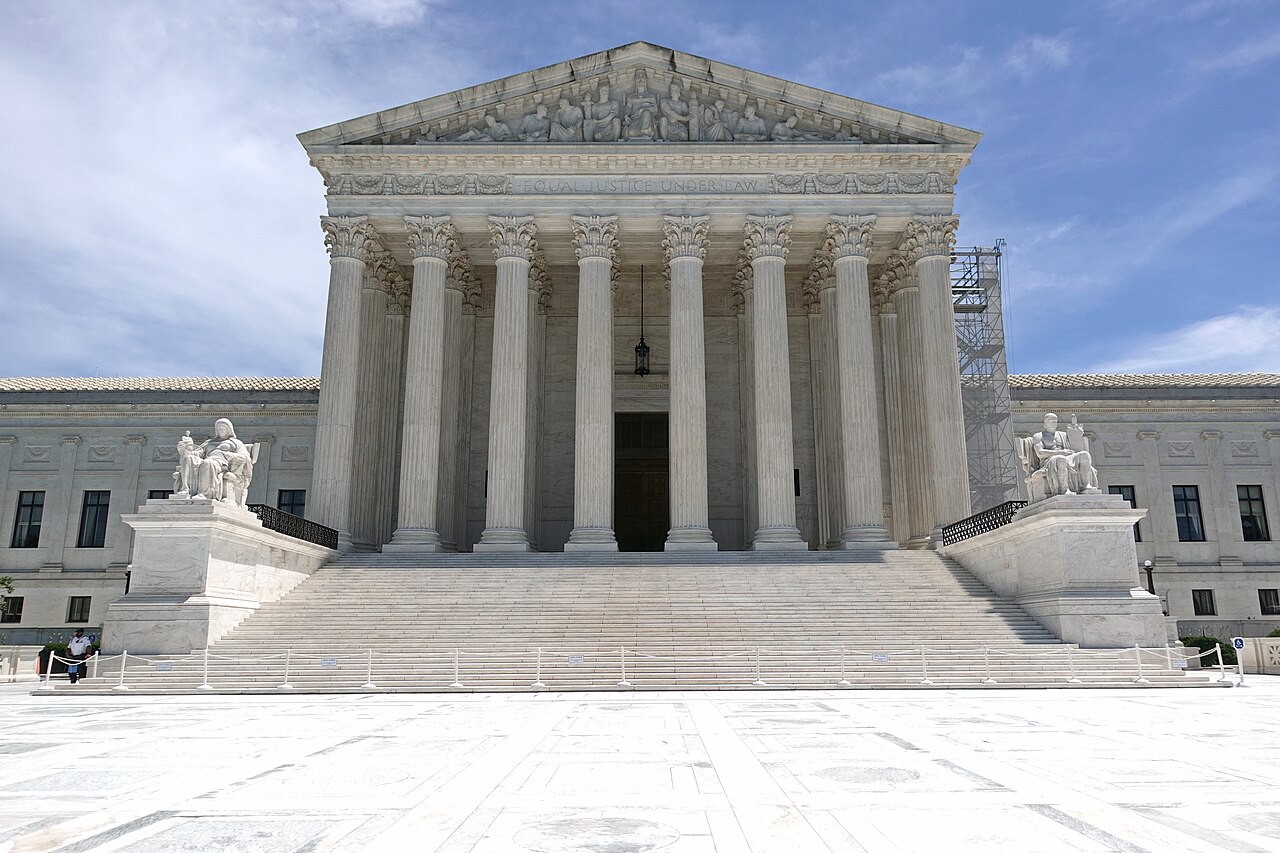
Contractors whose awards were cut in 2025 may have to wait until mid-2027 to learn whether the public can see how the Department of Government Efficiency picked its targets. The Supreme Court on Tuesday, Oct. 13, agreed to hear the Trump administration's bid to block a watchdog group from collecting evidence about DOGE's structure and authority, CBS News reported. The case, U.S. DOGE Service v. U.S. District Court for the District of Columbia (No. 25-1103), will likely be argued in early 2027, with a decision coming by that summer.
The dispute is the second trip to the high court for Citizens for Responsibility and Ethics in Washington's Freedom of Information Act lawsuit. At stake is a threshold question: is DOGE an "agency" that must answer records requests, or a presidential advisory body that FOIA does not reach? Before any court answers that, the justices will decide how much CREW can learn about DOGE in order to argue the point.
How a FOIA Request for an Org Chart Reached the Supreme Court Twice
CREW filed its FOIA request in early 2025, seeking DOGE information that included its organizational chart and financial disclosures, according to CBS. The administration declined to process it, arguing that DOGE is not subject to FOIA because it is housed within the Executive Office of the President and is a purely advisory entity.
CREW sued. U.S. District Judge Christopher Cooper ruled in CREW's favor and ordered expedited processing of the request, the Associated Press reported via Federal News Network. According to CBS, a judge also allowed CREW to collect limited information about DOGE's structure and the scope of its authority, including a deposition of its administrator, Amy Gleason.
The administration filed an emergency appeal. In June 2025, the Supreme Court ruled 6-3 to set aside the lower court order. "Separation of powers concerns counsel judicial deference and restraint in the context of discovery regarding internal executive branch communications," the Court said, according to CBS. It ordered the U.S. Court of Appeals for the D.C. Circuit to take "appropriate action to narrow" the discovery order.
What CREW Kept After Narrowing Its Requests
On remand, CREW dropped some categories of records. It sought only information on DOGE's structure, its directives to cancel federal contracts and fire government workers, and examples of DOGE exercising substantial independent authority, such as gaining access to sensitive systems, CBS reported. The D.C. Circuit let that discovery proceed, finding the narrowed request consistent with the Supreme Court's order.
The government's petition for certiorari, filed in March 2026, says the appeals court again denied the government's mandamus petition "without any new analysis regarding the remaining discovery, which includes numerous requests for internal communications and a deposition of USDS's head."
CREW says the appeals court fully complied with the Supreme Court's earlier order, according to the AP. "Undisputed facts in the public record — including the President's statements — confirmed that (DOGE) was wielding enormous independent authority across the federal government," its attorneys wrote.
Can Courts Order Discovery Before Deciding Whether FOIA Applies?
The petition puts two questions to the justices. The first is whether the D.C. Circuit's order "departed from this Court's instructions and the separation-of-powers principles" set out in Cheney v. United States District Court (2004). The second is "whether a court may order broad discovery against an Executive Office advisory body—potentially providing much information sought on the merits of a plaintiff's FOIA claims—to determine whether FOIA's disclosure requirements apply in the first place."
That second question carries the administration's core argument. If discovery goes forward, CREW would receive much of what it sought in its FOIA request before any court has said whether DOGE is covered by the law, CBS reported.
"The decision below intrudes into the autonomy and confidentiality of presidential advisors and augurs time-consuming and burdensome discovery litigation, including through a deposition of USDS Administrator Amy Gleason," Solicitor General D. John Sauer wrote in a filing quoted by CBS.
Justice Department attorneys framed it as a question of congressional intent. "Subjecting advisory bodies to intrusive discovery triggers the very concerns that Congress sought to avoid by excluding presidential advisory bodies from FOIA's reach," they wrote, according to the AP.
The administration also says the appeals court impermissibly authorized CREW to take a sworn deposition of DOGE's acting administrator, the AP reported.
Why DOGE's Contract Directives Sit at the Center of the Case
CBS described DOGE as the entity that "spearheaded government-wide firings of federal workers and cancellations of government contracts." Its directives to cancel contracts are one of the three categories CREW still seeks. Those records bear on the agency question: whether DOGE exercised substantial independent authority across the government, or only advised the President.
CREW attorney Nikhel Sus said in a statement that lower courts have uniformly ruled the group is entitled to records that could help determine whether DOGE wields that type of authority. "We will continue to pursue transparency for the American people, who deserve to know the details of the Trump Administration's efforts to unilaterally remake the federal government," Sus said, according to the AP.
What It Means for Contractors
The grant pushes any public account of how DOGE selected contracts for termination well into 2027 at the earliest. Whether the narrowed discovery — including records on DOGE's contract-cancellation directives — goes forward now rests with the justices.
The outcome will set a rule beyond this administration. Sauer's filing warns that the appeals court's ruling "threatens to burden future presidential administrations with FOIA suits designed to leverage discovery against advisors in the Executive Office," CBS reported. A win for the government would make it harder to use FOIA suits to probe how any White House-based body works. A win for CREW would let discovery proceed on DOGE's contract-cancellation directives, which could bear on whether terminations originated with the agencies that signed them or with an advisory office in the White House.
Companies building termination-for-convenience settlement claims, or tracking which cancellations DOGE directed, should not count on FOIA records from this case to support them before the Court rules. Agency-level FOIA requests to the contracting offices that issued the terminations remain a separate route, since those agencies are plainly covered by the statute.
Sources
- Supreme Court takes up dispute over watchdog group's bid to access DOGE records (CBS News, Oct. 13, 2026)
- Supreme Court agrees to hear watchdog lawsuit seeking records on Elon Musk's DOGE (Federal News Network, AP, Oct. 13, 2026)
- Petition for a Writ of Certiorari, U.S. DOGE Service v. U.S. District Court for D.C., No. 25-1103 (U.S. Supreme Court docket, March 2026)
