
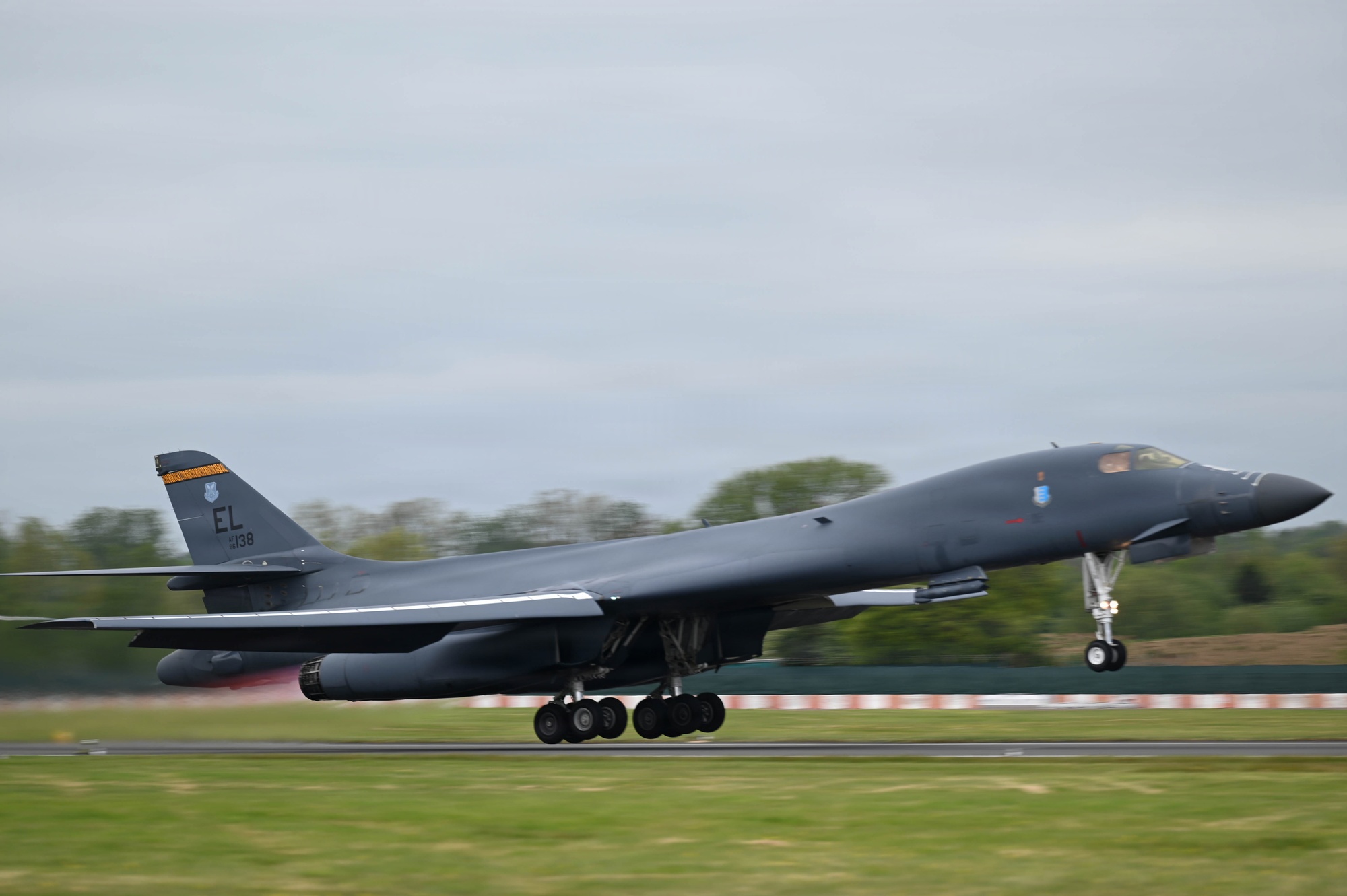
Top Flight Aerostructures Inc., a Dallas, Georgia-based defense supplier, has been awarded a maximum $53,078,535 firm-fixed-price indefinite-delivery/indefinite-quantity (IDIQ) contract by the Defense Logistics Agency (DLA) for B-1 aircraft trailing edges — critical structural flight control surface components supporting the Air Force B-1 Lancer bomber fleet. According to the official Department of Defense contract announcement, the award was made on June 12, 2026, with work to be completed by June 12, 2029. The contract was funded through defense working capital funds, and the using military service is the Air Force. It reflects continued federal investment in maintaining the readiness and airworthiness of one of the Air Force premier long-range strike platforms.
The contract, assigned number SPRTA1-26-D-0004, was issued by the Defense Logistics Agency Weapons Support office located in Oklahoma City, Oklahoma. The IDIQ vehicle carries a maximum ceiling value of $53,078,535 and was structured as a firm-fixed-price arrangement, meaning Top Flight Aerostructures will deliver the specified components at agreed-upon unit prices without adjustment for the contractor actual cost experience during performance. This pricing model is common in defense sustainment contracting, where the government seeks predictable costs for recurring parts needs over a multi-year horizon. No option periods are included in the three-year contract.
About the Contract and Competition
The award was competitively procured through SAM.gov, the federal government primary contract opportunities portal, with two offers received during the solicitation process. Competitive procurement at DLA is standard practice for supply chain and sustainment contracts, and the receipt of two offers indicates that the government evaluated at least one alternative source before selecting Top Flight Aerostructures for the work.
The three-year period of performance runs from June 12, 2026, through June 12, 2029. As an IDIQ contract, the government is not obligated to purchase the full maximum value of $53,078,535. Instead, the contract establishes the terms and ceiling under which the DLA can place individual delivery orders for trailing edge components as requirements arise over the contract term. This structure gives the Air Force and DLA flexibility to draw down inventory and order replacement parts on an as-needed basis rather than committing to a single large bulk purchase upfront.
Trailing edges are a structurally and aerodynamically significant element of any aircraft. On a bomber platform like the B-1 Lancer, trailing edge components form the rearward section of the wing and control surface assemblies, directly influencing aerodynamic performance, stability, and flight control authority. These are not off-the-shelf commodity parts — they require precise manufacturing to meet strict military specifications and airworthiness standards. Their classification as critical structural flight control surface components underscores the importance of maintaining a reliable, qualified supplier capable of meeting consistent delivery requirements across a sustained period of operations. Contracts like this one are a key mechanism through which DLA maintains continuity of supply for components that cannot be easily sourced through commercial off-the-shelf channels.
The B-1 Lancer and Its Sustainment Demands
The B-1 Lancer is a long-range, multi-mission supersonic bomber operated by the United States Air Force. The aircraft has been a cornerstone of U.S. conventional strike capability for decades, and keeping the fleet airworthy requires a continuous supply of certified replacement components from qualified manufacturers. As platforms age, sourcing structural and flight-critical parts becomes increasingly complex, making contracts like this one essential to maintaining operational readiness across the bomber inventory. Sustained investment in parts availability is one of the primary mechanisms through which the Air Force extends the service life of legacy platforms without fully replacing them.
The Defense Logistics Agency Weapons Support office in Oklahoma City serves as a primary hub for aviation parts and logistics for the Air Force depot and fleet support operations. Its role in awarding and administering this contract reflects the broader DLA mission to provide reliable supply chain solutions for military weapon systems across all service branches. DLA Weapons Support manages a broad portfolio of aviation sustainment contracts covering multiple weapon systems and components. For aerospace suppliers tracking government procurement activity, the office represents a consistent and significant source of contracting opportunities across the full spectrum of Air Force aviation needs.
What It Means for Contractors
For defense contractors following the aerospace sustainment market, this award highlights several important trends worth tracking. First, the use of an IDIQ structure for flight-critical components is a deliberate government strategy to preserve ordering flexibility while locking in a qualified, vetted source for a defined period. Contractors competing for similar work should anticipate that DLA and other defense agencies will continue to favor IDIQ vehicles for sustainment components where demand is recurring but variable across fiscal years.
Second, the competitive nature of this award — with two offers received via SAM.gov — signals that the government is actively seeking alternatives in this supply category rather than relying on sole-source arrangements. Small and mid-sized manufacturers with aerospace structural fabrication capabilities should monitor DLA Weapons Support solicitations closely, as these contracts can represent significant sustained revenue over multi-year periods.
Third, the firm-fixed-price structure places cost and schedule risk squarely on the contractor. Companies pursuing similar contracts must have mature cost estimating processes and the manufacturing capacity to absorb fluctuating order volumes without repricing. Winning an IDIQ ceiling is meaningful, but long-term profitability depends on disciplined execution at the delivery order level throughout the full performance period.
Finally, the DLA Weapons Support office in Oklahoma City — which administers aviation parts contracts for multiple Air Force weapon systems — is a significant procurement center for companies in the aerospace sustainment space. Contractors who regularly engage with DLA Weapons Support solicitations and understand its contracting patterns may find it easier to compete effectively for future awards in this and related weapon system categories.
For companies tracking B-1 Lancer sustainment opportunities specifically, this contract represents a three-year window during which Top Flight Aerostructures will serve as the DLA primary source for trailing edge components. Related structural and flight control surface categories may see separate solicitations, and the competitive landscape established here could inform how DLA structures future awards in the same weapon system family.
