
The Department of Justice announced that the Trade Fraud Task Force has surpassed $1 billion in civil and criminal recoveries, penalties, forfeitures, and publicly charged losses in less than one year of operation. Two gold jewelry import fraud cases out of the Chicago area pushed the joint DOJ-DHS task force past the milestone, and the department used the occasion to unveil a new enforcement section dedicated to trade crimes.
Background
DOJ and the Department of Homeland Security launched the Trade Fraud Task Force in August 2025 to target customs fraud, tariff evasion, and forced-labor imports tied to international trade. The task force pairs DOJ prosecutors with Homeland Security Investigations agents and U.S. Customs and Border Protection officers to pursue both criminal charges and civil penalties, including False Claims Act cases against importers who misstate the origin, value, or classification of goods to dodge duties.
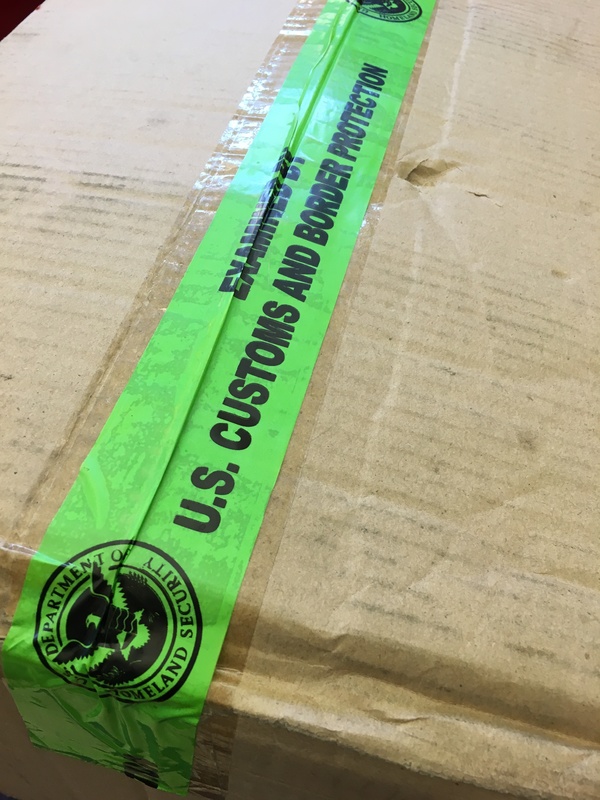
Assistant Attorney General Colin McDonald and U.S. Attorney Andrew Boutros of the Northern District of Illinois announced the $1 billion milestone at a CBP Centralized Examination Center event in Bensenville, Illinois. Officials staged the announcement alongside displays of seized vapes tied to an $80 million illegal-import crackdown and boxes of drones officials said were made with forced labor, underscoring that the task force's mandate extends beyond customs duties to product safety and forced-labor supply chains. The Bensenville facility is one of the CBP centers where officers physically inspect and examine commercial cargo shipments flagged for further review, making it a fitting backdrop for a milestone built on cargo-declaration fraud cases.
DOJ credited the two Illinois gold jewelry cases announced July 14, 2026, with pushing the task force's cumulative recoveries, penalties, forfeitures, and charged losses over the $1 billion threshold less than a year after the task force stood up.
Key Details
The two Chicago-area cases that pushed the task force past $1 billion both involve gold jewelry importers accused of lying about where their goods came from. Raj and Veena Kohli, who run Surya International Inc. in South San Francisco, were charged with falsely declaring roughly 563 shipments of gold jewelry, valued at approximately $693 million, as originating in Singapore when the goods actually came from India and the United Arab Emirates. Prosecutors say the scheme ran from 2020 through 2024 and allowed the Kohlis to avoid paying about $38 million in customs duties.
In a separate case, Narain Gulabani of Barkha Wholesale Inc. in Naperville, Illinois, was charged with falsely declaring around 242 gold jewelry shipments worth about $240 million as originating in Oman or Singapore between 2016 and 2021, avoiding roughly $13.6 million in duties.
DOJ also announced it is creating a Global Trade & Commerce Enforcement Section within its National Fraud Enforcement Division to consolidate and expand trade fraud prosecutions. Alongside the new section, DOJ and DHS jointly released "A Resource Guide to Trade Fraud Enforcement," which the department describes as the first comprehensive framework of its kind for cross-border compliance and enforcement priorities. Standing up a dedicated section signals that DOJ views trade fraud as a permanent enforcement lane rather than a temporary task-force initiative that winds down once headline cases are resolved.
DOJ's announcement notes that CBP has assessed more than $2.1 billion in commercial trade penalties so far this fiscal year and has debarred 35 parties from doing business with the federal government. Debarment is a separate consequence from the criminal charges and civil settlements DOJ tracks toward its $1 billion figure, meaning companies caught misdeclaring goods can lose both money and their ability to compete for federal work in the same enforcement cycle.
The department also pointed to a run of recent high-dollar settlements the task force cites as evidence of its reach. Perfectus Aluminum agreed to a $549.5 million False Claims Act settlement in May 2026, the largest matter the task force has cited to date. Ceratizit USA settled a False Claims Act matter for $54 million. Boise Cascade paid a $6.3 million fine, and Royal Sovereign paid $8 million in criminal fines and restitution. DOJ also listed a matter involving MGI International among its recent high-impact actions; that case involved alleged misrepresentation of country of origin to avoid Section 301 duties, but DOJ did not disclose a specific penalty amount in the July 14 announcement.
What It Means for Contractors
Importers and federal contractors that source goods internationally should treat the task force's first-year results as a signal that country-of-origin misrepresentation is now a top-tier enforcement priority, not a paperwork technicality. The Kohli and Gulabani cases show DOJ is willing to pursue individual owners of mid-sized import businesses, not just large corporations, when customs declarations misstate origin to dodge tariffs.
The creation of the Global Trade & Commerce Enforcement Section signals that DOJ intends to keep dedicated prosecutorial resources on trade fraud rather than treating it as an occasional add-on to other fraud dockets. Contractors that rely on subcontracted or resold imported components, including gold, aluminum, and other metals subject to tariff schedules tied to country of origin, should expect closer scrutiny of their supply chain documentation and country-of-origin certifications.
The 35 debarments CBP has issued this fiscal year are a reminder that trade violations can carry consequences beyond fines and criminal charges. A debarment bars a company from federal contracting altogether, which can be more damaging to a government-facing business than the underlying penalty. Contractors that import goods for resale to federal agencies, or that incorporate imported materials into deliverables, should review their customs compliance programs now, particularly around country-of-origin declarations, valuation, and classification, given DOJ and CBP's stated intent to keep expanding both civil and criminal trade fraud enforcement under the new resource guide framework.
The newly released resource guide gives compliance officers a single reference point to align internal customs procedures with how DOJ and DHS build these cases, which the agencies describe as starting with material misrepresentations to CBP such as transshipment, mislabeling, and false declaration. Contractors that already maintain False Claims Act compliance programs for federal sales should extend the same rigor to import documentation, since the task force has shown it will use the False Claims Act, not just customs penalties, against companies that misstate origin to avoid duties. Given the size of the settlements DOJ is citing, from the $549.5 million Perfectus Aluminum matter down to the $6.3 million Boise Cascade fine, the task force is pursuing companies across a wide range of sizes, not only the largest importers.
