
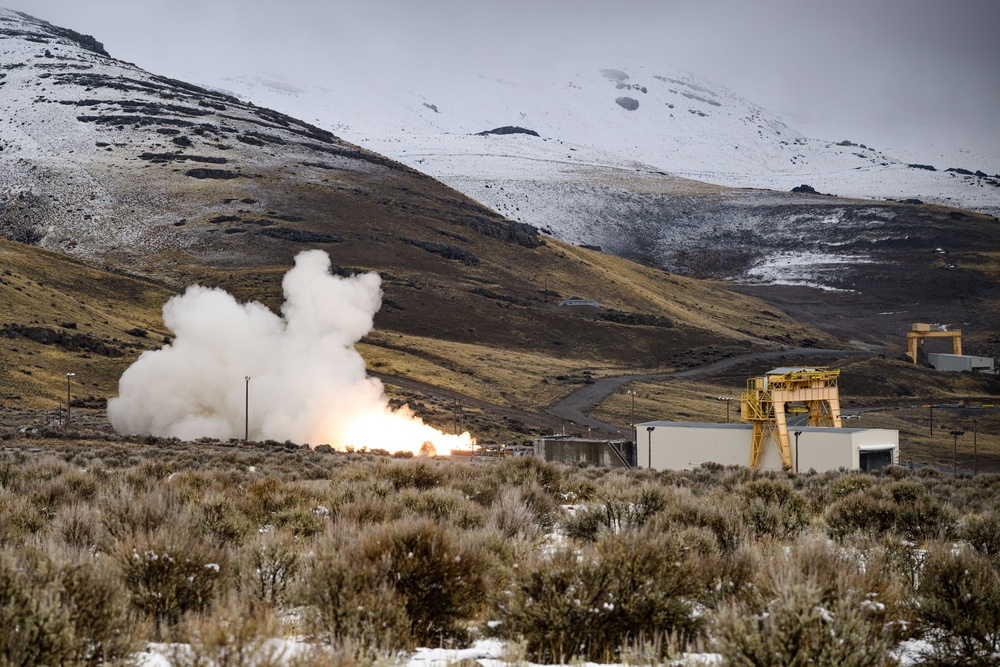
President Trump signed a presidential memorandum on June 11, 2026, invoking the Defense Production Act after determining that “conditions exist which may pose a direct threat to the national defense” due to systemic constraints in the U.S. munitions industrial base. The invocation unlocks a legal mechanism that lets competing munitions suppliers coordinate production, supply chains, and investment strategies with one another — coordination that would otherwise expose them to federal antitrust liability under existing competition law.
Background
The Defense Production Act grants the President broad authority to direct industrial resources toward national defense needs. One of its lesser-used provisions authorizes the Department of Defense to facilitate voluntary agreements among competitors in critical industries. These agreements allow companies that normally cannot discuss pricing, capacity, or production plans with each other to do so under Pentagon supervision — without triggering Sherman Act violations. Companies that participate in these agreements retain their competitive independence in commercial markets; what the framework enables is targeted coordination on shared production and supply-chain challenges that are too large for any single firm to solve unilaterally.
The munitions industrial base has drawn sustained concern from defense planners since Russia’s 2022 invasion of Ukraine exposed how quickly modern peer conflicts consume artillery rounds, missiles, and precision munitions. Decades of post-Cold War defense industry consolidation left the U.S. with few producers of key propulsion and guidance components. Bottlenecks in solid rocket motor production have drawn particular attention, as solid rocket motors power a wide range of air defense interceptors, precision strike weapons, and loitering munitions currently in high demand across NATO partners and U.S. stockpiles alike. Replenishing those stockpiles requires production throughput the current industrial base cannot deliver at pace. The cost of that shortfall — slower reload rates, constrained deterrence, allied partners waiting on backlogged orders — has been visible for two years, but removing legal barriers to coordination required a formal presidential action.
Michael Cadenazzi, Assistant Secretary of Defense for Industrial Base Policy, said he spent nine months advocating internally for the DPA invocation before the June 11 memo was signed.
Key Details
The presidential memo identifies systemic constraints across the munitions industrial base including limited production capacity, fragile supply chains, long-lead dependencies, and related production bottlenecks. Solid rocket motors, precision strike missiles, Patriot interceptors, and THAAD interceptors represent links in the kill chain where domestic production capacity has not kept pace with operational demand or planned procurement requirements.
Cadenazzi described the voluntary agreement mechanism publicly on June 16, 2026. The construct lets the Pentagon assemble groups of suppliers — he cited approximately 10 to 12 companies interested in manufacturing solid rocket motors — and bring them together to communicate and coordinate in ways that would “normally be problematic” in competitive markets. Under the framework, those firms can openly discuss investment plans, share capacity data, and coordinate certification timelines without antitrust enforcement risk.
L3Harris has received Pentagon investment in its solid rocket motor business as part of earlier industrial base investment efforts, with the Pentagon committing $1 billion to that program. The DPA invocation was announced alongside more than $1 billion in conditional loans for rare-earth element processing — another supply chain the U.S. has designated a strategic vulnerability requiring rapid domestic expansion.
Cadenazzi stated a central operational objective: shorten the certification processes that currently slow new solid rocket motor producers from reaching production-ready status, and give existing producers visibility into where others plan to invest so the industrial base scales without duplication or critical gaps. The goal is not simply more production capacity in the abstract but coordinated capacity oriented toward the missile programs with the most acute inventory shortfalls.
What It Means for Contractors
For munitions manufacturers and their suppliers, the DPA invocation creates a formal, legally protected channel for industry coordination that did not previously exist. Companies that could not discuss capacity allocation or production scheduling with direct competitors can now do so through Pentagon-facilitated voluntary agreements — provided they follow the statutory process and accept DoD oversight of those sessions.
The practical ceiling of the construct depends on participation and execution. Voluntary agreements under the DPA require companies to opt in; the Pentagon cannot compel participation. Companies that join gain legal cover for otherwise-prohibited discussions, but they also accept scrutiny of what is said and agreed upon within those forums. Firms evaluating participation should engage antitrust counsel early to understand what the voluntary agreement framework actually permits versus what remains prohibited even within DPA-authorized proceedings. The line between coordination and collusion can shift depending on the specifics of what is discussed, and DoD facilitation does not provide blanket immunity beyond the scope of each approved agreement.
Contractors in adjacent markets — propellant suppliers, energetics manufacturers, guidance electronics producers, and others across the constrained supply chain categories — should expect the Pentagon to convene similar sessions segment by segment. The Cadenazzi framework is explicitly designed to be replicable supply-chain segment by supply-chain segment, not limited to solid rocket motors alone.
Defense primes that depend on subcontractor-supplied solid rocket motors and interceptor components have a direct stake in whether the coordination succeeds. If voluntary agreements accelerate second-source certification or align capacity investment with planned procurements, lead integrators on Patriot, THAAD, and long-range precision strike programs gain more predictable supply availability and reduced schedule risk tied to propulsion shortfalls. Primes that currently manage missile production around solid rocket motor lead times will benefit most directly if the new framework compresses those timelines.
The DPA invocation does not directly fund production or authorize directed allocation of materials. Its leverage is legal rather than financial: removing the antitrust exposure that has blocked meaningful coordination among competitors even when both the government and industry recognized the need for it. Whether that removal translates into faster production at scale depends on how aggressively participating firms use the window the memo has opened, and how quickly DoD establishes the procedural infrastructure to run voluntary agreement sessions across multiple supply chain verticals simultaneously.
Sources
- Breaking Defense — Pentagon aims to sidestep potential ‘collusion’ through Defense Production Act: Senior official
- Washington Times — Trump invokes Defense Production Act as U.S. munitions stockpiles dwindle
- ExecutiveGov — Michael Cadenazzi: Trump Invokes Defense Production Act for Munitions Industrial Base
