
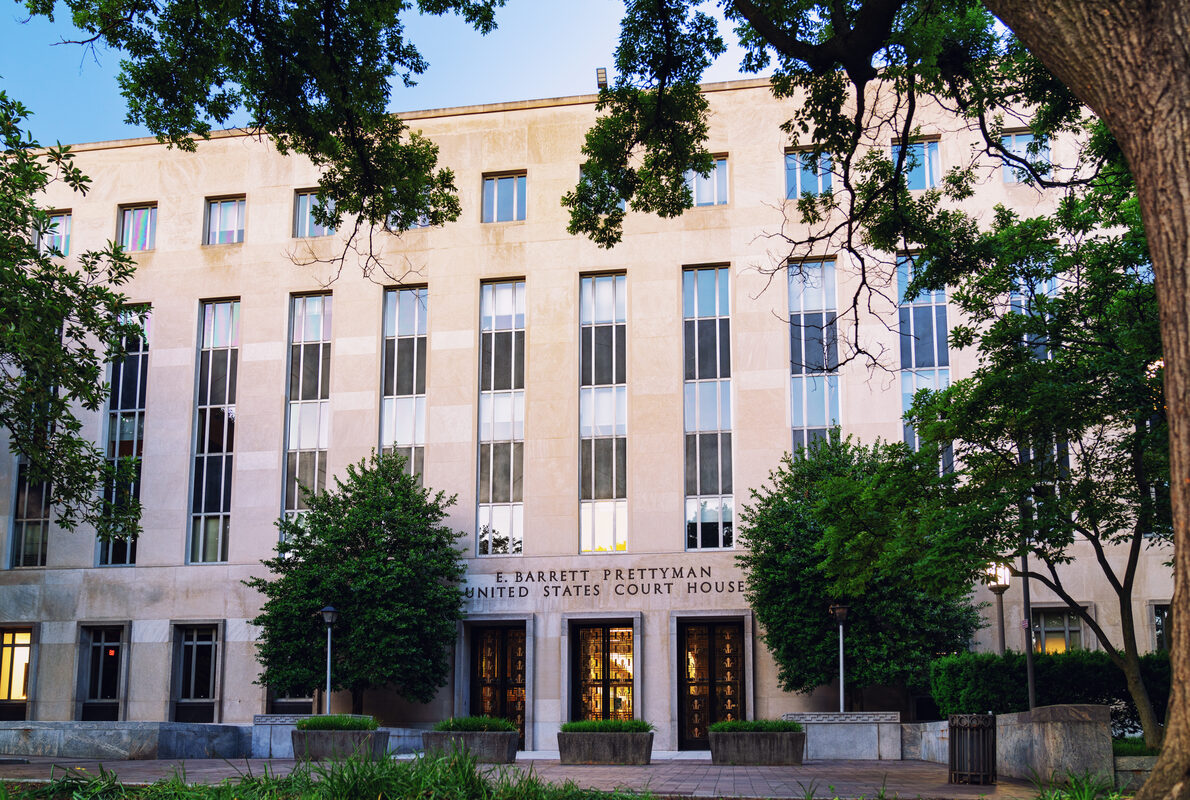
A former senior financial official at an independent federal agency has been sentenced to four months in prison for steering roughly $617,000 in sole-source contracts to a friend's company in exchange for cash kickbacks, the U.S. Attorney's Office for the District of Columbia announced on May 27, 2026. Mathieu Zahui, 59, of Fairfax, Virginia, the former Director of Financial Management at the U.S. African Development Foundation, abused his position over roughly three years to direct contracts to a friend's firm for services it never performed.
From Budget Analyst to Contracting Insider
Zahui joined the U.S. African Development Foundation, also known as USADF or ADF, as a budget analyst in 2010 and rose through its finance ranks over roughly fifteen years to become its Director of Financial Management, effectively the agency's chief financial officer. The foundation is an independent federal entity. Beginning in December 2020, Zahui also served as a Contracting Officer Representative, a role that gave him influence over the agency's contracting decisions and for which he received conflict-of-interest training. That training is central to the government's case, because it establishes that Zahui understood the rules he later broke.
According to prosecutors, the scheme began in March 2020. Zahui directed ADF to award his friend's company a series of sole-source contracts, which are exempt from competitive bidding, for logistical-support services the company never performed. Three of those contracts were valued at approximately $173,640, $350,544 and $93,200, totaling roughly $617,000. Each of the three exceeded the $100,000 cap that ordinarily governs sole-source awards, a structural red flag that the awards were not the product of legitimate procurement.
Pass-Through Invoices and Inflated Markups
The contract steering was only part of the conduct. Prosecutors say Zahui also routed payments owed to other, legitimate contractors through the friend's firm, which collected markups of 17 percent to 66 percent for performing no work. In one instance, a $120,000 staffing invoice was transformed into a $140,653 invoice billed to ADF, a markup of more than $20,000 that the friend's company pocketed for adding no value.
Over roughly three years, the friend's company submitted more than 20 pass-through invoices and collected approximately $134,886 in markups for no legitimate work. In return for steering the business and approving the inflated billing, Zahui personally received $12,000, paid in eight separate cash installments. The arrangement effectively converted a public official's contracting authority into a private revenue stream, with federal funds covering both the fictitious logistical-support contracts and the padded pass-through invoices.
When federal agents questioned Zahui in January 2024 and again in February 2024, he denied receiving any benefits from his friend's company and characterized his contact with the man as occurring only a few times a year. Those denials were false. Phone and email records showed the two were in near-daily contact, contradicting Zahui's account and forming the basis for a separate false-statements charge.
The figures in the case illustrate how modest the personal payoff was relative to the public cost. Zahui collected $12,000 in cash, while the friend's firm took in roughly $134,886 in markups for no legitimate work and the steered sole-source contracts alone totaled about $617,000 in federal funds spent on services that, according to prosecutors, were never delivered. The gratuity charge to which Zahui pleaded reflects that his personal benefit, though small, was enough to corrupt the integrity of the awards he controlled.
Guilty Plea and Sentence
Zahui pleaded guilty on February 23, 2026, before Chief Judge James E. Boasberg of the U.S. District Court for the District of Columbia, to one count of receiving a gratuity as a public official and one count of making false statements to federal law enforcement. On or about May 27, 2026, the court sentenced him to four months in prison, to be followed by 12 months of supervised release. Prosecutors had requested a 21-month prison term. The court also ordered Zahui to pay a $12,000 criminal forfeiture money judgment, matching the cash kickbacks he received.
U.S. Attorney Jeanine Ferris Pirro announced the sentencing. The matter was investigated by the U.S. Agency for International Development Office of Inspector General and prosecuted by the U.S. Attorney's Office for the District of Columbia together with the Criminal Division's Fraud Section.
What It Means for Contractors
For companies that do business with the federal government, the Zahui case is a reminder that procurement-integrity enforcement reaches both sides of an award. The criminal exposure here ran to the government insider, but the conduct depended entirely on a private firm that was willing to accept sole-source work it never performed and to submit pass-through invoices padded with markups for no value. A contractor that participates in such an arrangement, even at the invitation of a sympathetic official, courts serious legal risk of its own.
The structural warning signs in this case are ones every contractor and compliance officer should recognize. Sole-source awards above the competitive-bidding threshold, a single official who controls both the award and the invoice approval, contracts for services that produce no deliverables, and invoices that arrive inflated relative to the underlying work are all classic indicators of a steering or pass-through scheme. Legitimate firms asked to act as a conduit for another contractor's payments, or to add a markup without performing work, should treat the request as a compliance emergency, not a favor.
The case also illustrates how a single Contracting Officer Representative can concentrate enough authority to corrupt a procurement, and why agencies separate award and payment functions. Contractors benefit from understanding that segregation: when a counterparty official appears able to bypass competition, approve his own invoices, and waive normal documentation, the resulting awards are vulnerable to being unwound, and the firms that accepted them can be drawn into the fallout. Finally, the false-statements counts underscore that lying to federal investigators is itself a felony, independent of the underlying fraud. For contractor personnel interviewed in a procurement investigation, candor is not optional, and records of contact and communication routinely surface to test it. Cooperation and accurate disclosure protect a company; concealment compounds the exposure.
Sources
U.S. Attorney's Office, District of Columbia (May 27, 2026)
The Washington Times (May 28, 2026)
