
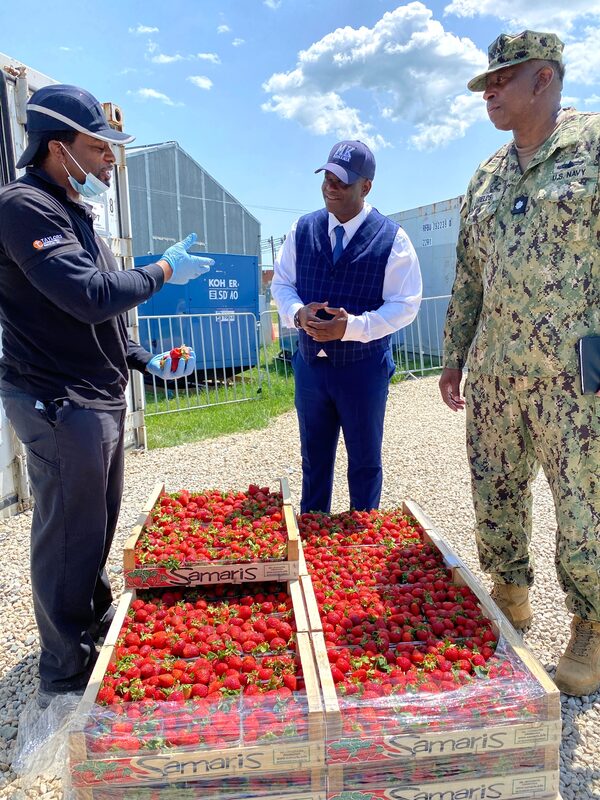
A Louisville produce distributor that started with a single delivery van is now the Pentagon's fresh-produce lifeline for troops at bases across the country, after the Department of War awarded Creation Gardens Inc. a contract worth up to $496,849,673. The company, doing business as What Chefs Want, will supply fresh fruits and vegetables to the Army, Air Force, and Department of Agriculture under a firm-fixed-price contract with economic-price-adjustment provisions.
The award is an indefinite-delivery/indefinite-quantity vehicle, meaning the Defense Logistics Agency guarantees no set dollar amount up front but can order against the ceiling as needs arise. Three companies competed for the work, and DLA Troop Support in Philadelphia is the contracting activity managing it under contract number SPE300-26-D-P450. Performance is centered in Illinois, and the ordering period runs five years with no option periods, closing out on September 7, 2031. That $496,849,673 figure is a ceiling, not a guaranteed payout — the government will draw against it order by order as dining facilities and USDA programs place produce requisitions over the next five years, and the actual dollars spent could land well short of the maximum depending on demand.
Why an Economic-Price-Adjustment Structure Matters for a Half-Billion-Dollar Produce Deal
Fresh produce pricing swings with weather, fuel costs, and seasonal supply in a way that few other Pentagon procurement categories do. The contract's economic-price-adjustment clause lets pricing move with market conditions over the life of the deal rather than locking Creation Gardens into rates set in 2026 and holding them there through 2031. That structure is standard for DLA Troop Support's fresh-food contracts, which have to keep military dining facilities stocked without either starving the supplier during a bad growing season or overpaying the government when produce prices fall.
The three-offer competition suggests DLA drew real interest from produce distributors capable of servicing military installations at that scale — a reminder that Pentagon food contracts, while less glamorous than missile systems or aircraft parts, still draw multiple bidders willing to compete on price and logistics capacity. Fresh produce is also one of the harder subsistence categories to contract for precisely because it cannot be stockpiled the way shelf-stable rations can; DLA needs a supplier that can guarantee steady delivery of perishable goods across a five-year horizon without the government having to renegotiate pricing every time a hurricane wipes out a citrus crop or diesel prices spike. The contract announcement states plainly that "Creation Gardens Inc., doing business as What Chefs Want, Louisville, Kentucky, has been awarded a maximum $496,849,673 firm-fixed-price with economic-price-adjustment, indefinite-delivery/indefinite-quantity contract for fresh fruits and vegetables."
From a One-Van Startup at Louisville's Grocers Ice Facility to a Pentagon Supplier
Creation Gardens did not start out chasing federal contracts. According to the company's own history page, Ron and Mollie Turnier acquired what was then "a small one van produce company called Creation Gardens" and built it into the foodservice brand now known as What Chefs Want, operating out of Louisville's historic Grocers Ice facility. The company's stated philosophy from the outset was customer-driven distribution: "Their goal was simple: ask chefs what they need — and deliver it with speed, flexibility, and a personal touch."
That restaurant-and-foodservice pedigree is notable next to the client list on this contract. Rather than retail grocery chains or institutional food-service giants, What Chefs Want's original customer base was chefs and kitchens wanting specific, fast-turnaround produce sourcing. Scaling that model up to a five-year DLA Troop Support IDIQ serving Army and Air Force dining operations, plus USDA needs, represents a significant jump in both volume and contractual complexity from delivering to restaurant kitchens.
The company's own materials frame its growth around the Grocers Ice building, a historic Louisville cold-storage and produce-handling site that gave the young operation the refrigerated infrastructure a produce distributor needs to grow beyond a single van. Nothing in that history page mentions federal contracting as part of the original plan, which makes the leap from a one-van operation to a half-billion-dollar Pentagon ceiling a useful illustration of how far cold-chain infrastructure can carry a foodservice distributor.
What the Illinois-Based, No-Option Contract Actually Covers
The performance location for the award is Illinois, which could position Creation Gardens to service military installations and USDA customers from a central distribution point rather than shipping every order out of Kentucky — though the contract announcement does not spell out the company's distribution strategy. The absence of option periods shows something concrete: DLA structured this as a flat five-year ordering window rather than a base-plus-options award, meaning the government is not reserving the right to extend the relationship unilaterally beyond 2031. If DLA wants to keep Creation Gardens as a fresh-produce source after the ordering period ends, it will have to run another competition rather than simply exercise an option year.
The three named using customers — Army, Air Force, and Department of Agriculture — span both military dining and a civilian agency, underscoring how DLA Troop Support contracts often serve multiple federal customers off a single vehicle rather than being dedicated to one branch. That multi-customer structure is common for DLA's subsistence contracts, which exist precisely to centralize food purchasing so individual installations and agencies do not each have to run their own produce solicitations.
No award fee or incentive structure beyond the base firm-fixed-price-with-EPA terms appears in the contract announcement, and no executive statement from Creation Gardens or What Chefs Want accompanied the award — the only company-specific language available is the firm's own historical framing of its founding mission, not a reaction to winning this contract.
What It Means for Contractors
For small and mid-sized food distributors eyeing federal subsistence work, this award is a data point worth studying: a company that grew out of a single delivery van and built its reputation serving individual chefs won a nine-figure DLA ceiling in a three-way competition. The economic-price-adjustment clause matters just as much for any contractor bidding fresh-food IDIQs — it signals DLA's willingness to share commodity price risk rather than force suppliers to absorb multi-year fixed pricing on goods with inherently volatile input costs.
The competitive field — three offers received — and the lack of option periods both point toward DLA keeping this category genuinely re-competable rather than letting incumbents coast on renewals. Contractors in the fresh-produce and perishable-subsistence space should treat the 2031 ordering-period end date as a firm recompete trigger, not a formality, and should note that DLA Troop Support is willing to award a contract of this size to a company whose institutional identity is built around foodservice relationships rather than defense-logistics pedigree.
