
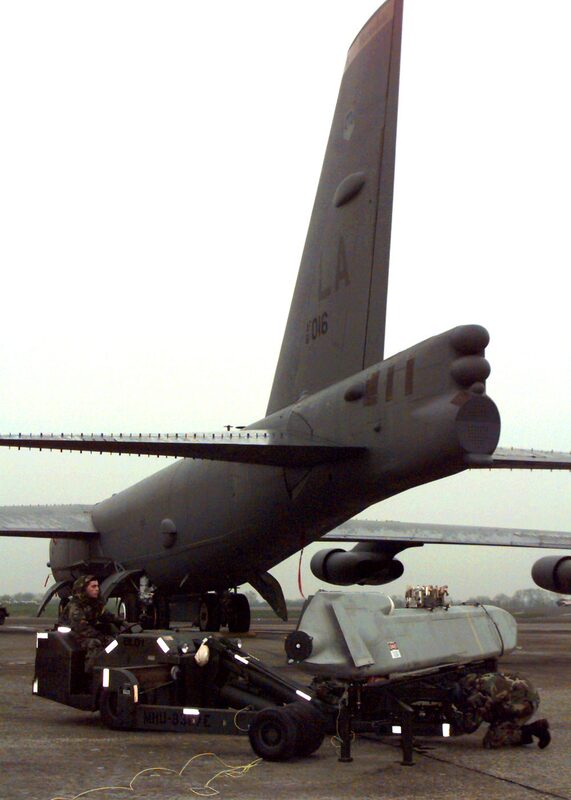
The Air Force Nuclear Weapons Center has awarded Boeing a $49.5 million sole-source contract to remanufacture the flight-control units that steer the AGM-86B Air Launched Cruise Missile, the nuclear-armed weapon that B-52 bombers have carried since the 1980s. The indefinite-delivery/indefinite-quantity award runs through June 29, 2033, extending the missile's service life while the Air Force waits for its intended replacement to reach the field.
Background
The AGM-86B ALCM has served as a core leg of the Air Force's air-launched nuclear deterrent for more than four decades, carrying the W80-1 thermonuclear warhead aboard B-52H bombers. The missile was never meant to remain in service this long. It is slated for eventual retirement and replacement by the AGM-181 Long Range Standoff weapon, but that program has not yet reached the production volumes needed to retire the older missile outright. In the meantime, the Air Force Nuclear Weapons Center, headquartered at Kirtland Air Force Base, New Mexico, must keep the existing ALCM fleet combat-ready, which means sustaining components that were manufactured decades ago and are no longer produced on any active line.
One of those components is the Elevon Actuator Controller, or EAC, the flight-control assembly that translates guidance commands into movement of the missile's elevons during flight. AFNWC's Missile Sustainment Division posted a sole-source notice seeking a contractor to restore the aging EAC inventory rather than attempt a costly new-production run. Boeing, as the ALCM's original manufacturer, was the only company positioned to take on the work, and the Air Force pursued the award on a sole-source basis.
The decision to remanufacture existing hardware rather than build new controllers reflects a broader reality of the nuclear enterprise: production lines for many original ALCM components closed years ago, and reopening them from scratch would take longer and cost more than restoring parts that already exist in Air Force inventory. Sole-source awards of this kind are common in nuclear sustainment work, where the government prioritizes a proven, security-cleared supplier over the delay and qualification burden a competitive new-entrant would face.
AFNWC's Missile Sustainment Division, part of a headquarters based at Kirtland Air Force Base, New Mexico, manages the ALCM alongside other legacy air-delivered nuclear weapons in the Air Force inventory. The office's mandate is to keep fielded systems certified and safe to operate for as long as the Nuclear Weapons Council requires them, a task that grows more difficult and more expensive each year a weapon system remains past its originally planned retirement date.
Key Details
The contract covers regeneration of up to 550 Elevon Actuator Controllers along with production of the test sets used to certify each unit before it returns to the fleet. Boeing plans to restore the controllers at a rate of roughly eight units per month, or about 94 per year, a pace intended to match attrition in the existing inventory without overwhelming the limited supplier base that still supports ALCM hardware.
Work will be split between Boeing facilities in Heath, Ohio, and Fort Walton Beach, Florida, the same locations that have historically handled ALCM guidance and control hardware. At the time of award on June 30, 2026, the Air Force obligated only $2,867,534 in fiscal 2026 missile procurement funds, a small fraction of the $49.5 million ceiling. That pattern is typical of IDIQ vehicles, where the government commits a small amount up front and issues additional funding through task or delivery orders as the work is scheduled over the seven-year period of performance.
Because the ALCM remains a nuclear-capable weapon, the underlying solicitation and contract documentation carry restrictions beyond those found in most conventional sustainment awards. The Department of War's own daily contract announcement for the award was not independently retrievable through automated means during reporting, but the contract's terms, value, and delivery schedule were corroborated across defense trade outlets Army Recognition and MILMAG, both of which cited the same $49.5 million figure, the same June 29, 2033 completion date, and the same 550-unit ceiling.
What It Means for Contractors
This award is a reminder that legacy nuclear weapons sustainment remains a durable, if narrow, revenue stream for the handful of firms with the engineering pedigree and security clearances to touch these systems. Boeing's position as ALCM's original developer effectively locked out competition here, and that dynamic will likely persist for as long as the missile stays in service. Smaller contractors without an existing nuclear-certified supply chain relationship should not expect to break into this specific program, but the award does signal where the Air Force Nuclear Weapons Center is willing to spend as it bridges the gap between AGM-86B retirement and AGM-181 fielding.
For component suppliers and test-equipment manufacturers that already hold subcontracts with Boeing's nuclear weapons division, the seven-year period of performance offers planning stability. A production rate of eight units per month is modest, but it is a known, contracted quantity that can be built into staffing and parts-inventory decisions rather than treated as a one-off surge. Firms that manufacture legacy avionics test sets, in particular, may find opportunities as subcontractors on the associated test-set production line called out in the award.
The low initial obligation of $2,867,534 against a $49.5 million ceiling also underscores how these IDIQ vehicles actually pay out. Contractors evaluating the headline dollar figure should treat it as a maximum, not a guarantee, and should expect the real revenue to arrive incrementally as AFNWC issues delivery orders tied to fiscal-year missile procurement funding rather than as a lump sum at award. Companies bidding on adjacent nuclear sustainment work should read the delivery-order cadence here as a template for how similarly structured legacy-weapon contracts will likely be funded going forward.
More broadly, the contract illustrates a recurring pattern across the nuclear enterprise: aging weapon systems that outlive their planned replacement timelines generate steady sole-source remanufacture work rather than new-start competitions. Contractors tracking the broader Long Range Standoff weapon program should watch for slippage signals there, since any further delay in AGM-181 fielding raises the odds of additional ALCM sustainment task orders being issued under this same vehicle before 2033. Conversely, an accelerated LRSO schedule could see the Air Force scale back EAC restoration quantities in later option years, so contractors bidding follow-on work should track LRSO milestones as a leading indicator for how much of the $49.5 million ceiling actually gets obligated.
