
Lockheed Martin and its suppliers now have a Pentagon signal to build capacity for the AIM-260 Joint Advanced Tactical Missile, but the agreement itself orders no missiles. The Defense Department and Lockheed signed a framework agreement on Thursday, Sept. 17, to expand production of the classified long-range air-to-air weapon developed for the Air Force and Navy. Defense News reported that the agreement “is neither a contract nor an order for missiles.” Neither side released a production rate, quantity, dollar value or timeline.
What the AIM-260 Framework Actually Commits
The document sits one step short of a purchase. Lockheed’s release says the agreement “forms the foundational agreement for a multiyear procurement contract, pending Congressional approval.” Defense News said the aim is for production lines to be ready when orders arrive, should Congress authorize and fund a multiyear buy.
Under Secretary of Defense for Acquisition and Sustainment Michael Duffey framed the arrangement as a message to industry. “Speed, scale, and stability drive acquisition excellence, and these gears must turn in unison,” Duffey said in the Pentagon release, as reported by Defense News. Officials described the deal as a demand signal meant to justify investment in capacity, workforce and production efficiencies.
The War Zone asked the Pentagon about the number of missiles covered, estimated costs and delivery schedules. The department declined to comment on all three. Lockheed says it “will support necessary investments to drive the production increase under this agreement.” Tim Cahill, president of Lockheed Martin Missiles and Fire Control, said the company will spend its own money ahead of any orders, according to Defense News. Breaking Defense noted that Lockheed gave no specifics on the size of that investment.
Why Framework Deals Have Struggled to Become Contracts
The JATM agreement is the latest in a series of framework agreements the Pentagon has signed with industry this year to scale up weapons production. Industry pledges its own funds to modernize and build facilities. The department promises stable multiyear demand.
Breaking Defense laid out the track record. Lockheed’s earlier frameworks for the Patriot’s PAC-3 and the THAAD interceptors have since become undefinitized contract actions worth $59 billion and $35 billion, respectively. Yet “final, definitized contracts for any of the dozen or so framework deals have proven elusive,” the outlet reported, with much of the Pentagon’s munitions spending tied to a $350 billion reconciliation request that Congress has not passed.
The JATM budget picture is partial. Air & Space Forces Magazine reported that the Air Force’s fiscal 2026 request showed 144 JATMs bought in 2024 and 2025, with at least 112 more planned. The fiscal 2027 request, still pending before Congress, carries $1.5 billion in procurement to scale up production, but the budget documents list no quantities.
Mark Gunzinger, director of future concepts and capability assessments at the Mitchell Institute for Aerospace Studies and a retired Air Force colonel, said the framework addresses a specific problem. “It is difficult for industry to justify expenditures needed to accelerate and scale up production,” Gunzinger told Air & Space Forces Magazine.
Why the Air Force and Navy Want JATM Over AMRAAM
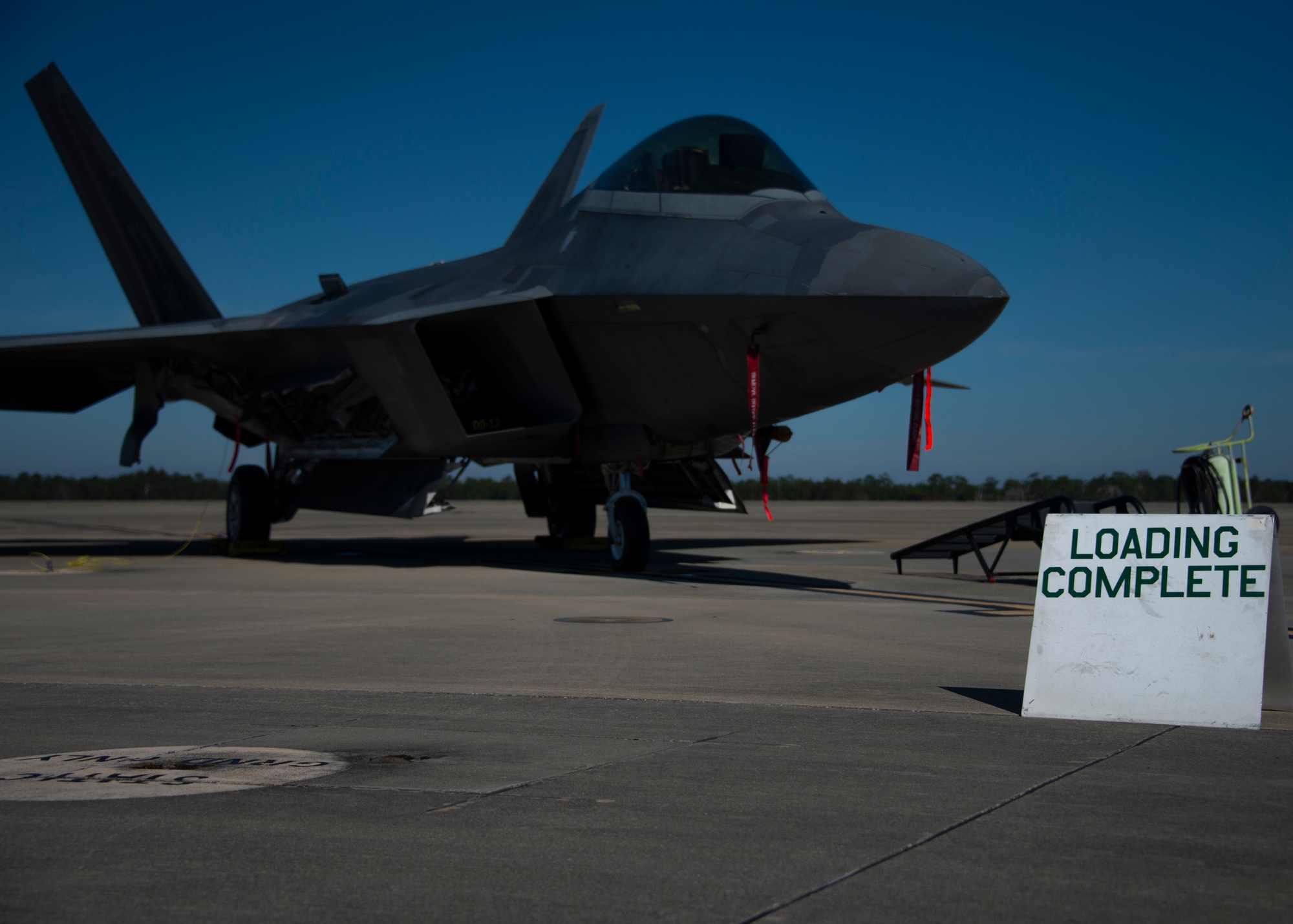
Lockheed is developing JATM for the Air Force and Navy to outrange and eventually replace the AIM-120 AMRAAM. Defense News reported that public estimates put the AIM-260’s range above 120 miles, a response to longer-range Chinese weapons such as the PL-15. The missile is sized to fit the internal bays of fifth-generation fighters such as the F-22 and F-35. Air & Space Forces Magazine adds that JATM is needed for the F-47 and the Collaborative Combat Aircraft variants, the FQ-42 Vengeance and FQ-44 Fury.
The missile is still in development. Air Force Brig. Gen. Mark Massaro, who leads the Air Force Test Center, told reporters at the Air & Space Forces Association conference: “We’re actively testing JATM, and it’s progressing along its program path.” The War Zone notes it is unclear when the first operational AIM-260s will enter the U.S. inventory. When the program became public in 2019, the stated goal was to start fielding in 2022.
The Air Force is not dropping the older missile. Its fiscal 2027 request seeks $953 million for 618 AMRAAMs, and the Navy asks $673 million for 388, Air & Space Forces Magazine reported.
What Australia’s $520 Million Order Means for JATM Volume
Foreign sales are part of the framework, according to The War Zone. Australia announced Aug. 6 that it would spend about $520 million, or A$736 million, to buy JATM for the Royal Australian Air Force, making it the first export customer, according to Defense News. Lockheed’s release cites “a nearly $736 million investment” without naming the currency; Defense News gives the figure as Australian dollars.
That order is a fraction of what Washington has cleared. In March, the United States approved a potential sale to Australia of up to 450 missiles and associated test articles valued at $3.16 billion, Defense News reported. A potential sale approval is a ceiling, not a purchase.
What It Means for Contractors
The framework changes planning for Lockheed’s supplier base before it changes any purchase orders. Suppliers of JATM components should treat the agreement as a reason to prepare, not a reason to book revenue. It carries no quantity, price or delivery schedule, and the Pentagon declined to supply any.
Three markers will show whether the signal turns into work.
- Congressional action on a multiyear buy. Lockheed’s release makes the follow-on contract conditional on congressional approval.
- The fiscal 2027 request. The $1.5 billion in JATM procurement is pending, and no quantities are listed. Watch whether appropriators attach numbers.
- A contract action. The PAC-3 and THAAD frameworks became undefinitized actions worth $59 billion and $35 billion, yet Breaking Defense says final, definitized contracts for the dozen or so frameworks have proven elusive.
Lower-tier suppliers carry similar exposure to Lockheed’s. If a multiyear buy stalls in Congress, capacity built on the strength of the framework has no guaranteed customer. Companies weighing capital spending should ask Lockheed’s supply chain managers what written commitments, if any, back each request to expand.
Sources
- Pentagon, Lockheed sign framework deal to boost AIM-260 production (Defense News, Sept. 17, 2026)
- Lockheed reaches deal to boost production of secretive JATM missile (Breaking Defense, Sept. 17, 2026)
- Pentagon, Lockheed to Expand Production of Secretive New JATM (Air & Space Forces Magazine, Sept. 17, 2026)
- Pentagon Cuts New AIM-260 Air-To-Air Missile Production Deal, Testing Accelerating (The War Zone, Sept. 17, 2026)
- Lockheed Martin and Department of War to Accelerate Air Dominance Missile Production Under New Agreement (Lockheed Martin news release, Sept. 17, 2026)
