
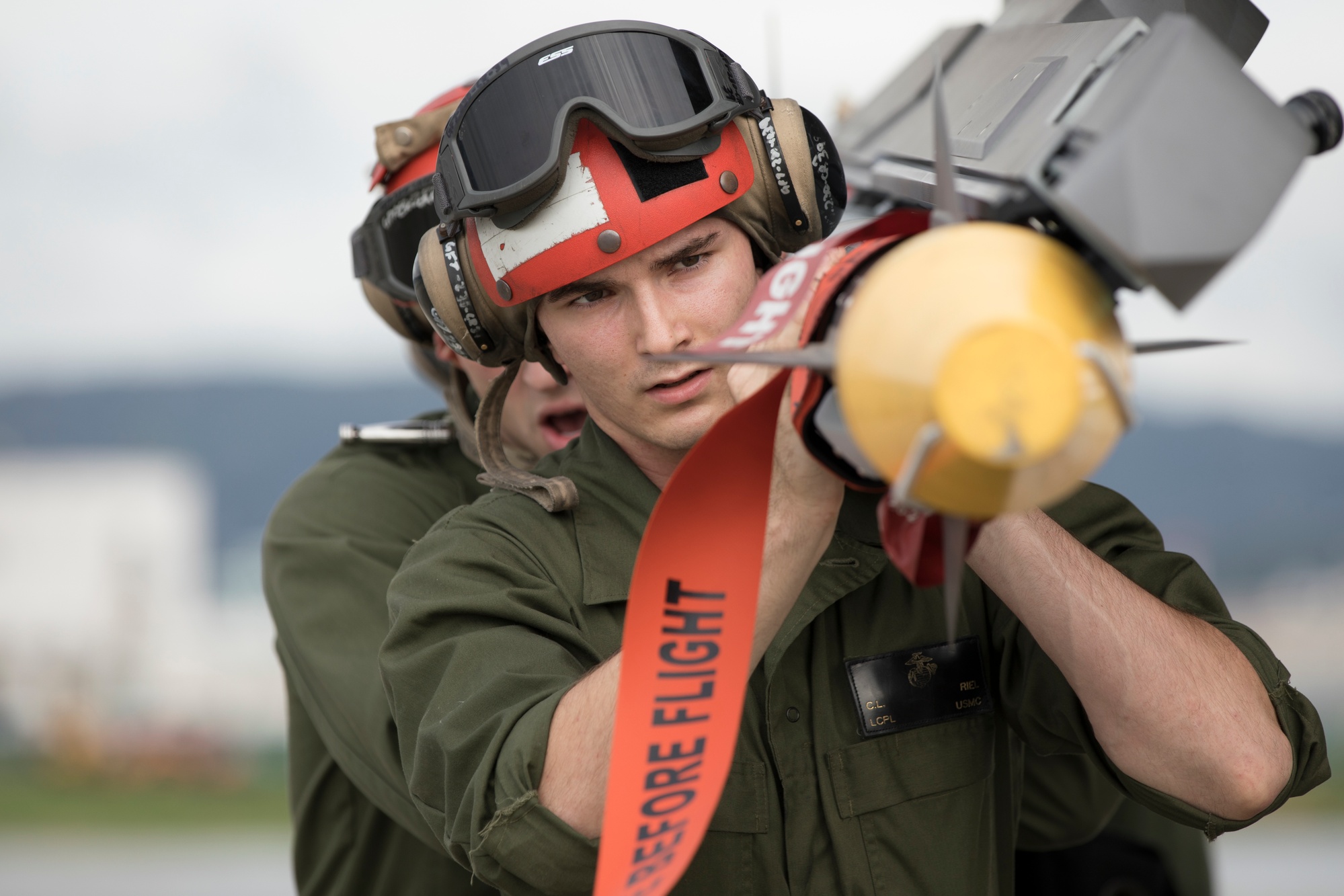
The U.S. Navy has handed Raytheon a $1.108 billion contract modification to build the next lot of AIM-9X Sidewinder air-to-air missiles, according to the Department of War daily contracts listing for June 25, 2026. The award exercises Lot 26 production options and covers 1,989 tactical missiles across the Navy, Army, Air Force and Foreign Military Sales partners, making it the largest single AIM-9X production order placed to date.
Background
The AIM-9X is the latest generation of the Sidewinder, a short-range, infrared-guided air-to-air missile lineage that traces back to the 1950s. The Block II and Block II+ variants pair a high off-boresight imaging infrared seeker with a thrust-vectoring control section, letting pilots cue shots well off the nose of the aircraft and giving the weapon a lock-on-after-launch capability through a two-way datalink. The missile arms the front-line fighter fleet, including the F/A-18E/F Super Hornet, F-15, F-16 and F-35, and it equips a long list of allied air forces through Foreign Military Sales.
Raytheon, the RTX business that produces the weapon, confirmed the deal in a press release dated June 26, 2026, noting that the AIM-9X is trusted by more than 35 allied and partner nations. The order lands as the U.S. and its partners work to rebuild air-to-air missile inventories that reporting ties to stocks drawn down during recent Middle East combat operations. Replenishing magazines of precision munitions has become a recurring theme in Pentagon procurement, and a single lot of nearly 2,000 Sidewinders signals how seriously the services are treating the gap between expenditure and production. Raytheon says it is expanding annual production capacity to 2,500 missiles to meet that demand.
Key Details
The $1,108,009,001 modification breaks down into a detailed mix of tactical and training rounds. The tactical portion comprises 1,653 AIM-9X-4 Block II missiles and 336 AIM-9X-5 Block II+ missiles, the latter configured for Foreign Military Sales customers. That brings the tactical count to 1,989 missiles.
The award also funds a substantial training and test inventory: 156 CATM-9X-4 captive air training missiles, 16 Special Air Training Missiles, 10 Captive Test Missiles, 57 Data Air Test Missiles and 17 multi-purpose training missiles, along with spares, containers and support equipment. Captive training missiles let aircrews fly realistic intercept profiles and exercise the seeker without expending a live round, while the test articles support fleet evaluation and integration work.
Naval Air Systems Command manages the contract. Roughly 36 percent of the work is performed in Tucson, Arizona, Raytheon's missile hub, with the balance spread across the supplier base. Work is scheduled for completion in 2029. The buyer mix spanning the Navy, Army and Air Force alongside FMS partners reflects the AIM-9X's status as a joint and coalition weapon, and it lets the government consolidate demand into a single, larger production run rather than fragmenting orders service by service.
The Block II+ designation for the FMS quantity matters because it identifies an export-tailored configuration, underscoring that allied demand is now a meaningful share of Sidewinder production. With 336 of the 1,989 tactical missiles destined for foreign partners, roughly one in six rounds in this lot supports international customers buying through the U.S. government's security cooperation channels.
What It Means for Contractors
A billion-dollar Lot 26 award is a clear signal that munitions replenishment is driving real, fundable demand rather than aspirational budget language. For prime contractors and the supplier tiers beneath them, the size of this single order points to an environment where the services are willing to commit to larger lot buys to stabilize production lines and bring down unit costs. Companies positioned in the precision-munitions supply chain, including seeker optics, rocket motors, control actuators, datalink electronics and containerization, should expect sustained pull-through as primes ramp to meet multi-year delivery schedules.
The Tucson workshare figure is instructive for businesses tracking where the money lands. With about 36 percent of the value tied to the prime's home facility, the majority of the contract value flows outward to subcontractors and material suppliers, creating subcontracting and second-source opportunities for firms that can qualify components against defense specifications. Vendors already on Raytheon's approved supplier lists are best positioned, but the scale of the order can also justify investment in capacity expansion and new qualifications.
The heavy training and test-article content, more than 250 captive, test and training missiles, highlights a less-publicized revenue stream. Training munitions, support equipment, spares and containers represent recurring, lower-risk work that often outlasts the tactical production tail. Contractors in logistics, calibration, depot support and sustainment should read this lot as evidence that the government is buying the full ecosystem around the missile, not just the warheads.
Finally, the Foreign Military Sales component is a reminder that allied demand can expand a domestic program's addressable market. The 336 Block II+ rounds for FMS partners ride on the same production line as the U.S. tactical buy, and that consolidation benefits the entire supply base by smoothing volume. Firms with export-compliant processes and the ability to support international configurations stand to gain as security cooperation continues to channel partner-nation spending through U.S. industry. With deliveries stretching into 2029, the Lot 26 award offers a multi-year planning horizon that contractors can build hiring, tooling and capital decisions around.
