
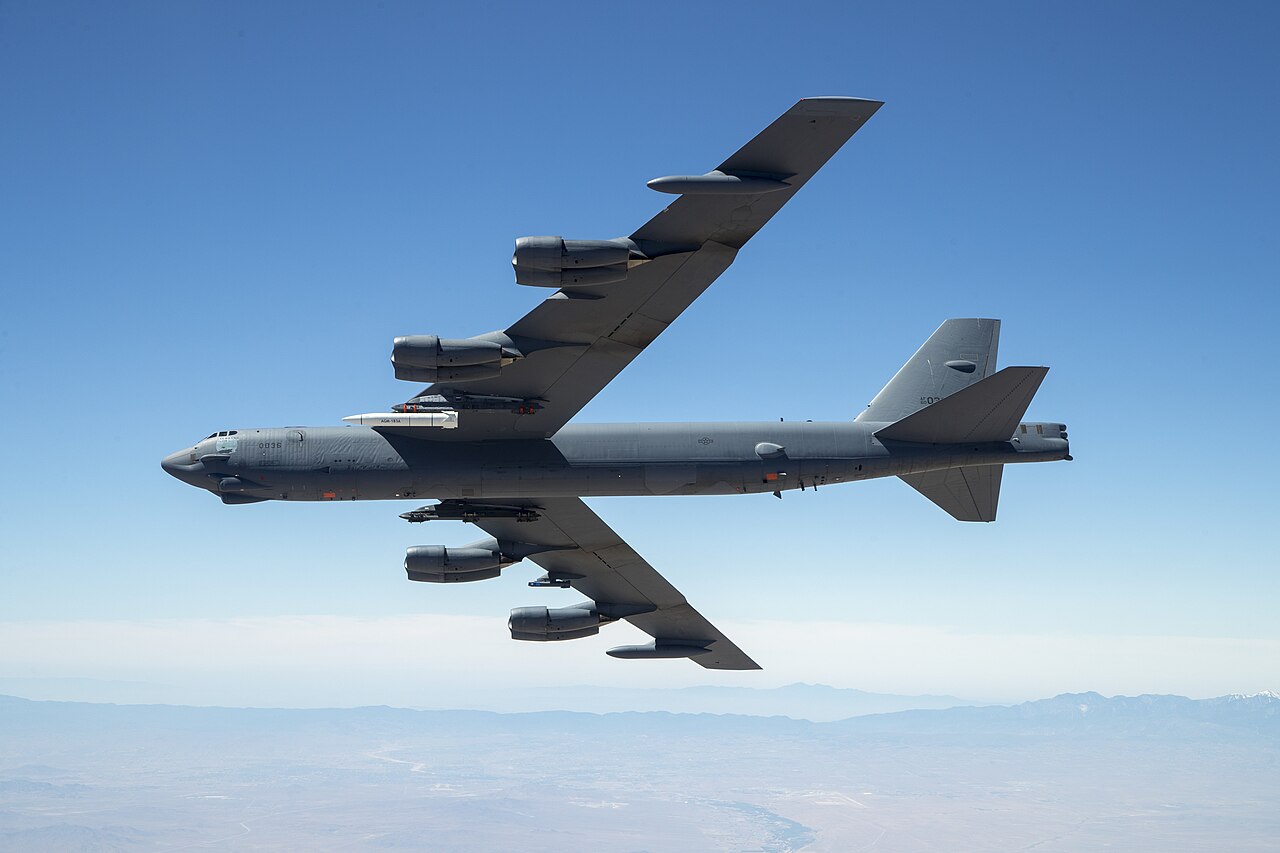
The Air Force's first hypersonic missile is headed into production. The Department of the Air Force awarded Lockheed Martin a $694 million contract for the production and fielding of the AGM-183A Air-Launched Rapid Response Weapon (ARRW), moving a boost-glide program that Congress and the service itself had nearly abandoned out of prototyping and flight testing. The contract was signed Sept. 29, 2026, but the Air Force did not announce it until Oct. 26.
The award was executed under the Department of War's Enterprise-Wide Agile Acquisition Contract. The service released neither the number of missiles ordered nor the delivery schedule, saying in its release that "Further details regarding quantities and delivery dates will not be released to protect Operational Security."
Why the Air Force Calls ARRW a "Turning Point"
Air Force leadership framed the award as the moment the service finally commits to a fielded hypersonic strike weapon rather than a test article.
"This is a turning point in our advanced weapons roadmap," said Secretary of the Air Force Troy Meink. "By moving ARRW from test to production, we're providing our combatant commanders with a credible, high-speed strike weapon capable of penetrating the most advanced anti-access and area-denial systems."
Chief of Staff Gen. Ken Wilsbach tied the weapon to global reach. "Fielding ARRW enhances our ability to hold targets at risk anywhere around the world," he said. "This hypersonic weapon provides the Joint Force a flexible and rapid response option for highly contested environments."
ARRW is designed to accelerate past Mach 5 on a solid-fuel rocket booster before releasing a hypersonic glide vehicle. Once the booster separates and falls away, the glide vehicle maneuvers to its target at five times the speed of sound or greater. The Air Force says the weapon will let its aircraft strike time-sensitive, heavily defended and high-value targets from standoff ranges. Budget documents describe it as "a lethal capability against high-value time-sensitive targets," according to Air & Space Forces Magazine.
The missile is too large for most fighter jets. Air & Space Forces Magazine reports it will initially be fielded on the B-52 and has also reportedly been tested on the B-1.
How ARRW Survived Three Failed Tests and a Zeroed Budget
The production award caps an unusually rocky eight-year run. ARRW development began in 2018, when the Air Force signed Lockheed to a design contract worth up to $480 million. The program built on the joint DARPA-Air Force X-51 effort and aimed to deliver a prototype capability by 2021. Captive carry tests followed in 2019, the same year Lockheed received a $988.8 million contract modification for critical design review.
The schedule then slipped. The first operational flight test had been planned for the end of 2020, with initial operational capability projected for 2022. Instead, the first launch test slid to April 2021 and failed, and two more failures followed. The first successful test came in May 2022.
By then, the money was drying up. In 2021, Congress stripped funds for 12 ARRW missiles from the fiscal 2022 budget plan, and the Air Force zeroed out its own funding for fiscal 2023. In March 2023, Andrew Hunter, then the service's top civilian acquisition executive, said the program would end without purchases. Air Force leaders said at the time they would focus on the smaller Hypersonic Attack Cruise Missile and reusable hypersonic systems.
The program came back in 2025, when then-Chief of Staff Gen. David Allvin told Congress the Air Force would buy ARRW. The fiscal 2026 budget allotted $362 million for that purchase.
Where the $694M Award Sits Against ARRW's Budget Outlook
The $694 million contract value exceeds the $362 million the fiscal 2026 budget allotted for the buy, and the next tranche of funding is not yet secure. The Air Force's fiscal 2027 request includes $452 million for ARRW production, but that budget is stalled in Congress. The Pentagon is operating under a continuing resolution at fiscal 2026 levels, which generally limits new spending to prior-year rates.
The Future Years Defense Plan projects ARRW procurement of $556 million to $621 million per year from 2028 through 2031. If Congress funds those levels, ARRW would settle into a steady production line worth more than half a billion dollars annually for at least four years.
Quantities remain off the public record. Air & Space Forces Magazine reports that ARRW quantities are designated "controlled unclassified information" and are not released. That leaves unit cost, and therefore the size of the eventual inventory, outside public view.
Why the Month-Long Announcement Gap Matters
The timing stands out. As Air & Space Forces Magazine put it: "The contract was awarded Sept. 29, 2026, but the decision was not announced until a month later." Paired with the decision to withhold quantities and delivery dates, the delay shows the Air Force is keeping ARRW production details close.
For a program whose earlier problems played out in public test failures and budget fights, the quieter posture marks a change. Congress will still see the line items in budget documents, but the public, and suppliers outside the prime's immediate team, will have limited visibility into production rates.
What It Means for Contractors
The award locks in Lockheed Martin as ARRW's production prime and opens a multi-year munitions line backed by planned annual procurement of $556 million to $621 million through 2031. Suppliers of solid rocket motors, thermal protection materials, guidance electronics and glide-vehicle structures should expect demand tied to that line, though the Air Force has not disclosed rates or schedules.
Three factors will shape how fast that work arrives:
- Appropriations timing. Until Congress passes the fiscal 2027 budget, the continuing resolution holds ARRW to fiscal 2026 funding levels, below the $452 million requested for production.
- Restricted information. With quantities treated as controlled unclassified information, subcontractors will need appropriate handling procedures and CUI compliance to see demand signals and bid on follow-on work.
- Contract vehicle. The use of the Department of War's Enterprise-Wide Agile Acquisition Contract is the vehicle for this award. Firms pursuing weapons work should track how that vehicle is structured and who can reach it.
The award also changes the competitive picture for hypersonics. In 2023, the Air Force signaled it would favor the Hypersonic Attack Cruise Missile over ARRW. With ARRW now in production, companies working hypersonic programs should watch how future budgets divide funding between ARRW and the service's other hypersonic efforts.
