
The Air Force is paying to find out whether a blended-wing freighter can fill the gap between a converted Cessna and a C-130 in the Indo-Pacific. That gap matters to the Airmen who will be dispersed to remote and austere airfields under Agile Combat Employment. The service is putting $3.5 million into Natilus's KONA aircraft, Air & Space Forces Magazine reported Oct. 21. The money will help move the startup's demonstrator toward full-scale flight testing.
The magazine describes the effort as an attempt to develop "a blended-wing body freighter that's smaller than a C-130 but larger than a Cessna for 'sub-tactical' lift." The contract is small by Pentagon aircraft standards. But it puts a new class of airframe in front of planners who are trying to keep dispersed forces supplied across long stretches of open water.
Who Is Paying for the $3.5M KONA Contract?
The funding does not come from a traditional airlift program office. The Pentagon's Operational Energy-Innovation Directorate and the office of the Air Force's assistant secretary for energy, installations, and environment funded the contract, Natilus Chief Operating Officer Nolan Giblin told Air & Space Forces Magazine.
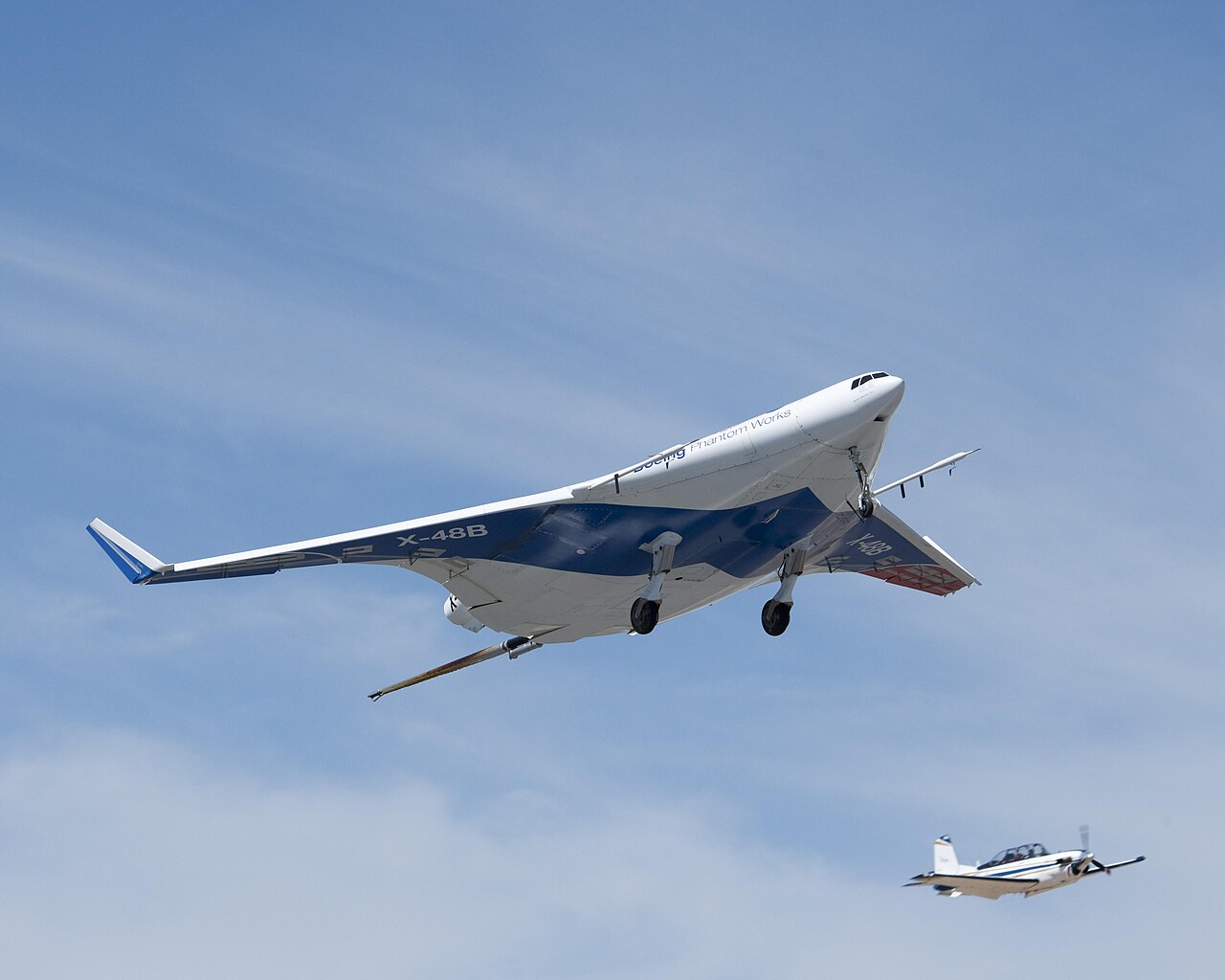
That source of money explains the pitch. Blended-wing bodies merge the wings and fuselage into one lifting shape, which makes them more aerodynamic and fuel efficient and enlarges the cabin. For an energy office, the selling point is fuel burned per pound moved. Giblin put it this way: "When you couple the aerodynamic efficiency of about 30 percent reduction in fuel with the added volumetric capacity, it really boils down to moving more for less."
The $3.5 million goes toward KONA development, including what Giblin called "full-scale flight testing" starting in late 2027 or early 2028. Natilus also plans a demonstration during a joint force exercise, likely in the Pacific, according to the magazine.
How KONA Fits Between the Cessna and the C-130
KONA is a modest airplane. Giblin said it has an 85-foot wingspan and a maximum takeoff weight of 19,000 pounds. It can carry payloads of a little more than 8,000 pounds over a range of 800 nautical miles.
Those numbers place it at the top of a crowded field of small cargo drones. Some of those designs are Cessna 208s modified to fly autonomously, and others are clean-sheet aircraft, with payloads running from 500 pounds to a few thousand. Above that field sits the C-130. The Air Force has about 270 of the tactical airlifters, and they can haul 40,000 pounds of cargo. Giblin described the space between the light utility aircraft and the C-130 as a "capability gap" that KONA is built to fill.
The aircraft will be "optionally manned." For commercial work inside the United States under FAA rules, a human pilot will likely fly it, Giblin said. For the Air Force, autonomy is the key attribute, especially in contested airspace. "We do have our own homegrown [autonomy] software stack. However, we also have optionality to partner with folks that are already looking at this in a serious way," Giblin said.
Why Agile Combat Employment Creates Demand for Small Freighters
Natilus first designed KONA for "short-haul cargo operations and e-commerce," according to the company's website as cited by the magazine. Carriers such as FedEx, DHL and Amazon run hub-and-spoke networks, and the small aircraft serving the spokes tend to fill their cabins before they reach their weight limits. Giblin said those operators are "literally leaving revenue on the ground every time they take off."
The Air Force is looking to build its own hub-and-spoke model. Agile Combat Employment calls for dispersing small teams of Airmen and aircraft from large hubs to remote or austere airfields so adversaries have a harder time targeting them. Supplying those teams is hard in the Pacific, where distances are vast and mostly over water. An aircraft with more cabin volume per pound of structure and lower fuel burn is the kind of design that could suit that problem, which is the case Natilus is making. Flying Magazine framed the Kona as a regional freighter that could serve both commercial cargo operators and military missions in the Indo-Pacific.
JetZero's $235M Z4 and the Pentagon's Blended-Wing Bet
KONA is not the Air Force's first blended-wing investment. In 2023 the service started a BWB demonstrator and prototype program with startup JetZero, which is partnering with Northrop Grumman. That aircraft, the Z4, is expected to fly in 2027, and the Air Force has invested about $235 million in it.
The two aircraft serve very different roles. JetZero has pitched the Z4 as a possible future aerial refueler, with a wingspan approaching 185 feet and a maximum operating weight of 362,000 pounds, putting it in the class of a KC-46 or C-17. KONA's 19,000-pound maximum takeoff weight is a small fraction of that. Even so, Giblin said the Z4 investment told Natilus there are "tailwinds" for blended-wing aircraft inside the Pentagon.
Where the KONA Demonstrator Stands Today
Natilus is already building its demonstrator, and the Air Force contract will speed up that work. Giblin listed the progress: the "vertical tails, flight control surfaces are already built, the cargo loading system was delivered by Raytheon a couple weeks ago, we just put on order used PT6 engines." The wing shipset and the fuselage are still to come.
The open question is whether the company can finish the wing and fuselage and fly a full-scale aircraft in the late-2027 to early-2028 window Giblin described.
What It Means for Contractors
The KONA award shows a path into defense aviation that does not run through a major program of record. Operational energy and installations offices are funding airframe development when a company can tie its design to fuel savings and logistics for dispersed operations. Small aircraft developers, autonomy software firms and cargo-handling suppliers should watch those offices alongside the traditional acquisition channels.
Several pieces of KONA's development look open to partners. Giblin said Natilus has more than one path to autonomous flight, including working with outside firms, and the demonstrator still needs its wing shipset and fuselage. Raytheon's delivery of the cargo loading system shows that a large defense firm is already acting as a supplier on the program.
The planned joint force exercise demonstration is the next public milestone. If KONA performs there, the Air Force will have flight data on a sub-tactical lift tier that sits between today's small cargo drones and the C-130. Companies building in that payload range may find that data shapes how the service approaches future requirements for Pacific logistics.
