
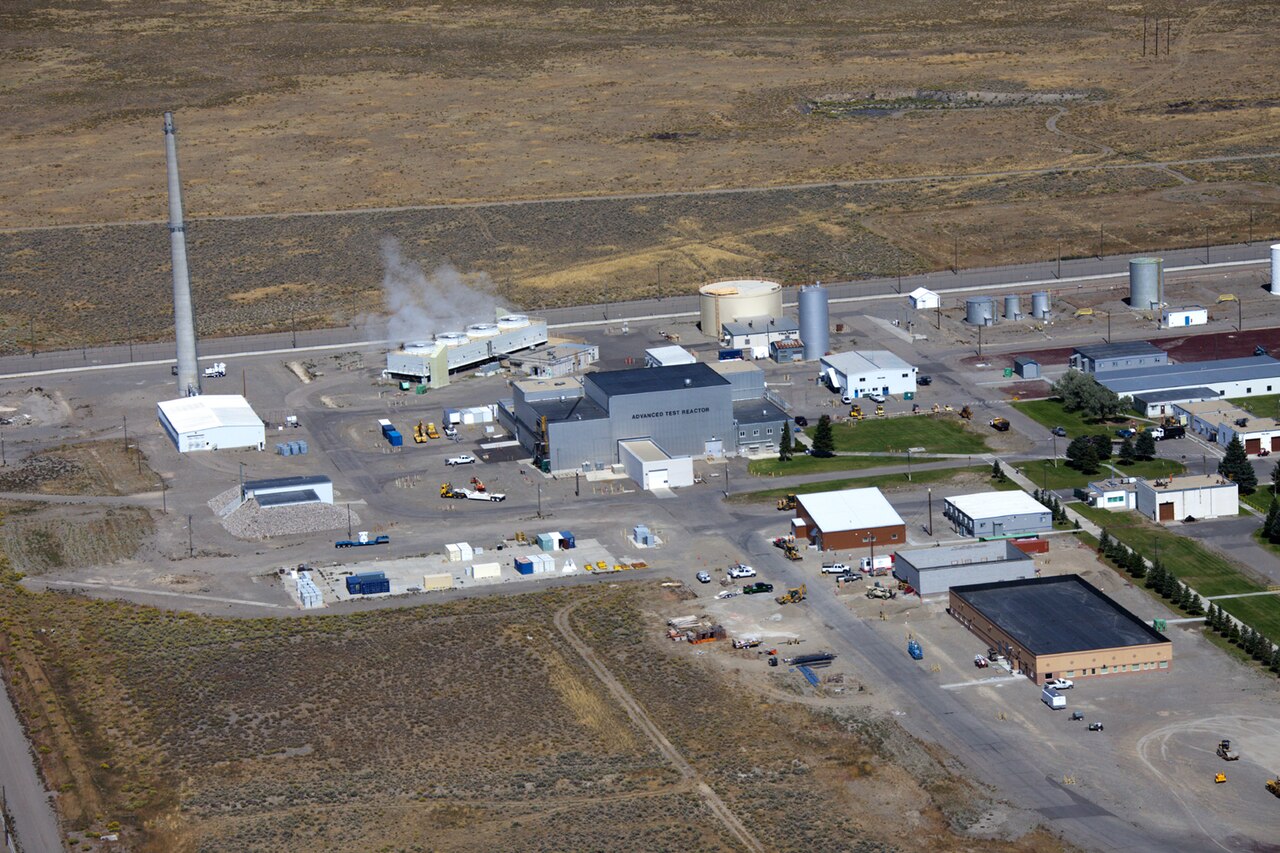
Naval Weapons Station Crane in southern Indiana is now on track for its own nuclear power source, and Indiana is on track for its first power-producing reactor. The Department of the Navy selected Radiant Industries, Inc. to design, build and deliver a prototype Microreactor Power Plant at Crane, using Radiant's factory-built Kaleidos design. The Navy's release is dated Oct. 21, 2026; EconoTimes reported that the selection came Oct. 20, when Radiant announced it.
The Navy is buying through the Army's Janus Program, in partnership with the Department of War Innovation Unit (DIU), and the Crane plant counts against a microreactor fleet the Army has already announced. EconoTimes reports the Department of War's installation deadline is no later than September 2028. Neither the Navy release nor EconoTimes disclosed a contract value.
How the Crane Reactor Fits Inside the Army's Janus Program
The Navy release takes pains to say the Crane reactor does not expand Janus. "The selection of Radiant for NWS Crane is not a new or additional effort within the existing Janus Program," the release states. Instead, the Crane plant "is accounted for within the August 26, 2026 award announcement which stated the Army expects to build more than 20 total nuclear microreactors on military installations."
The Navy presents that structure as a shortcut. According to the release, "By leveraging the Army's Janus contracting vehicle and DIU's agile innovation framework, the Navy is streamlining the path to deployment to provide NWS Crane with an independent power source."
Dr. Jeff Waksman, Principal Deputy Assistant Secretary of the Army for Installations, Energy and Environment, framed the program as a cross-service vehicle. "The Janus Program was built from day one to deliver real, reliable hardware and systems to solve energy resilience challenges across all of the Services," he said. "We are excited to partner with the Navy to place a Janus reactor at NWS Crane, and by doing so to deliver the state of Indiana its first advanced microreactor."
EconoTimes reported that the Department of War announced the Crane project in September, saying the reactor would be commercially owned and operated and, if installed, would be Indiana's first nuclear reactor to produce power. The Radiant selection names the supplier for that project.
What Radiant's 1-Megawatt Kaleidos Unit Promises
Radiant rates Kaleidos at 1 megawatt of electrical output, according to EconoTimes. The company says the unit can move by aircraft, ship or overland, and that it needs neither cooling water nor extensive construction at the site. Radiant projects a 20-year service life with up to five years between refuelings.
The design has not yet proven itself in the field. Radiant says Kaleidos is undergoing testing at Idaho National Laboratory's Demonstration of Microreactor Experiments facility, tests meant to show how the reactor performs and whether it runs reliably. EconoTimes notes that the reactor has not begun supplying power at the base and that Radiant says further design work and prototype testing remain before deployment at Crane.
Why Crane Needs Grid-Independent Power
Naval Weapons Station Crane is home to two major organizations: Crane Army Ammunition Activity, which produces and distributes joint conventional munitions, and Naval Surface Warfare Center, Crane Division. The Navy release says these national security requirements "demand resilient infrastructure to perform critical weapons development, support electromagnetic warfare, strengthen strategic missions, and enable advanced manufacturing capabilities."
Brendan Rogers, Assistant Secretary of the Navy for Energy, Installations, and Environment, tied the reactor directly to readiness. "The industrial and operational testing missions executed at NWS Crane are vital to the readiness of our fleet and the future fight," he said, adding that dedicated microreactor power "means our critical naval support systems will never go dark."
Vice Adm. Brad Collins, Commander, Navy Installations Command, cast installations as combat assets. "Our installations are foundational warfighting platforms and ensuring their resilience is essential to supporting the Fleet," he said.
At the department level, Mike Dodd, Assistant Secretary of War for Critical Technologies, presented the selection as part of a wider push on nuclear deployment. "The Department of War is actively breaking down the barriers that have prevented deployment of nuclear reactors," Dodd said. He added, "We are not just investing in technology; we are leveraging vital commercial capabilities to deliver an immediate, asymmetric advantage directly to the warfighter."
Indiana Gov. Michael Braun welcomed the project in the release, saying it "supports significant economic opportunity for Hoosier communities through high-quality jobs, new investment, and local business growth."
What Stands Between Selection and a September 2028 Startup?
The Navy lists the next phases as "final environmental reviews, localized site design, and regulatory coordination with the appropriate oversight entities and with federal, state, and local partners." Experts from the Naval Nuclear Propulsion Program will work alongside the Nuclear Regulatory Commission and other partners, providing technical support through "design refinement, prototype testing, regulatory coordination, site preparation, and ultimately safe deployment."
That is a long list for a roughly two-year window. Environmental review, site preparation and regulatory coordination must run while Radiant continues testing at Idaho National Laboratory.
What It Means for Contractors
The Crane selection suggests Janus is a route for installation microreactors beyond the Army. Companies hoping to place reactors on Navy or other service bases may find it worth tracking how those opportunities move through the Army's Janus vehicle and DIU, since the Navy used that path here rather than announcing a separate program. With the Army expecting to build more than 20 reactors under the August award announcement, the remaining sites are where further selections may land.
The bigger near-term work may sit around the reactor. The Navy's release names final environmental reviews, localized site design and regulatory coordination, and it says the project will adhere to strict safety, physical security and environmental compliance standards. Engineering, environmental consulting and construction firms with nuclear licensing experience, or with existing relationships at Crane, look well placed to support Radiant as subcontractors or to support the Navy's oversight role, though neither source says how that work will be sourced.
Suppliers to NSWC Crane and Crane Army Ammunition Activity should also watch how a dedicated power source changes base energy planning. A reactor intended to keep critical operations powered during grid outages could affect future facility, utility and energy-resilience requirements at the station.
Neither source disclosed a dollar value for the Crane plant, and the Department of War said the reactor would be commercially owned and operated. Firms sizing the opportunity should watch Janus announcements for financial terms as they emerge.
