
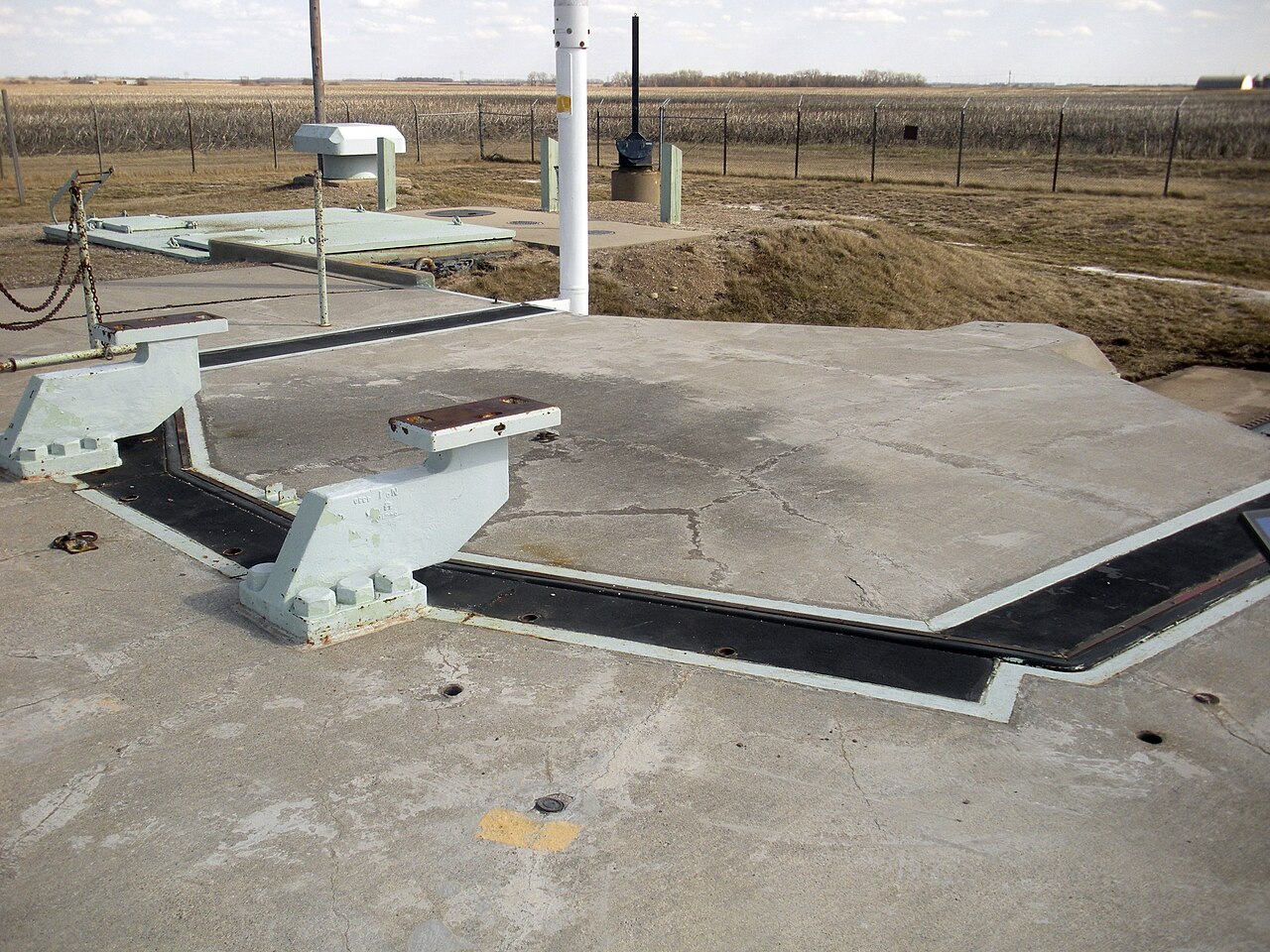
Landowners and construction firms across Wyoming, Montana and North Dakota now face the prospect of the Air Force buying land it does not own today for as many as 120 new Sentinel ICBM silos, after the service reopened the program's environmental review to account for its shift from reusing Minuteman III sites to building new ones. The Department of the Air Force announced the change in a Federal Register notice of intent published Oct. 9, 2026, which commits it to a Supplemental Environmental Impact Statement (SEIS) to the 2023 Sentinel EIS and the May 2023 Record of Decision. A 30-day public scoping period began on the date of publication.
The notice states the timeline plainly: "The Draft SEIS is anticipated to be provided for public comment in fall 2027. The Final SEIS is anticipated for publication in Spring 2028." According to Air & Space Forces Magazine, the Secretary of the Air Force can sign a Record of Decision after the final document is out, and that decision clears the way for land acquisition and construction.
Why the 2023 Sentinel Basing Plan Could Not Survive
The 2023 EIS assumed the Air Force would recapitalize existing Minuteman III infrastructure, converting today's Launch Facility (LF) sites into Sentinel Launch Silo (LS) sites. The new notice abandons that premise. It says the original approach "could not be carried forward because key Sentinel Program milestones were no longer achievable due to cost and schedule risks associated with converting existing Launch Facility (LF) sites to Launch Silo (LS) sites."
The notice cites the July 2024 Acquisition Decision Memorandum that directed the program's restructure. Under that direction, the department evaluated deployment strategies "to reduce execution risk, stabilize costs, and address the complexities of legacy infrastructure" and moved "from legacy facility reutilization to the construction of modernized, new-built LS sites that are adaptable to future technological advancements."
Air & Space Forces Magazine reports that officials say the program's problems trace to infrastructure and civil engineering work rather than to the missile itself. Critical cost and schedule overruns triggered a Nunn-McCurdy notice to Congress in early 2024, and in spring 2025 Air Force officials decided it would be more effective to build entirely new silos. The service plans to replace the 450 active Minuteman III silos on a one-for-one basis.
The notice also rules out standing pat. The SEIS will analyze a No Action Alternative, under which the department would keep implementing the 2023 decision, but the notice says that alternative "is not a reasonable alternative because it has been deemed unachievable due to cost, schedule, siting, and engineering constraints."
Where the 120 Sentinel Silos on New Land Could Go
When the Air Force first chose new construction, a spokesperson told Air & Space Forces Magazine that the silos would be "predominantly Air Force-owned real estate, which means reusing the existing missile sites but not the 55-year-old silos." The SEIS website the service launched Oct. 9 changes that picture. According to the magazine, it states that just over a quarter of the sites could sit on land the Air Force does not own today. The service is considering acquiring land and building:
- up to 30 new launch silo sites around F.E. Warren Air Force Base, Wyo.;
- up to 30 new launch silo sites around Malmstrom Air Force Base, Mont.;
- up to 60 new launch silo sites around Minot Air Force Base, N.D.
The magazine also reports that the service is evaluating sites at Malmstrom once operated by the now-inactive 564th Missile Squadron for reuse as up to 60 new launch silo sites. "The Air Force is planning to buy up to 12 acres per silo, according to the supplemental EIS website," the magazine reported. The Federal Register notice itself gives a less detailed split: up to 30 new LS sites at F.E. Warren and up to 60 at Malmstrom and Minot.
The notice lists land acquisition through real estate transactions for new LS and Launch Center sites at F.E. Warren and Minot, expansion northwest of the existing missile field at F.E. Warren, and expansion west and east of the existing field at Minot. At Malmstrom, the notice describes reusing former 564th Missile Squadron sites as swing space and setting up temporary laydown areas.
What Else the Sentinel SEIS Proposed Action Covers
The silos are one piece of a broader construction program. At each missile field, the proposed action includes closing in place a selected number of the current 150 Minuteman III LF sites, disposing of existing Missile Alert Facility (MAF) and LF sites, and converting qualifying LF sites to LS sites. It would reuse MAF sites to build Launch Centers and procure easements for new utility corridors, "including fiber-optic cables not evaluated in the 2023 EIS."
The notice also adds in-field MH-139 Grey Wolf helicopter refueling and rearming capability at selected Launch Center sites, new on-base facilities, and plausible relocation of workforce hubs to support construction efficiency.
Air & Space Forces Magazine reports that the Air Force will reuse MAF sites for Launch Centers "where feasible," but at Minot officials are weighing "construction of new launch center sites in previously undeveloped areas." Each Launch Center would occupy up to 16 acres. The service is also considering a "purpose-built Operations Group Facility" at Malmstrom.
Who Weighs In Before the Sentinel SEIS Is Final?
The Air Force is the lead agency. It will invite seven federal agencies to take part as cooperating agencies: the Bureau of Indian Affairs, Bureau of Land Management, Bureau of Reclamation, U.S. Army Corps of Engineers, U.S. Forest Service, U.S. Fish and Wildlife Service, and the U.S. Department of Agriculture Farm Service Agency.
The department accepts comments at any time during the SEIS process but asks that they arrive within the 30-day scoping window. Comments can go through the project website, sentinelseis.com, or by mail to Sentinel SEIS, c/o Tetra Tech, 711 Navarro Street, Suite 560, San Antonio, Texas 78215.
What It Means for Contractors
The SEIS sets the order of work for Sentinel's ground segment. According to the magazine, the final SEIS, planned for spring 2028, comes before a Record of Decision that clears the way for land acquisition and construction. Firms positioning for silo, Launch Center, utility corridor and fiber-optic work should plan around that sequence rather than the 2023 baseline.
The scope also widens the field of trades involved. Real estate acquisition across three states, new utility easements, closure and disposal of legacy LF and MAF sites, helicopter refueling infrastructure and a possible new operations facility at Malmstrom each draw on different specialties.
Companies with operations near F.E. Warren, Malmstrom and Minot should watch the scoping record and the fall 2027 draft closely. Those documents will show which sites survive analysis and where the Air Force intends to buy land. Air & Space Forces Magazine reports that Northrop Grumman, the Sentinel contractor, is already building a prototype silo with the Air Force at its Promontory, Utah, facilities.
