
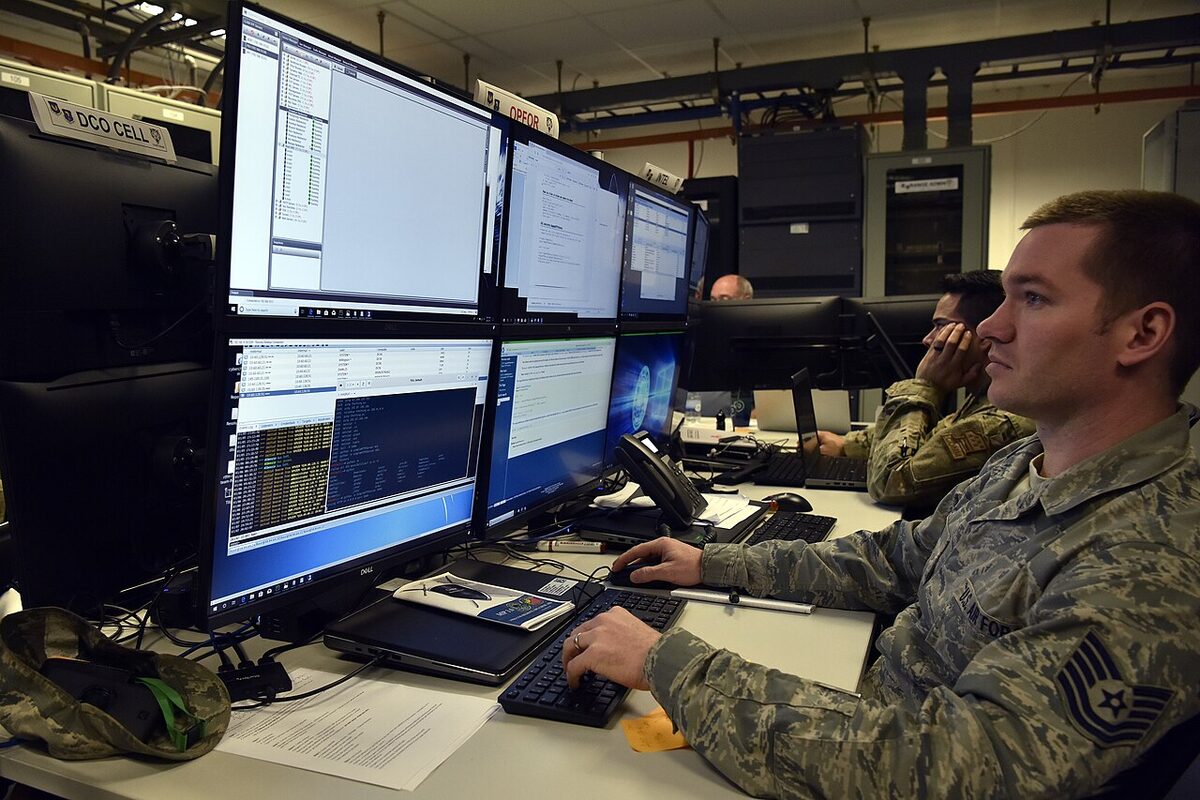
Cyber troops who were set to lose up to $1,000 a month in incentive pay will keep their old rates for another year. The Pentagon has put a one-year transition plan in place for its Cyber Mastery Incentive Pay (C-MIP) program, DefenseScoop reported Oct. 15, letting affected service members draw either C-MIP or their legacy service incentive pay, whichever is higher, until Sept. 30, 2027. The memo authorizing the plan was dated the same day C-MIP took effect, Oct. 1.
The reprieve came days after services had warned subordinates to expect cuts. Before the plan, certain troops would have lost between $100 and $1,000 a month once the new program replaced older service-run incentive models, according to DefenseScoop's earlier reporting.
“To ensure a smoother transition, we’ve formalized a one-year plan to facilitate the transition for service members,” Katie Sutton, the Pentagon’s top cyber advisor, told DefenseScoop in an emailed statement.
Who Gets the Higher of C-MIP or Legacy Pay?
The transition protection applies to a defined population. Troops qualified in one of five designated work roles and assigned to Cyber Operational Forces 1 and 2 can receive the higher of C-MIP or legacy service pay during the transition. The five roles are cyberspace operator, exploitation analyst, capabilities developer, host analyst and network analyst.
Troops outside that scope, including COF 1 and COF 2 members qualified in work roles other than the five C-MIP identifies, will continue to receive legacy service pay, according to the memo. The Pentagon may expand C-MIP to additional COFs and other roles, contingent on an evaluation of the transition plan and further approval from department leadership.
The memo also sets a paperwork deadline. Service secretaries must submit updated incentive pay plans by Jan. 1, 2027, routed through the cyber policy office for approval by the Pentagon’s personnel arm.
How the Two-Tier C-MIP Structure Works
The Pentagon announced C-MIP on June 10, 2026, as part of its Cybercom 2.0 initiative. Military Times reported that the program was developed in 60 days by the CYBERCOM 2.0 unit and was meant to replace service-specific incentive models with a more flexible system that aligns pay with skill mastery.
“To incentivize our cyber forces and meet both Department of War and Defense Industrial Base needs, we need to shed legacy incentive models and invest directly in our people serving on the digital front lines. C-MIP does this,” Undersecretary of Defense for Personnel and Readiness Anthony Tata said in the June release.
The framework has two tiers. Skill Incentive Pay (SIP) rewards progression across the five work roles at basic, senior and master levels. Special Duty Assignment Pay (SDAP) is a monthly incentive for troops who take on duties Cyber Command deems “exceptionally demanding,” such as serving as trainers or in more advanced cyber positions. The June announcement did not specify pay amounts for either level, Military Times noted.
The legacy programs C-MIP was built to retire belonged primarily to the Army and Air Force; the Navy previously had a limited-scope incentive pay model. Basic and senior level troops in nearly all five work roles were set to take immediate cuts before the transition plan, according to a Sept. 14 pay chart comparing C-MIP with the Army’s Cyber Assignment Incentive Pay (CAIP) that DefenseScoop previously reported on.
Why 21% of the Cyber Mission Force Already Gets a Raise
Not every troop faced a cut. The Pentagon said more than 21% of the Cyber Mission Force has earned higher qualifications since the June announcement and will see pay increases under C-MIP. The department declined to provide a detailed breakdown, citing operational security concerns.
For the rest, the year is meant to buy time to upskill. A Pentagon official told DefenseScoop that the department “intends to reevaluate the transition period prior to the one-year expiration to ensure all service members have had adequate opportunities to upskill.”
The end state is fixed, though. “At the conclusion of the transition period, service members will be compensated strictly in accordance with their mastery level and the special duties they are executing under the C-MIP framework,” the official said.
Army Cyber Leaders at AUSA: ‘Nobody’s Losing Pay’
Senior Army cyber officials said at the annual AUSA conference in Washington this week that troops were previously at risk of losing pay under C-MIP but no longer would under the transition plan. Lt. Gen. Christopher Eubank, head of Army Cyber Command, had sent an email days before C-MIP’s launch preparing subordinate leaders for conversations with troops worried about pay cuts.
“I’ll start with: Nobody’s losing pay,” Eubank said. “When we rolled out Cyber Mastery Incentive pay, we were in a place where potentially we were going to lose pay,” he added.
Before the memo, the Army had planned its own stopgap: paying soldiers the higher of the C-MIP rate or half of their legacy CAIP rate for a year. Under the Pentagon-wide plan, eligible troops can instead draw the higher of C-MIP or their full legacy rate.
Brandon Pugh, the Army’s principal cyber advisor, said “there’s going to be a lot of lessons learned over the next year” during the transition. “Part of my job is making sure this is rolled out, that Army soldiers are being benefited and supported,” he said at the AUSA panel.
What It Means for Contractors
C-MIP is a military compensation program, but its design may reach into the contractor workforce. Tata framed the program around meeting both Department of War and Defense Industrial Base needs, and firms that hire cleared cyber talent will want to watch which roles the department chooses to pay for.
Three points matter for firms supporting Cyber Command and the service cyber components:
- Retention pressure eases for a year. With legacy pay preserved through Sept. 30, 2027, troops in basic and senior tiers lose one immediate incentive to leave uniformed service for industry jobs. Companies counting on a wave of cleared cyber operators leaving the force should plan for a slower flow.
- Training demand is likely to rise. The Pentagon has said the year exists so troops can upskill toward higher mastery levels. Firms that deliver cyber training, ranges and qualification support to the Cyber Operational Forces should watch how services fund that push.
- The Jan. 1, 2027 plans are the next signal. Updated service incentive pay plans, and any decision to expand C-MIP beyond COF 1 and 2 or beyond the five roles, will show which skill sets the department intends to pay most for.
The harder date is Sept. 30, 2027. After that, pay follows mastery level and special duties only, unless the Pentagon’s promised reevaluation changes the timeline.
