
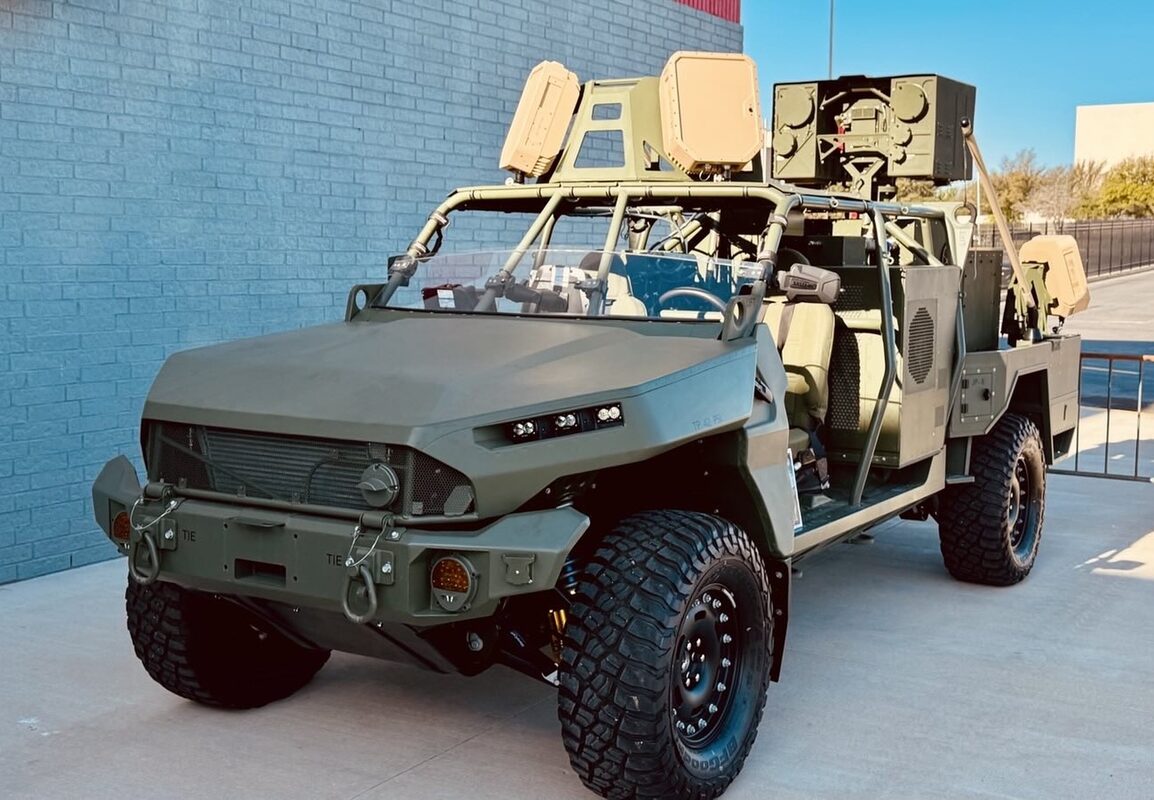
The Army is putting a combat laser into mass production for the first time in U.S. military history, arming ground vehicles with a weapon designed to shoot down small drones for less than the price of a cup of coffee per shot. The service awarded AeroVironment a $464.8 million Other Transaction Authority production contract on Sept. 2, 2026, for the Enduring-High Energy Laser program, known as E-HEL.
The Albuquerque, New Mexico-based operation will build the LOCUST X3 system, a 30-kilowatt, platform-agnostic laser engineered to defeat Group 3 drones weighing up to 1,320 pounds at a cost AeroVironment officials say is under $5 per shot. That price point matters against an adversary that can launch swarms of cheap drones faster and more affordably than the Army has historically been able to shoot them down with missiles costing tens of thousands of dollars apiece.
Why E-HEL Is the Army's First Production Laser
Directed-energy weapons have circulated through Pentagon demonstration programs for more than a decade, but none had cleared the threshold into an actual production contract until this one. Army officials framed the award as a structural shift rather than another prototype.
"This first of its kind directed energy program will enable our formations to defeat unmanned systems and dominate from the outset," Gen. Christopher LaNeve, Vice Chief of Staff of the Army, said of the award.
Mary Clum, president of AeroVironment's space, cyber and directed energy program, described the contract in similar terms. "The Enduring High Energy Laser Program is historically significant. It's not simply about lasers defeating a drone, it is the transition of directed energy toward an enduring place in the Army's force structure," Clum said, according to DefenseScoop.
John Garrity, AeroVironment's vice president of directed-energy systems, told Breaking Defense the milestone was less about any single engagement and more about the industrial base standing behind it. "One of the key exciting components of this particular production program is introducing production-directed energy for the first time in the nation's history," Garrity said.
Why the Army Used an OTA Instead of a Standard Contract
The Army structured the award as an Other Transaction Authority production contract rather than a conventional Federal Acquisition Regulation program of record. OTAs let the Pentagon move a technology from prototype to fielded production without running the full competitive recompete process a traditional program requires, and the Army has increasingly leaned on that authority for systems it wants in soldiers' hands quickly rather than after years of milestone reviews. Using an OTA for E-HEL signals the Army treats defeating Group 3 drones — fixed-wing and rotary-wing unmanned aircraft weighing up to 1,320 pounds — as urgent enough to bypass the slower acquisition track, even for a weapon category, directed energy, that has never before reached production.
Where the LOCUST X3 Gets Mounted First
AeroVironment plans to initially mount the LOCUST X3 on Joint Light Tactical Vehicles and Infantry Squad Vehicles, along with palletized configurations that can be moved between platforms as needed. The company has described the laser as platform-agnostic and has pointed to a path toward integrating it onto Strykers and other heavier vehicles as the program matures.
The system is also designed to plug into existing Army networks rather than operate as a standalone box. It can integrate with Anduril's Lattice software, which the Army has folded into its Next Generation Command and Control architecture, letting a laser-equipped vehicle receive targeting data from sensors and other shooters across a formation instead of relying solely on its own onboard detection.
The Push Past 20 Systems a Year
AeroVironment expects to deliver an initial laser capability within one year of the award. On production volume, the company says it has already moved past the "tens of systems a year" it used to build and can now manufacture in the low 20s annually — and Garrity told Breaking Defense the company will be "scaling well beyond that" over the coming 12 to 18 to 24 months.
AeroVironment has separately told reporters it expects to deliver "well into the dozens" of LOCUST X3 systems to the Army over the next few years under the OTA, without specifying exact unit numbers, according to DefenseScoop — a domestic manufacturing line built specifically around directed-energy hardware rather than adapted from another weapons program.
The sequencing matters: AeroVironment finished its $30 million Albuquerque investment before the production contract existed, not after. That is a bet that the Army would eventually need volume the company did not yet have a contract to build, and it is the kind of capital outlay that only a handful of directed-energy competitors could have made without a signed award underwriting it. With the contract now in hand, that plant becomes the anchor for AeroVironment's push to scale well beyond its current low-20s-per-year capacity over the next one to two years.
What It Means for Contractors
The E-HEL award reopens directed energy as a real acquisition category rather than a research line item, and it does so through an Other Transaction Authority vehicle rather than a traditional Federal Acquisition Regulation contract — a structure that let the Army move from prototype to production without the years-long recompete cycle a conventional program of record would require. Competitors who have spent years running their own laser demonstrations, including defense primes with directed-energy divisions, now have a concrete benchmark to beat: a sub-$5-per-shot cost, a 30-kilowatt power class, and a delivery timeline of one year to initial capability.
The Lattice and Next Generation Command and Control integration requirements also signal where the Army wants future counter-drone bids to point. A system that cannot pass targeting data through those networks will look less competitive on the next solicitation, even if its beam quality is comparable. Smaller directed-energy firms without an existing relationship to Anduril's software stack or the Army's C2 architecture may need to budget for that integration work up front rather than treat it as an afterthought once a contract is in hand.
For companies supplying the Joint Light Tactical Vehicle and Infantry Squad Vehicle programs, the palletized and vehicle-mounted configurations open a new subsystem lane: power generation, thermal management, and structural mounting kits sized to a 30-kilowatt laser draw more current and generate more heat than the sensors and radios those platforms were originally built around. Subcontractors who can solve the power and cooling problem for a vehicle-mounted laser have a market opening well before the Army gets to Strykers and other heavier platforms.
