
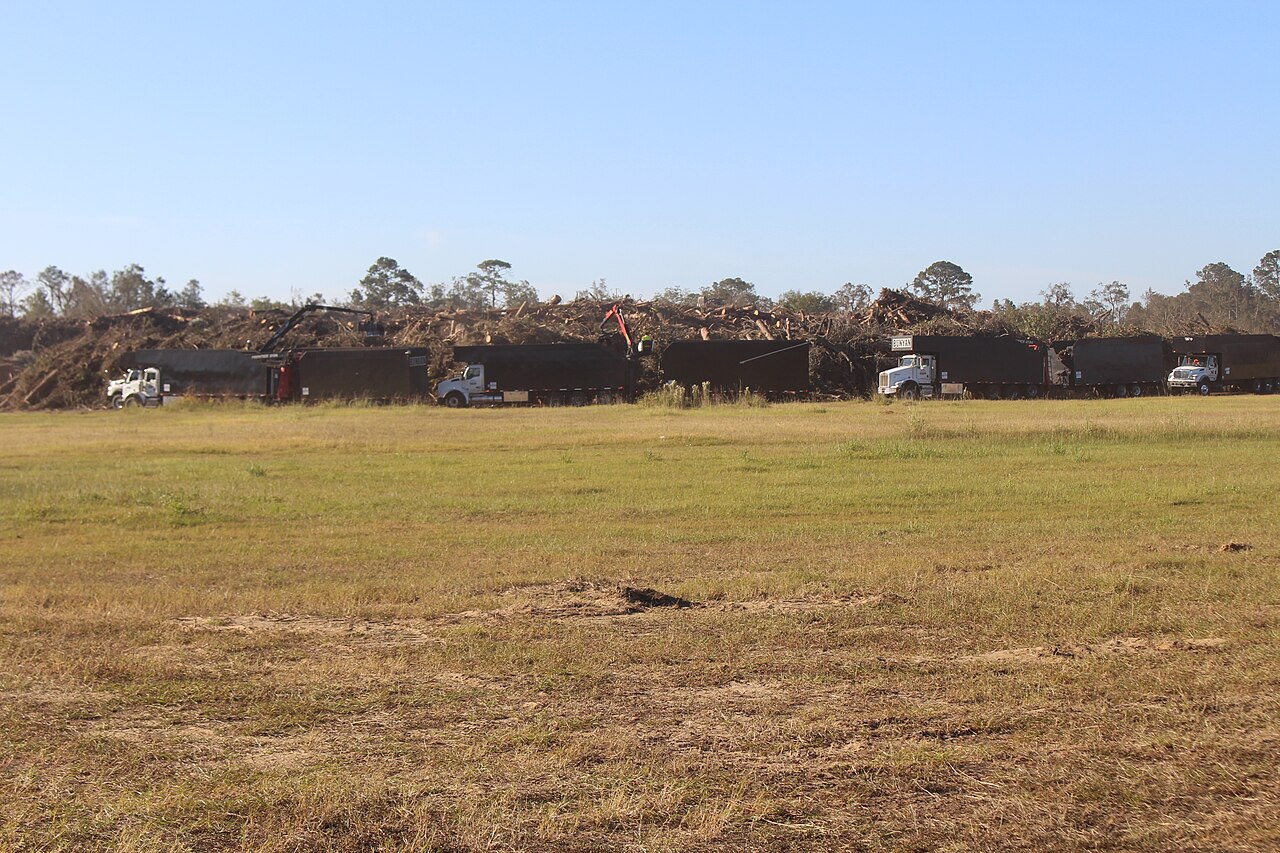
The Army Corps of Engineers paid its Hurricane Helene debris contractor in North Carolina by the book, a new Department of War Inspector General audit concludes, giving disaster-response contractors a rare oversight report with no findings against the government's payment process. Auditors sampled 17 invoices totaling $664.6 million and found no material deficiencies against task order requirements.
The report, DOWIG-2027-004, carries an Oct. 13, 2026 cover date and was posted to Oversight.gov with an issue date of Oct. 15. It makes no recommendations. "We did not make any recommendations in this report," the IG wrote.
How the $2.9B Helene Debris Mission Was Contracted
After Hurricane Helene, FEMA assigned $2.9 billion to the Army Corps to lead storm debris cleanup across six states, with $2.6 billion, or 90 percent, designated for North Carolina. The Corps awarded $2.4 billion in debris management contracts in the state, relying on regional Advanced Contracting Initiative (ACI) contracts that pre-qualify firms before a storm hits.
The Planning and Response Team from the Corps' Louisville District worked with the Wilmington District to issue 20 task orders totaling $1.7 billion and to manage invoice reviews and quality assurance for that work. The IG's audit universe included 199 invoices tied to those 20 task orders. Auditors focused on paid invoices from eight high-value task orders that covered all three mission types: right-of-way clearing, waterway debris removal, and private property debris removal (PPDR).
The IG's headline conclusion is direct. "As a result, USACE officials had reasonable assurance that the Government received contracted services, paid invoices appropriately, and obtained accurate FEMA reimbursements for Hurricane Helene debris management expenditures," the executive summary states.
What Auditors Checked in the $664.6M Invoice Sample
Across the 17 sampled invoices, the IG found no material deficiencies when comparing them with each task order's requirements. For 12 of those invoices, totaling $476.3 million, auditors also compared debris load data against paper load tickets. They found no material deficiencies, though five paper load tickets contained minor differences that did not result in any overpayments.
Waterway work produced a similar result. Eight invoices totaling $403.2 million for debris the contractor removed from waterways showed no material deficiencies. Two of those invoices contained minor differences in three paper load tickets, again without overpayments.
On private property, Corps quality assurance officials confirmed right-of-entry agreements were in place before work began and reviewed and approved 40 PPDR packets totaling $3 million. According to Corps officials, a digital right-of-entry process improved accuracy and cut the time required to authorize work from 3 days to 12 hours.
Mobilization and demobilization costs followed the contract's split: up to 60 percent paid during mobilization and the remaining 40 percent after demobilization. The IG found Wilmington contracting staff and Louisville planning team officials followed those payment percentages for two invoices totaling $116.9 million.
The Corps also had database managers validate debris data against recorded information, a step that implements a recommendation from a 2019 Army Audit Agency report on hurricane debris operations (A-2020-0011-FIZ). The IG found only a few minor mismatches across the sampled invoices, none resulting in overpayments.
Why the Corps Skipped QA Checks on Soil-Haul Weights
The one area where the Corps chose not to put inspectors in the field was soil hauling. According to the Corps' contracting officer's representative, the agency took a risk-based approach, assigning QA officials to other debris sites rather than checking the contractor's soil-haul weights. Instead, the Corps relied on contractor data and paid invoices based on the tonnage of soil hauled to disposal sites.
The IG accepted that approach for the one soil-hauling invoice it reviewed, valued at $43.4 million, finding no material deficiencies in the accuracy of those costs. The report says the risk-based methods for soil hauling and start-up and shut-down costs "helped them manage resources during debris cleanup in North Carolina."
That reliance on contractor-reported tonnage is worth tracking for firms bidding on future ACI work. A clean audit result on a single sampled invoice does not mean the government will skip independent weight verification on the next storm.
What the Audit Did Not Examine
The report draws a clear boundary around its conclusions. "We did not review contractor performance or determine whether USACE officials effectively monitored the contractor’s work at debris collection sites," the IG wrote. The audit tested whether the Corps paid invoices correctly, not whether the work on the ground met every eligibility rule. The report text does not name the North Carolina debris contractor.
That gap matters because field-level problems did surface. A June 9, 2026 Government Accountability Office report on disaster contracting (GAO-26-108121) reported that Army Corps officials told GAO they had, since March 2025, investigated allegations of contractors removing ineligible debris and endangering wildlife in western North Carolina. According to GAO, State and Army Corps officials said a stop-work order was issued in March 2025 for contractors removing excessive amounts of ineligible debris and vegetation, including healthy trees, along the banks of a waterway debris site.
Corps officials told GAO they retrained contractors afterward. "They said the subcontractors found to have repeated noncompliance for removing ineligible debris were removed from debris removal operations," GAO wrote. The IG report itself cites that GAO work in a footnote on contractor noncompliance.
What It Means for Contractors
For prime contractors holding ACI vehicles, the audit is a favorable data point. It shows the Corps' invoice review chain, from load tickets through database validation to payment, held up under IG scrutiny at a scale of hundreds of millions of dollars. Primes can expect the same documentation discipline on future storms: paper load tickets reconciled against load data, right-of-entry agreements confirmed before crews enter private property, and mobilization payments released on fixed percentages.
Minor ticket discrepancies did not trigger findings here, but they were counted and reported. Firms should treat every load ticket as an auditable record, because the IG credited the Corps' database-manager validation, which stems from the Army Audit Agency's 2019 recommendation, with improving the accuracy of information used for invoice payments.
Subcontractors face a different message. The IG's clean finding covers payment controls, not field conduct, and GAO's account shows the Corps has issued a stop-work order and removed subcontractors over ineligible debris removal. Primes that flow down eligibility rules loosely risk losing crews mid-mission, even when their invoices pass review.
Finally, the soil-hauling approach suggests where the Corps may lean on contractor data next time. Reliance on contractor tonnage data let the Corps assign inspectors elsewhere on this mission; firms that report accurate weights help keep that latitude in place.
Sources
- DoW OIG Report DOWIG-2027-004: Audit of USACE Invoice Reviews and QA Procedures for the Hurricane Helene Debris Management Mission (PDF via Oversight.gov)
- Oversight.gov report page: Audit of the U.S. Army Corps of Engineers Invoice Reviews and QA Procedures for the Hurricane Helene Debris Management Mission
- GAO-26-108121, Disaster Contracting: Actions Needed to Encourage Advance Contract Use and Improve Information Sharing and Oversight
