
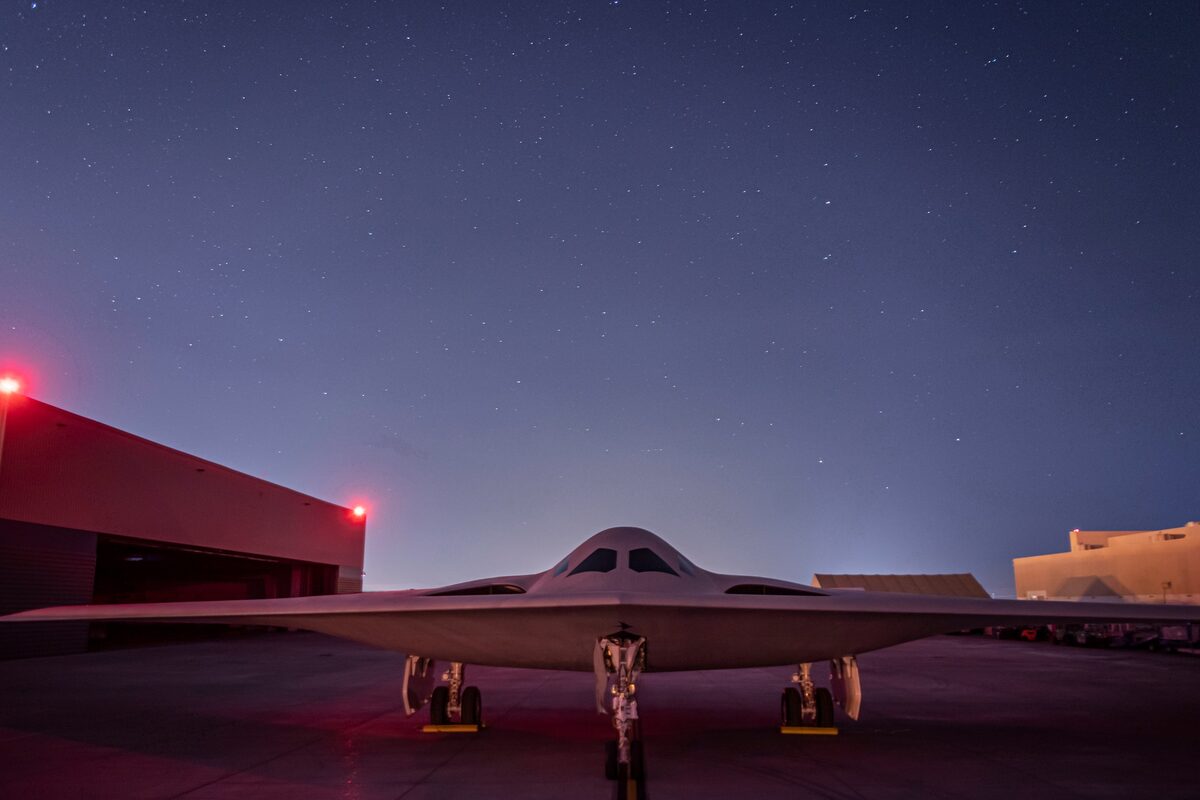
The Air Force is spending $74.8 million to make sure its newest stealth bomber still can't be seen on radar once it starts flying real missions out of Missouri. A contract announcement posted by the Department of War on September 8, 2026 shows Conti Federal Services LLC of Orlando, Florida, was awarded $74,787,155 to build a radio-frequency and measurements hangar for the B-21 Raider program at Whiteman Air Force Base, Missouri.
The firm-fixed-price contract, numbered W912DQ-26-C-A048, carries a total cumulative face value of $74,978,377 once prior obligations are included. The Army Corps of Engineers solicited bids over the internet and received three before Conti Federal won the work. The U.S. Army Corps of Engineers' Kansas City District is the contracting activity, and the government obligated the full $74,787,155 in fiscal 2026 military construction, defense-wide funds at the time of award. The Corps of Engineers estimates the building will be finished by September 25, 2029.
What the $74.8 Million Facility Will Do
According to the contract listing, the project "provides for construction of a B-21 program radio frequency and measurements hangar facility with one B-21 aircraft position, associated back shops, material storage, and administrative and facility support spaces." That single sentence, copied verbatim from the government's own announcement, is the clearest public description available of what Conti Federal is being paid to build.
The structure will run 57,533 square feet and will be lined with radio-frequency shielding in its walls, ceilings, and hangar-door seals. That shielding turns the building into a controlled electromagnetic environment, the only kind of space where technicians can accurately measure how much radar energy a B-21 reflects. The Air Force has described the inspections that happen inside such buildings as "a critical step in the maintenance process," according to a characterization reported by AeroTime, which covered the award's implications for the B-21 program.
Why a Bomber Needs Its Own Radar-Checking Building
A stealth aircraft's low-observable characteristics are not a one-time factory setting. Panel gaps open up, coatings wear down, and repairs made with the wrong materials or techniques can all raise an aircraft's radar signature over time. The Air Force tests for that degradation the same way it verified the design in the first place: by putting the aircraft inside a shielded chamber and bouncing radio-frequency energy off it to measure exactly how much comes back.
Doing that outdoors, or in an ordinary hangar, would let ambient radio noise from radios, radar systems, cell towers, and other aircraft contaminate the readings. A dedicated RF and measurements hangar isolates the bomber from that noise, giving maintainers and engineers a clean baseline they can compare against later inspections. The back shops and material storage space called out in the contract description suggest the facility will also handle at least some of the follow-on repair work once a signature problem is identified, rather than shipping the aircraft elsewhere for fixes.
The Air Force has been cautious about publicizing exact test procedures or performance thresholds for the B-21, consistent with how stealth-aircraft radar signature data is treated as classified information across U.S. defense programs. What the government has been willing to disclose is the physical footprint required to sustain that secrecy: a one-aircraft-position hangar, shielded on every side, with enough adjacent shop space that maintainers do not have to move the bomber elsewhere to act on what the RF measurements find. That combination of testing and repair capability under one roof is what distinguishes this project from an ordinary maintenance hangar, and it helps explain why the price tag runs well above what a conventional aircraft shelter of similar size would cost.
Whiteman's Expanding Role in the B-21 Program
Whiteman Air Force Base was named the Air Force's second B-21 main operating base in September 2024, after Ellsworth Air Force Base, South Dakota, and ahead of Dyess Air Force Base, Texas. The new hangar aligns with that decision and follows a template the Air Force has already used once: Conti Federal Services built a similar radio-frequency hangar at Ellsworth — the B-21's first main operating base — for $70.5 million in April 2023.
The near-identical scope and comparable price tag between the Ellsworth and Whiteman contracts point to a repeatable facility design that the Corps of Engineers and the Air Force are replicating base by base as the B-21 fleet grows. Whiteman already hosts the B-2 Spirit fleet and its associated low-observable maintenance infrastructure, giving the base an existing workforce and support ecosystem that likely factored into its selection as a second B-21 site. The new hangar adds B-21-specific capability alongside that legacy B-2 footprint rather than replacing it, and it signals that Whiteman's transition from a single-bomber base to a two-bomber base is now backed by real construction dollars, not just a basing announcement on paper.
What It Means for Contractors
The award reinforces a pattern worth watching for construction and engineering firms chasing Air Force military construction work: specialized, low-observable-related facilities are being procured through repeat relationships rather than broad, open competitions. Conti Federal Services now holds the Air Force's two publicly known B-21 radio-frequency hangar contracts, at Ellsworth and now Whiteman, giving it institutional knowledge of RF shielding techniques, government inspection standards, and Corps of Engineers contracting procedures that a first-time bidder would have to build from scratch.
For firms without that track record, the more realistic entry points are the subcontract tier — RF shielding installation, specialized door seals, and electromagnetic test equipment are all niche disciplines that a prime contractor like Conti Federal is likely to subcontract out — or the next round of construction at Dyess Air Force Base, Texas, which the Air Force has already named as the B-21 program's third main operating base. That site is likely to need its own low-observable maintenance infrastructure built to a similar specification.
The contract drew only three bids, modest by defense construction standards, which suggests this remains a specialty market with a limited pool of qualified bidders rather than a commoditized construction category. Firms with cleared personnel, low-observable coatings experience, or prior Air Force stealth-program facility work have a real advantage bidding into this niche, and the Whiteman award is fresh evidence that the niche is still growing as the B-21 fleet moves from flight test into operational service.
