
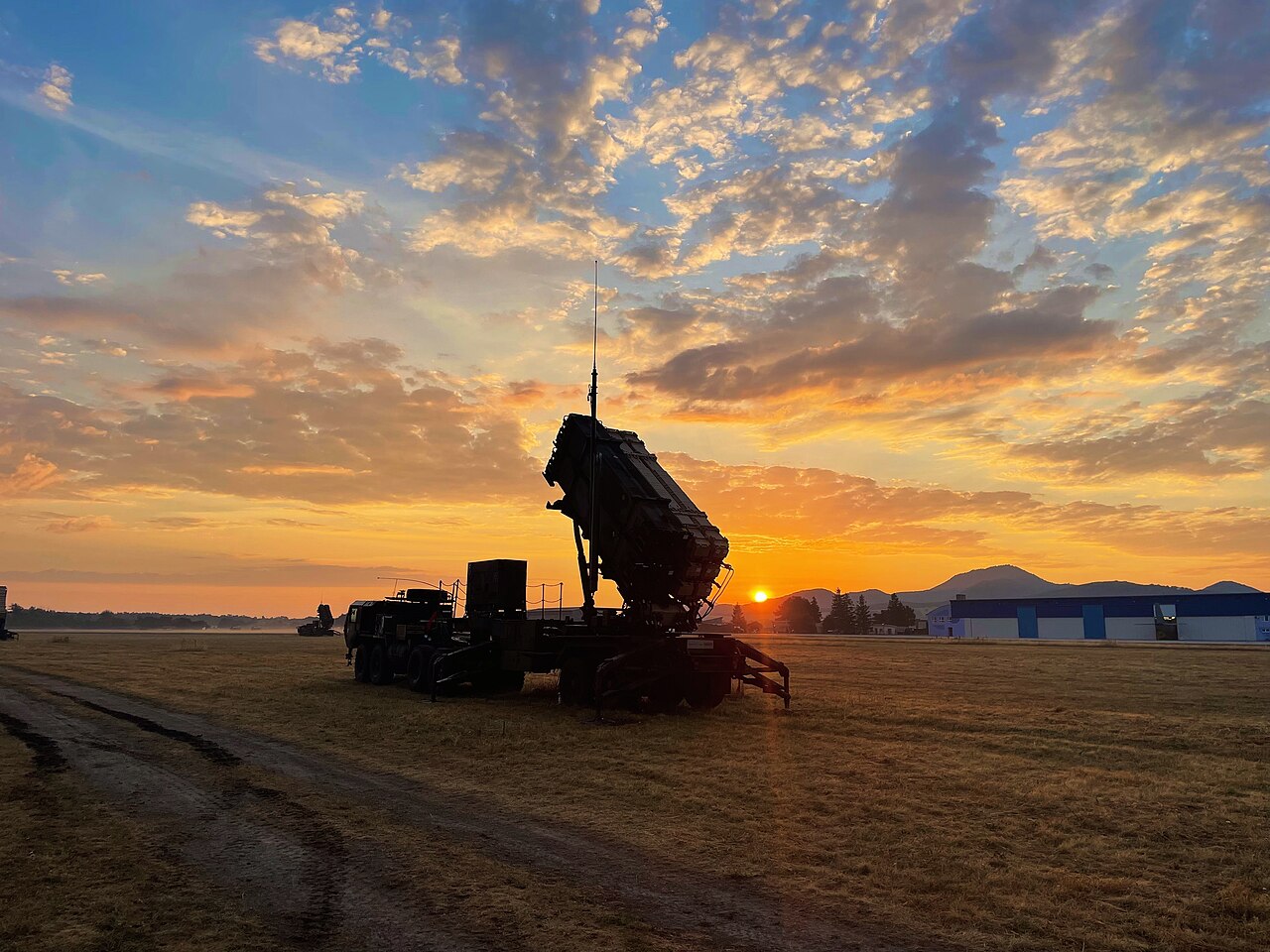
The Patriot interceptor's seeker now has a production contract behind it: Boeing will be paid to triple output of the seekers that guide the PAC-3 Missile Segment Enhancement, a step that lines up with Lockheed Martin's own interceptor surge. Boeing said Oct. 5 from Huntsville, Ala., that it was awarded an undefinitized contract action worth approximately $14.7 billion by Lockheed Martin "to scale production and deliver PAC-3® Missile Segment Enhancement (MSE) seekers." The award comes from Lockheed, the PAC-3 prime, rather than directly from the government.
According to Boeing, the contract "enables Boeing to triple PAC-3 MSE seeker production under the previously announced seven-year framework agreement with the U.S. Department of War in support of its Acquisition Transformation Strategy." The company's headline summary puts it more bluntly: "The award formalizes a seven-year framework to triple PAC-3 MSE seeker production."
How the $14.7 Billion Seeker Award Fits Lockheed's PAC-3 Surge
The seeker deal is the supplier half of a two-part production push. In January, as Defense News reported, Lockheed announced a seven-year framework agreement "to increase annual PAC-3 interceptor production from approximately 600 to 2,000." An interceptor cannot leave the line without a seeker, so Lockheed's ramp plainly depends on Boeing's.
That dependency helps explain why the Pentagon dealt directly with Boeing in the spring. On April 1, Boeing announced a framework agreement with the Defense Department to triple seeker capacity. Defense News wrote that the framework, "which will be spread across seven years, will match Lockheed Martin’s push to surge production on the PAC-3 MSE all-up round." Work was to begin immediately at Boeing's Huntsville facility.
The October action turns that framework into a contract running through the prime. The government sets the volume target with the supplier and the prime places the order. A commitment of this size gives the supplier a long-horizon basis for capital spending and hiring, though the undefinitized terms mean the final shape of that commitment is not yet fixed.
What "Undefinitized" Means for the Final Price
The $14.7 billion figure is an approximate value attached to an undefinitized contract action. Under that type of action, work starts before the parties have settled final terms, specifications and price. Boeing's release does not state a definitization date, a quantity of seekers, a per-unit price or a split between fixed-price and cost-type work, and none of those details appear in the public record GovConFeed reviewed.
Contractors tracking this award should treat the headline number as an approximate figure rather than a settled obligation. Because the terms are not final, the ultimate price will depend on negotiation between Boeing and Lockheed, and because the work supports a government program, those negotiations sit inside the government's broader PAC-3 pricing picture.
Boeing Says Huntsville Factory Is Already Ramping
Boeing frames the award as a payoff from investment it made ahead of the contract. "Early investment and a relentless focus on quality and execution have positioned us to now deliver seekers at unprecedented levels in the near-term, and we're committed to building on that momentum," said Steve Parker, president and CEO of Boeing Defense, Space & Security.
The company lists several steps: capital investments to expand its PAC-3 seeker factory, strengthened supplier relationships, modernized facilities, and "improved processes and controls to increase first-time quality." Boeing says production ramp-up and hiring began earlier this year after the framework announcement, "with hundreds of direct and indirect jobs expected to be created in the Huntsville, Alabama, area as a result of the contract."
The starting point for the ramp is not zero. In the April release quoted by Defense News, Bob Ciesla, vice president of Boeing Precision Engagement Systems, said, "In 2025, we increased deliveries by over 30% and we’re excited for the opportunity to grow our highly skilled workforce."
Boeing describes the seeker's job as enabling Patriot interceptors "to identify, track and engage advanced threats ranging from hostile aircraft to hypersonic, ballistic and cruise missiles." Defense News notes the interceptor then uses a two-pulse solid rocket motor and destroys targets through direct body-to-body contact.
Why the Pentagon Is Contracting Past the Prime
The Boeing framework reflects a deliberate change in how the Pentagon approaches munitions bottlenecks. Michael Duffey, under secretary of war for acquisition and sustainment, said in the April release: "This agreement with Boeing is a direct reflection that speed, volume and a resilient supply chain are paramount. We are moving beyond the old model and forging direct partnerships with critical suppliers to ensure the entire defense industrial base is postured to expand production and deliver the decisive capabilities our warfighters need at speed and scale."
The PAC-3 seeker deal is not the only example. Defense News reported that the Pentagon also announced a deal with BAE Systems and Lockheed to quadruple production of infrared seekers for the Terminal High Altitude Area Defense interceptor, aligned with a January agreement to raise Lockheed's annual THAAD interceptor output from 96 to 400.
Cost pressure frames all of it. Defense News pointed to scrutiny of the military's reliance on costly interceptors against cheap munitions, particularly those Iran deployed during Operation Epic Fury, citing a $35,000 average cost for an Iranian Shahed drone against an estimated $4 million price tag for a PAC-3.
What It Means for Contractors
For firms in the PAC-3 and broader missile-defense supply base, the award carries several practical signals:
- Sub-tier demand is likely to firm up. Boeing says it has strengthened supplier relationships to support the ramp. Component, electronics and materials suppliers to the Huntsville seeker line should expect order volumes to follow the tripling target over the seven-year term, subject to final contract terms.
- Direct supplier deals look like a pattern. The PAC-3 seeker framework and the THAAD infrared-seeker deal both put the government in direct talks with a critical-component maker. Makers of critical components on other munitions programs should be ready for the government to approach them about capacity.
- Undefinitized terms leave pricing open. With price and terms not yet set, Boeing's lower-tier subcontracts may also carry provisional pricing. Suppliers should scrutinize flow-down clauses and the risk of rate changes before committing capital.
- Huntsville hiring competition may rise. Boeing expects hundreds of direct and indirect jobs in the area, which could tighten the skilled-labor market for other defense firms in the region.
- Watch for the prime-level action. Boeing's release names Lockheed, not the government, as the awarding party. Contractors should track government PAC-3 actions with Lockheed for the funding that backs this order.

