
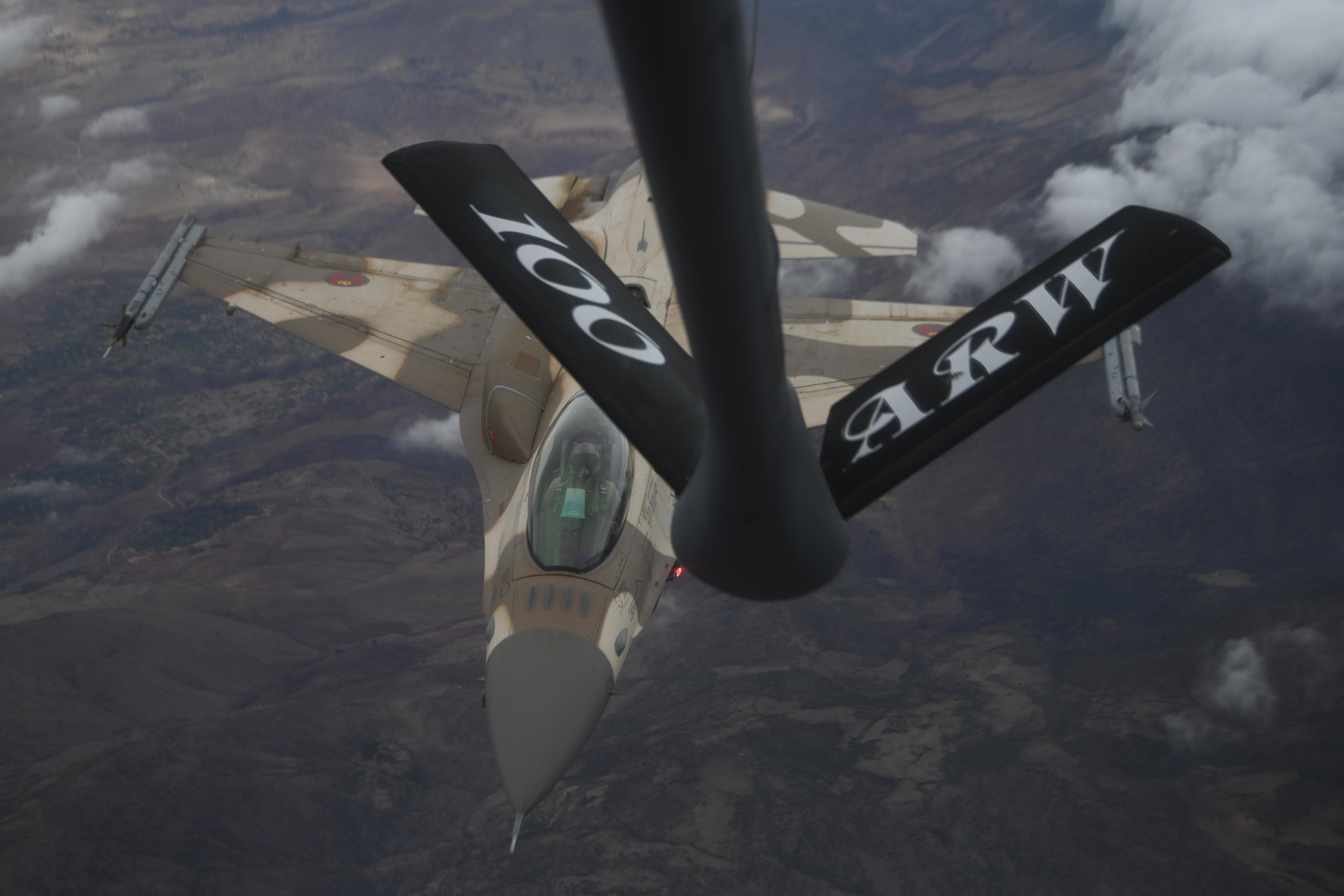
Royal Moroccan Air Force pilots converting to the F-16 Block 72 Viper will train in U.S.-built simulators before they ever climb into the jet's cockpit, under a $42.1 million Air Force contract awarded to CAE Inc. The Aug. 31, 2026 award, posted by the Department of War, directs CAE's Arlington, Texas operation to build two full-mission trainer systems and keep them running through contractor logistics support for a fleet Morocco began buying in 2019. Air Force Life Cycle Management Center at Wright-Patterson Air Force Base, Ohio, is managing the deal, contract number FA862126CB003, on behalf of the Royal Moroccan Air Force under the Foreign Military Sales program.
What the $42.1 Million Buys
The Department of War's contract announcement describes the award in its own opening line: "CAE Inc., Arlington, Texas, has been awarded a maximum $42,103,873 fixed-price, cost-plus-award-fee, cost reimbursable, and fixed-price plus incentive contract for Royal Moroccan Air Force F-16 Block 72 training system and contractor logistics support." That blend of contract types is unusual enough to be worth unpacking: a straight firm-fixed-price deal assumes both sides already know exactly what the work costs, while cost-reimbursable and award-fee elements let the government absorb some of the risk that comes with building a simulator for an aircraft configuration that has not been in service anywhere very long.
Of the $42.1 million ceiling, $37,975,064 in Foreign Military Sales funds was obligated at the time of award, with the balance expected to follow as CAE completes incentive milestones and any contract options. Because this is an FMS case, the money originates with the Moroccan government and flows through the U.S. Air Force's Foreign Military Sales accounting rather than through a domestic Air Force appropriation, even though the contracting officer, oversight and quality requirements are identical to a U.S.-only award.
"The contract provides for two F-16 full mission trainer systems to include instructor-operator stations, F-16 Block 72 cockpit, visual display system, computational system, power distribution system, joint helmet-mounted cueing system ii helmet-mounted display, one uninterruptable power supply, one central file server, spares and support equipment," the announcement states.
That parts list describes a pair of ground-based devices meant to replicate the Block 72 cockpit closely enough that pilots can log procedural and emergency training hours without burning flight time on the actual aircraft. The joint helmet-mounted cueing system II display is the same targeting helmet Block 72 pilots wear in the jet, meaning the simulator's visual and helmet systems have to sync convincingly with the same avionics and mission software the real aircraft runs — not a generic F-16 cockpit, but one wired specifically to the Block 72's active electronically scanned array radar and updated glass displays. The instructor-operator stations let a single instructor inject emergencies, weather and threat scenarios in real time, while the central file server and spares package are meant to keep both trainers flying — figuratively — without waiting on parts shipped from the United States. Work will happen at CAE's Arlington facility and at Sidi Slimane Airbase in Morocco, where the trainers will ultimately be installed, with an estimated completion date of April 30, 2029.
Morocco's Long Road to a 25-Jet Block 72 Fleet
This trainer order is a downstream piece of a much larger commitment. The State Department cleared Morocco to buy 25 F-16C/D Block 72 aircraft in 2019, in a package the Pentagon valued at roughly $3.787 billion, covering airframes, engines, radars, munitions and support. Morocco has held Major Non-NATO Ally status since 2004, a designation that streamlines U.S. arms sales and defense cooperation with a short list of countries outside the NATO alliance.
Simulator and logistics contracts like this one typically arrive years after the headline aircraft sale, once the jets are close enough to delivery that the buying air force needs qualified pilots and maintainers ready to receive them. A trainer built to the Block 72 configuration — with its active electronically scanned array radar, updated mission computer and glass cockpit — cannot simply be repurposed from an older F-16 variant; the computational system and displays cited in the contract have to be built to match the specific jets Morocco is receiving.
The seven years between the 2019 sale approval and this 2026 trainer contract illustrate how long an FMS case's tail can run. Aircraft delivery schedules, pilot-training pipelines and infrastructure work at receiving bases like Sidi Slimane rarely move in lockstep, and simulator contracts tend to land close to when the first jets are expected on the ramp — giving instructor cadres time to build proficiency on the trainer systems before live aircraft arrive and flight hours become the scarcer, more expensive resource.
What It Means for Contractors
CAE's win is a reminder that Foreign Military Sales packages generate a long tail of follow-on work beyond the initial aircraft procurement, and that work runs through the same U.S. contracting activities as any domestic Air Force program. Training-systems integrators, visual-display makers, and logistics-support subcontractors who can plug into an FMS trainer buy have a recurring opportunity here: any partner nation buying F-16 Block 72 jets will eventually need comparable simulator and sustainment contracts, and Wright-Patterson's Air Force Life Cycle Management Center is well placed to keep running that pipeline as Morocco's program moves forward.
For companies evaluating whether to compete on the next tranche of this work, the contract mechanics are also instructive. A fixed-price-incentive structure layered with cost-reimbursable elements signals the government expects some technical risk in matching a brand-new cockpit configuration to simulator hardware, and it's willing to share that risk rather than demand a flat firm-fixed-price bid — a structure worth noting for firms pricing similar training-device work on other FMS cases.
Independent coverage of this specific award is thin so far: beyond the Department of War's own contract announcement, Army Recognition, a defense-industry trade outlet, is the only other outlet found reporting on it as of this writing. That's a gap worth watching for readers who want a second independent confirmation of the contract's specifics, though the underlying facts here trace directly to the government's own release.
