
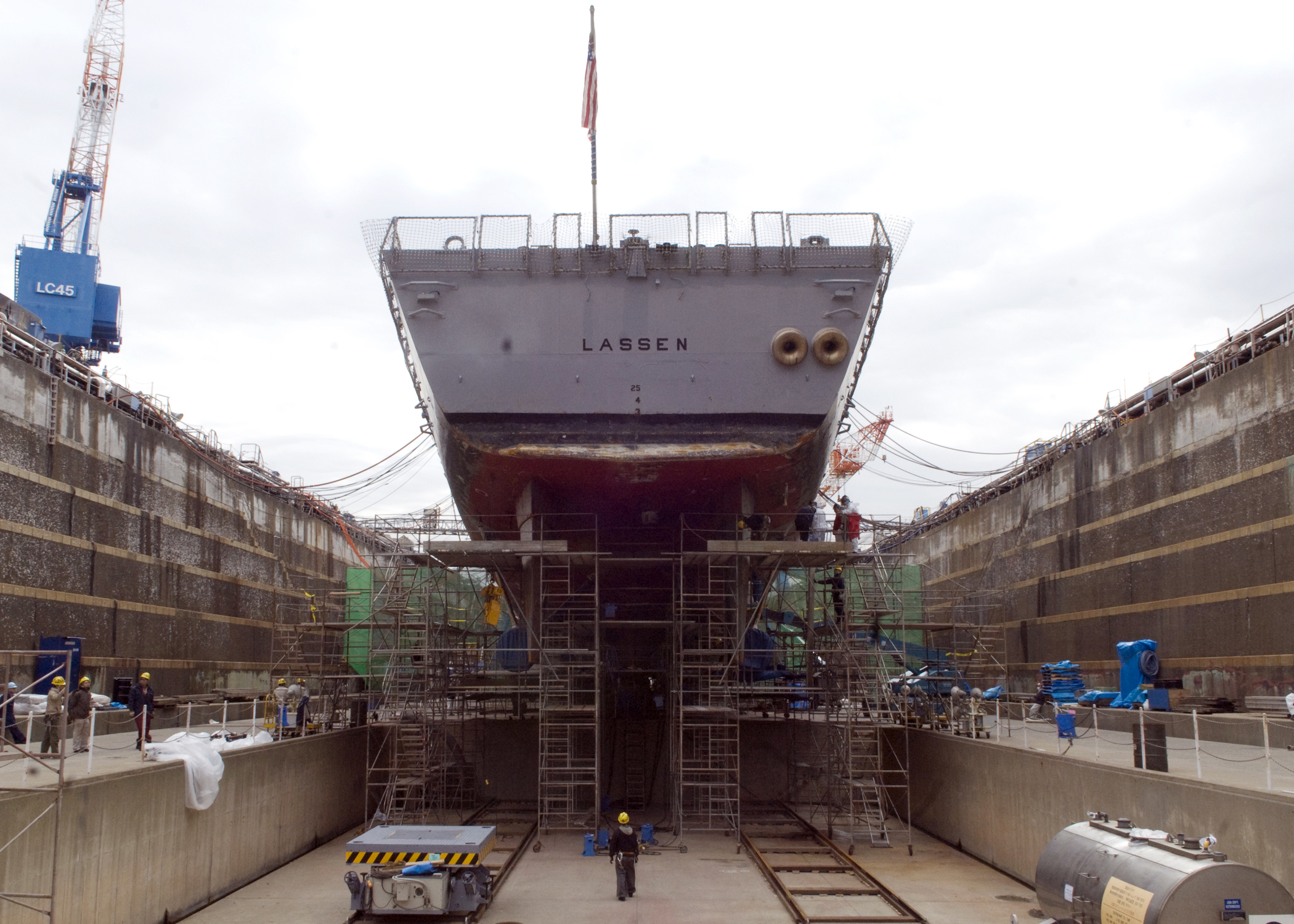
The Navy has awarded Cayuse Native Hawaiian Veterans LLC a $249 million indefinite-delivery/indefinite-quantity contract to repair Military Sealift Command ships in Guam, according to the Pentagon's Aug. 12 contract announcement.
Background
Military Sealift Command operates the Navy's fleet of government-owned support ships, and those vessels need scheduled maintenance and repair wherever they operate. Guam has become a focal point for that work as the Navy builds up forward sustainment capacity in the Western Pacific. A ship that would otherwise sail thousands of miles back to a stateside yard for routine repairs can instead be serviced on the island, cutting the time MSC vessels spend out of service.
The Aug. 12 award to Cayuse Native Hawaiian Veterans LLC, based in Pendleton, Oregon, was structured as what the Pentagon's contract notice calls a "rolling admission" — the company is being added to a previously established multiple-award construct for general ship repair rather than winning a standalone, single-award deal. That approach lets Military Sealift Command bring additional qualified repair firms onto the same vehicle as demand grows, without running a fresh full-and-open competition each time.
The contract was competed as a HUBZone set-aside, meaning only firms certified under the Small Business Administration's Historically Underutilized Business Zone program were eligible to bid. Two proposals were received, according to the award notice. HUBZone status requires a company to maintain its principal office in a designated economically distressed area and meet minimum employee-residency thresholds within that zone, a structure Congress built to steer federal spending toward specific communities rather than simply toward small businesses in general.
As the Navy pushes to expand forward maintenance and sustainment capability in the Western Pacific, this award points to Guam-based ship-repair capacity becoming a bigger piece of Military Sealift Command's contracting activity, rather than that work being routed to more distant yards. A five-year ordering period on a nine-figure ceiling signals that the Navy expects sustained repair demand at Guam rather than a short-term surge, and the decision to reserve that demand for HUBZone-eligible firms rather than open competition keeps the opportunity available to smaller, geographically targeted contractors even as the broader buildup accelerates.
Key Details
The firm-fixed-price contract, numbered N4044626D0002, carries a ceiling value of $249,000,000. Work will be performed in Guam and is expected to be complete by November 2027, with a five-year ordering period during which Military Sealift Command can issue individual task orders against the vehicle. The contract was solicited through the Government Point of Entry website, the federal government's centralized portal for competed procurements, rather than through a direct negotiation.
Only $3,500 in fiscal 2026 operations and maintenance funds was obligated at the time of award — the contract's minimum guarantee, a standard feature of IDIQ vehicles that ensures the contractor is owed some baseline amount even if no task orders are ever issued. The bulk of the $249 million ceiling will be obligated incrementally as Military Sealift Command issues individual delivery orders for specific repair jobs over the life of the contract. The contracting activity is Military Sealift Command, headquartered in Norfolk, Virginia.
The awardee's name — Cayuse Native Hawaiian Veterans LLC — echoes Cayuse Holdings, a HUBZone-certified contractor headquartered in the same city, Pendleton, Oregon, and owned by the Confederated Tribes of the Umatilla Indian Reservation. Cayuse Holdings has been recognized with a Platinum HIRE Vets Medallion and does business across federal, state and local, commercial and tribal "Native Solutions" sectors, according to the company's website. Neither the Pentagon's contract announcement nor Cayuse Holdings' public materials spell out the exact corporate relationship between the two entities or detail the ownership structure implied by the winning company's name.
Neither the contract notice nor the company's public materials specify how many hulls or what repair volume Cayuse expects to service under the vehicle in a given year; that detail, along with the scope of individual task orders, will emerge as Military Sealift Command issues delivery orders against the IDIQ over its five-year ordering period.
What It Means for Contractors
The rolling-admission structure is the detail worth watching here. Rather than closing the door once an initial pool of awardees is set, Military Sealift Command has left this ship-repair vehicle open to add qualified HUBZone firms as it identifies additional need in Guam. Small ship-repair yards and HUBZone-certified maintenance firms that missed an earlier competition round for this same requirement are not necessarily locked out — the government's notice makes clear that new entrants can still be brought aboard the multiple-award construct.
For companies chasing MSC repair work more broadly, the minimum-guarantee-plus-task-order structure is standard, but it means the real business opportunity sits downstream of the headline $249 million figure. Firms that want a share of that ceiling need to track individual delivery order solicitations as they're released against N4044626D0002 over the coming five years, not just the base award.
This award also fits a pattern worth noting: Guam-based sustainment work being carved out as a dedicated small-business set-aside rather than folded into a large full-and-open contract. That approach gives HUBZone-certified and tribally owned firms a recurring lane into Pacific fleet-support work. Companies that hold HUBZone certification but have not pursued Navy ship-repair opportunities in the Pacific may want to note that Military Sealift Command is actively expanding its awardee pool in Guam through this rolling-admission construct.
Firms without HUBZone status but with ship-repair capabilities should also watch for follow-on solicitations tied to this requirement, since this contract's set-aside structure suggests MSC may keep returning to that approach as its Western Pacific footprint grows.
Prime contractors on the broader MSC ship-repair multiple-award construct should also expect competition for individual task orders to sharpen as the roster of eligible HUBZone firms expands. Each new awardee added through the rolling-admission process is another bidder for the same pool of delivery orders, so subcontracting relationships and teaming arrangements with newly certified entrants like Cayuse may prove as valuable as chasing prime awards directly.
