
The Energy Department is moving a dozen of its Genesis Mission research teams from proof-of-concept into larger builds, putting one fusion company, seven universities and four national laboratories at the center of the administration's bet on artificial intelligence for science. DOE announced 12 Phase II Genesis Mission project awards totaling $159 million on Oct. 8, 2026, along with six new Phase I awards.
The department said the selections cap "a first-year cohort of 297 projects across the Genesis Mission portfolio." President Trump launched the Genesis Mission in November 2025 to accelerate discovery and strengthen U.S. leadership in science, medicine and technology, according to DOE, and the department first announced the program's project portfolio in July.
Who Leads the 12 Phase II Genesis Mission Projects?
All 12 new awards run through DOE's Office of Science. The department listed each project with its lead organization:
- Commonwealth Fusion Systems will build an AI-enabled digital twin platform for SPARC, its fusion demonstration device, to simulate and optimize operations.
- University of California San Diego will expand the RNA structure database five-fold to train models aimed at engineering resilient crops and sustainable microbes.
- MIT will pair AI with supercomputing calculations in lattice quantum chromodynamics, the physics of fundamental particles.
- University of California Irvine leads MAESTRO, a platform to map, stimulate and manage deep underground reservoirs for geothermal energy.
- University of Illinois Urbana-Champaign leads AXIS, which will design more efficient electrochemical processes for extracting critical rare-earth elements from domestic sources.
- University of Washington Seattle will build tools to predict and design functional enzymes.
- Fermilab leads AXESS, which will design rugged, high-performance microchips for space, high-radiation and ultra-cold environments.
- Lawrence Berkeley National Laboratory leads MOAT-Core, a shared platform across national laboratories to autonomously run and design particle accelerators.
- Harvard University leads ASQC, which combines AI with quantum hardware to tackle quantum error correction.
- Argonne National Laboratory leads AI4HPC, a framework to modernize, optimize and verify supercomputing scientific software.
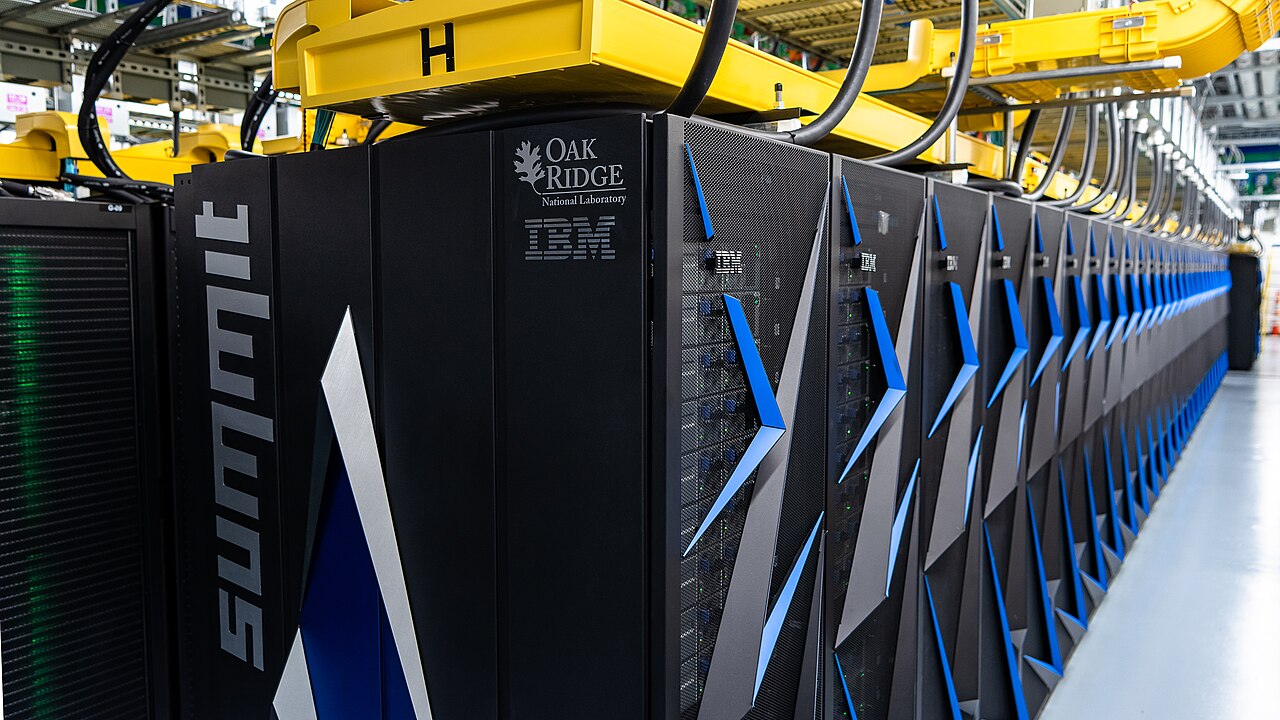
- Oak Ridge National Laboratory will design new quantum magnets by working backward from desired properties, with applications in quantum sensing and low-power electronics.
- Northeastern University will develop an automated assistant to operate and tune the particle separator at the Facility for Rare Isotope Beams (FRIB), which DOE said would unlock "hundreds of hours of research time annually."
DOE did not publish per-project dollar amounts in its announcement, so the $159 million figure is available only as a total across the 12 awards.
The new selections bring the total number of Phase II projects to 14. Two were announced earlier: GridFM 2.0 under the Office of Electricity and Prometheus under the Office of Nuclear Energy.
"These projects represent a critical step in turning the promise of Super Intelligence for science into transformative scientific capability," said Darío Gil, DOE's under secretary for science. "The Phase II teams have already demonstrated what is possible when SI is integrated with scientific expertise, data, and computing. These awards give them the opportunity to take that work to the next level."
How the $159M Fits Into the White House's $6B Science Push
DOE timed the awards to a larger event. Nextgov/FCW reported that the announcement came the same day as the White House AI Science Summit, which the administration billed as a $6 billion push. On that day, Nextgov reported, the Energy Department also announced "$96 million for early-career researchers and a new graduate fellowship program, along with an effort to advance the development of fault-tolerant quantum computers."
The private side of the package centers on computing. Eleven companies pledged $2.4 billion in compute credits to the Genesis Mission Consortium, which the White House said will support "over 15 Federal agencies working towards National Science & Technology Challenges," according to Nextgov. Nvidia committed $1 billion, AMD $500 million and OpenAI $200 million. Anthropic and Google each pledged $150 million; AMP and Emerald AI each committed $100 million; and Amazon Web Services, Armada, Crusoe and Micron each committed $50 million.
GovCon Wire detailed the agency-side programs announced alongside DOE's awards. DOE and the National Science Foundation will invest more than $100 million in SI-enabled scientific instruments and autonomous laboratories. DOE identified eight Quantum Computing Priority Applications to guide its $215 million Quantum Genesis Q Competition, which will fund teams working to demonstrate fault-tolerant quantum computers. The administration also created a $100 million Genesis Mission Fellowship for accelerated four-year doctoral programs combining SI with another science or engineering field.
The Pentagon joined in as well. Nextgov reported that the department announced up to $350 million for quantum computing initiatives for national security purposes, and quoted Emil Michael, under secretary of Defense for research and engineering: "We are answering that call by dismantling barriers to commercialization, modernizing our labs, and ruthlessly securing taxpayer-funded research from foreign exploitation."
Why a Fusion Company Sits Among the Labs
Commonwealth Fusion Systems is the only company named as a lead on the 12 new Phase II projects. The other 11 leads are universities or DOE national laboratories. Its project targets SPARC directly: DOE said the digital twin will "simulate and optimize operations of a fusion demonstration device," under a project titled "Accelerating the path to commercial fusion energy via an AI-enabled digital twin platform for SPARC."
Several projects point at supply-chain and infrastructure problems rather than pure research. The Illinois AXIS project addresses domestic rare-earth extraction, the Irvine MAESTRO platform targets geothermal energy, and Fermilab's AXESS aims at microchips that survive extreme conditions. Gil said the program brings "together our National Labs, universities, and industry partners."
What It Means for Contractors
The Phase II list shows where Genesis Mission money is going after its first year: overwhelmingly to national laboratories and research universities, with industry participating as a lead in one case. Firms that want a piece of this work are more likely to find it as partners, suppliers or subcontractors to those lead institutions than as prime awardees, based on the current roster.
The compute pledges matter for the vendor base too. Nvidia, AMD, OpenAI, Anthropic, Google, AWS and others committed $2.4 billion in credits and SI tools to the Genesis Mission Consortium, so the program's computing will draw on those providers' resources. Companies that build software, data pipelines or integration services alongside those providers have a clearer target than they did before the summit.
The technical areas DOE chose are also a guide. Quantum error correction, accelerator automation, supercomputing software verification, chip design for harsh environments, enzyme design and geothermal subsurface modeling all appear in the Phase II list, and quantum computing shows up again in DOE's $215 million Quantum Genesis Q Competition and the Pentagon's up to $350 million quantum effort. Contractors with capabilities in those areas should track DOE's Office of Science and the Genesis Mission's six new Phase I awards.
