
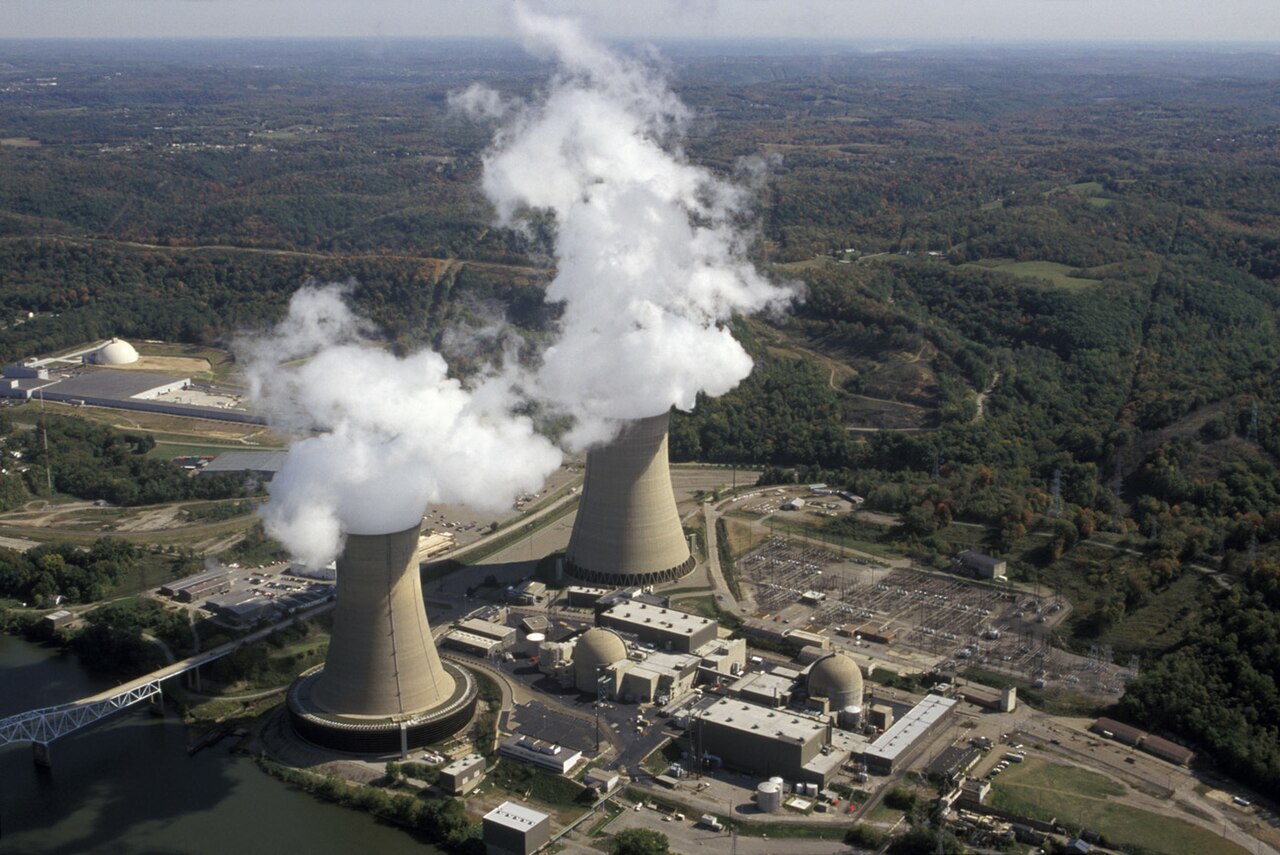
Three nuclear plants in Pennsylvania and Ohio could keep operating for 20 years beyond their existing licenses and send 433 megawatts of new capacity into the PJM grid, backed by up to $4.2 billion in federal loan money. The Department of Energy's Office of Energy Dominance Financing (EDF) announced a conditional loan commitment on Oct. 5, 2026 to finance "nuclear uprates and modernization across Vistra's nuclear fleet in Pennsylvania and Ohio." The plants named are Beaver Valley in Pennsylvania and Davis-Besse and Perry in Ohio, and the commitment also carries an option to finance possible future uprates at Vistra's Comanche Peak plant in Texas.
The money is not out the door yet. DOE describes the deal as a conditional commitment, and the department lists several steps Vistra still has to clear before any loan is funded.
What the $4.2 Billion Is Meant to Buy
An uprate raises the power output of a reactor that is already licensed and operating. DOE's announcement frames the Vistra package around two outcomes: holding on to existing generation and adding new megawatts to it.
According to DOE, the projects "will preserve nearly 4 gigawatts (GW) of reliable baseload power—enough to power more than 3 million homes—and add 433 megawatts (MW) of new nuclear capacity." The department says that capacity will help meet rising electricity demand in Pennsylvania, Ohio and across the 13-state PJM Interconnection region.
DOE also ties the work to plant longevity. Vistra's planned investments at the three sites, the department said, "will produce more electricity from existing nuclear plants without requiring new transmission corridors or equivalent new generation resources, while supporting the plants' operation for an additional 20 years beyond their existing licenses."
Power Engineering's coverage gives a sense of scale for each site. Perry is a single-unit plant on Lake Erie about 40 miles northeast of Cleveland with 1,268 MW of capacity. Davis-Besse is a single-unit plant in Oak Harbor, Ohio, about 35 miles east of Toledo, rated at 908 MW. Beaver Valley is a two-unit plant roughly 30 miles northwest of Pittsburgh with 1,872 MW of capacity.
Officials pitched the loan as a faster route to more nuclear power than building new reactors. "President Trump promised to unleash an American nuclear renaissance, and the Energy Department is delivering," said Energy Secretary Chris Wright. "By getting more power out of the nuclear plants we already have, we can deliver more affordable, reliable, around the-clock energy for American families and businesses."
EDF Director Gregory A. Beard described the goals in similar terms: "These investments will extend the life of existing reactors, increase nuclear generation, and deliver abundant, around-the-clock power to lower costs and power American prosperity for decades to come."
DOE said the investment advances the President's executive order on Reinvigorating the Nuclear Industrial Base.
Why the Vistra Commitment Is Still Conditional
A conditional commitment signals intent to lend; it does not obligate funds. DOE spelled that out in its announcement: "While this conditional commitment indicates DOE's intent to provide a loan, Vistra must satisfy certain technical, legal, environmental, and financial conditions before the Department enters into definitive financing documents and funds the loan."
DOE did not publish a timeline for closing those definitive documents. World Nuclear News, which reported the commitment on Oct. 6, pointed to earlier comments from Vistra President and CEO Jim Burke. In February, Burke said power purchase agreements with companies including Amazon Web Services and Meta were supporting the company's plans to relicense and uprate its nuclear plants, but that the focus on uprates is likely to come after 2028.
The Comanche Peak option is also prospective. DOE describes it as an option to finance "potential future uprates" at the Texas plant, not a defined project. World Nuclear News reported that Burke had said in February that Vistra still sees an opportunity to contract up to an additional 3.2 GW of nuclear capacity across its Beaver Valley and Comanche Peak sites, including potential upgrades of approximately 200 MW at Comanche Peak.
How Meta's Power Deals Tie Into the Uprates
The new capacity already has a buyer lined up. Power Engineering reported that Vistra entered into 20-year power purchase agreements to provide more than 2,600 MW of energy from the three plants to support Meta's operations in the PJM region, and that the total includes the 433 MW of incremental capacity from the uprates. Meta's purchases would begin in late 2026, with additional capacity added to the grid through 2034, according to the outlet.
World Nuclear News described the Meta agreements as covering 2,176 MW of nuclear energy and capacity from Perry and Davis-Besse, plus energy from uprates at those two plants and at Beaver Valley. It also reported that AWS signed a 20-year agreement with Vistra for up to 1,200 MW from Comanche Peak.
The Vistra loan landed one day before a separate uprate announcement in the same grid region. Power Engineering reported that Google, Constellation Energy and DOE jointly announced a 20-year power purchase agreement supporting 890 MW of upgrades at 11 reactors across six nuclear plants in Illinois, Pennsylvania and New Jersey. Constellation expects to invest more than $4.3 billion in those upgrades, according to the outlet.
Power Engineering noted that uprates can raise reactor output through upgrades to turbines, steam generators, controls and other equipment, without the timeline or cost of building a new plant, and that the approach is especially attractive in PJM, where data center growth is pushing electricity demand higher.
What It Means for Contractors
DOE estimates the Vistra projects will support approximately 3,000 project-related jobs "in engineering, construction, and planned outage work," while preserving thousands of permanent jobs at the plants. That breakdown points to where the work will sit: engineering studies, construction, and outage-window jobs at Beaver Valley, Davis-Besse and Perry.
This is private work financed by a federal loan, not a federal contract, so subcontracting opportunities would flow through Vistra and its suppliers rather than through a government solicitation. Firms that already support nuclear outages or power-plant equipment in Pennsylvania and Ohio are the most direct fit.
Timing is the main caution. The loan is not funded until Vistra meets DOE's technical, legal, environmental and financial conditions and the parties sign definitive financing documents. Burke's February comment that the uprate focus is likely to come after 2028 suggests that bidders should watch for the financing close and Vistra's outage schedules before planning around near-term awards.
The two announcements in back-to-back days show a pattern contractors can track: DOE financing and long-term tech-company power purchase agreements are converging on uprates at existing plants. Power Engineering put the uprates backed across the two deals at more than 1.3 GW of capacity, much of it in PJM.
Sources
- Energy Department Announces $4.2 Billion Investment to Boost Nuclear Power and Help Lower Energy Costs in Pennsylvania and Ohio (DOE)
- DOE offers Vistra loan for reactor upgrades and uprates (World Nuclear News)
- Constellation, Vistra uprate deals signal fastest path to new nuclear megawatts (Power Engineering)
