
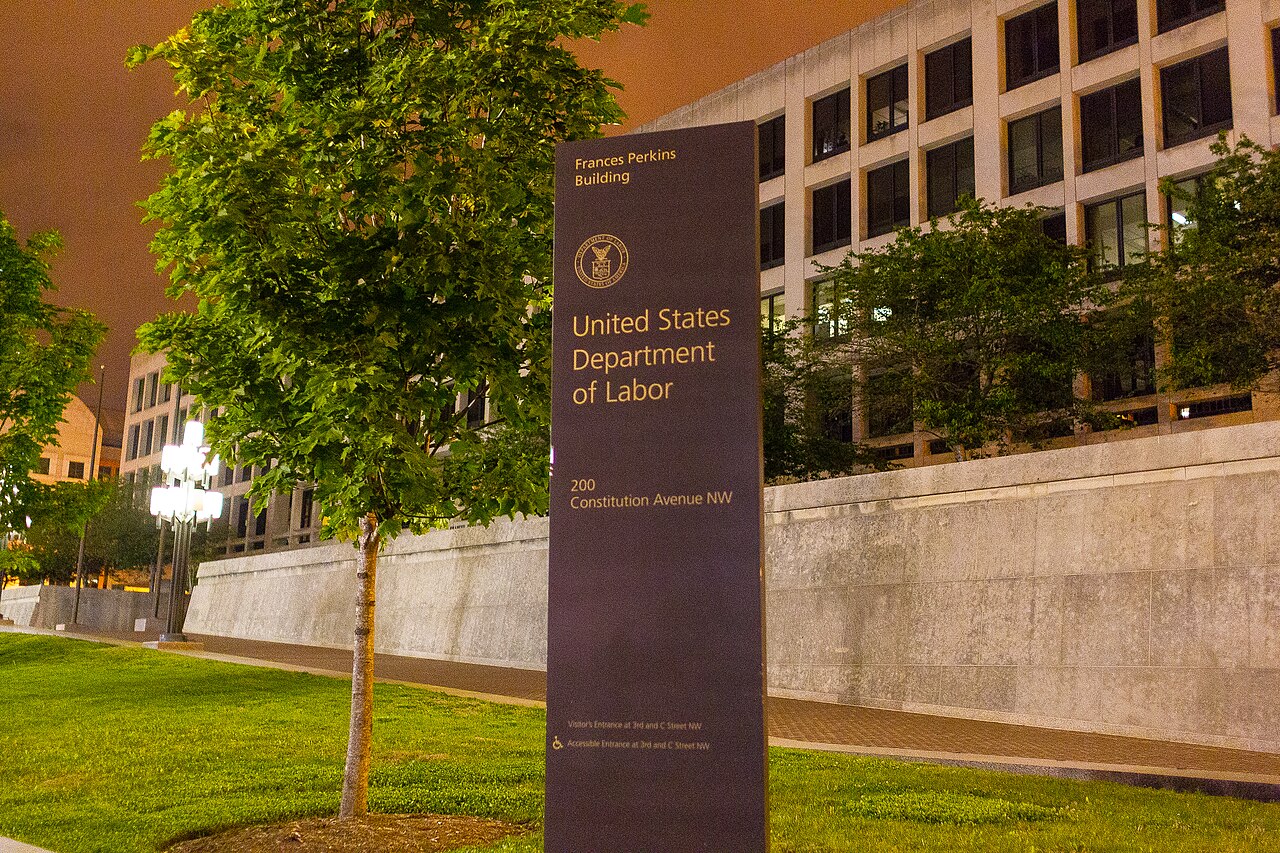
Federal contractors covered by Section 503 of the Rehabilitation Act are facing far less Labor Department scrutiny of their disability hiring obligations, and the government's own auditor wants that to change. In GAO-26-107937, released Oct. 6, 2026, the Government Accountability Office found that DOL suspended audits of selected contractors and shrank the Office of Federal Contract Compliance Programs (OFCCP) without the strategic workforce planning GAO says such cuts require. The report, titled "Disability Employment: DOL Should Enhance Monitoring and Guidance for Federal Contractors," comes with eight recommendations, according to PilieroMazza's summary.
The stakes are large. GAO notes that in fiscal year 2025 the federal government spent about $793 billion on contracts with federal contractors, which employ over 1 million U.S. workers. Section 503 bars those contractors from discriminating against people with disabilities and requires certain contractors to take proactive steps to employ and advance them.
How DOL Pulled Back on Section 503 Audits
OFCCP, the DOL office that enforces Section 503, has historically relied on compliance audits to check whether contractors meet their obligations. GAO's summary is direct: "Since January 2025, DOL has reduced its oversight activities. For example, DOL has suspended audits of selected contractors, which were a key tool for monitoring compliance."
Those audits produced results. From fiscal years 2017 through 2025, 532 audits found Section 503 violations, according to GAO. With audits of selected contractors suspended, that source of findings is narrower than it was. GAO drew the conclusion plainly: "Without resuming audits, DOL has less assurance that contractors are supporting employment of people with disabilities."
GAO also flagged that DOL has made changes to Section 503 regulations that could further affect OFCCP's activities. Separately, PilieroMazza notes that voluntary self-identification has been eliminated, which it says reduces the opportunity for data analysis.
Why GAO Faulted the OFCCP Staffing Cuts
The second major finding concerns OFCCP's headcount. DOL reduced the office's workforce in response to changes in its activities, GAO found, and GAO's workforce chart covers fiscal years 2017 through 2026. GAO's objection was to the process: the changes "were not informed by strategic workforce planning consistent with key principles for such efforts."
GAO argued: "Engaging in strategic workforce planning would help DOL ensure that OFCCP’s workforce composition meets its needs." That matters for contractors because staffing determines how quickly OFCCP could restart audits if the department accepts GAO's advice. An office cut without a plan for its future workload may struggle to ramp back up, and contractors could face uneven or delayed reviews when oversight returns.
Three Places Contractors Struggle With Section 503
The report's second half looks at the contractor side. GAO conducted interviews and discussion groups with DOL officials, contractors, compliance consultants, academic researchers and other stakeholders, and ran a nongeneralizable survey of contractor representatives. Selected stakeholders identified challenges in three key areas:
- Conducting outreach to and recruiting people with disabilities
- Retaining and advancing people with disabilities
- Demonstrating compliance with Section 503
Stakeholders told GAO that DOL could provide additional guidance to help contractors comply. GAO cited two examples: information on how to provide reasonable accommodations, and a list of best practices for Section 503 compliance. Either, GAO said, could help contractors better understand how to support employees with disabilities.
Nichole D. Atallah, managing partner at PilieroMazza, wrote that these findings "mirror concerns long expressed by contractors." She added: "Even sophisticated compliance programs can struggle with measuring outreach effectiveness, documenting accommodation efforts, and maintaining complete records to demonstrate compliance during an audit."
Will DOL Restart the Audits?
According to PilieroMazza, GAO's eight recommendations cover both enforcement and guidance. Its central asks are that DOL resume Section 503 compliance audits and engage in strategic workforce planning for OFCCP. PilieroMazza's reading is that GAO also concluded enhanced guidance could improve contractor understanding of Section 503, the kind of resource stakeholders requested. According to PilieroMazza, DOL agreed with six of GAO's eight recommendations.
Agreement on paper does not set a timeline. GAO recommendations stay open until the agency acts on them. Atallah framed the report as a forward indicator rather than a description of current risk: "GAO nevertheless concluded that additional monitoring, guidance, and workforce planning are necessary and formally recommended that DOL resume audits and strengthen contractor oversight."
She cautioned against reading reduced activity as reduced obligation. The report, she wrote, "should not be interpreted as a signal that disability compliance obligations have diminished. On the contrary, GAO’s recommendations suggest that disability-related compliance may become an area of renewed enforcement attention in the coming years."
What It Means for Contractors
Section 503 remains law. The statute's nondiscrimination and affirmative-action requirements still apply to covered contractors and subcontractors regardless of how often OFCCP audits them. The GAO report creates a documented, public record that DOL suspended audits of selected contractors, and it puts pressure on DOL to explain how it will verify compliance going forward.
For compliance teams, several practical points follow:
- Keep the program running. A suspended audit program can restart. Contractors that let outreach, accommodation and recordkeeping slide during the pause could face findings for gaps that accumulated while no one was looking.
- Document outreach and accommodations now. GAO's stakeholders named demonstrating compliance as one of the three hardest parts of Section 503. Contemporaneous records are easier to produce than reconstructed ones.
- Plan for thinner data. With voluntary self-identification eliminated, contractors have less internal data to measure the effect of their disability hiring efforts and will need other ways to assess outreach.
- Watch for DOL guidance. If DOL acts on the guidance recommendations, new resources on reasonable accommodations and best practices could become the yardstick OFCCP uses when audits resume.
PilieroMazza's advice is that contractors "ensure they have a compliant Section 503 program in place and periodically review its effectiveness and implementation within the organization." With about $793 billion in FY2025 contract spending flowing to federal contractors, the question of whether OFCCP resumes audits reaches well beyond a niche compliance function.
