
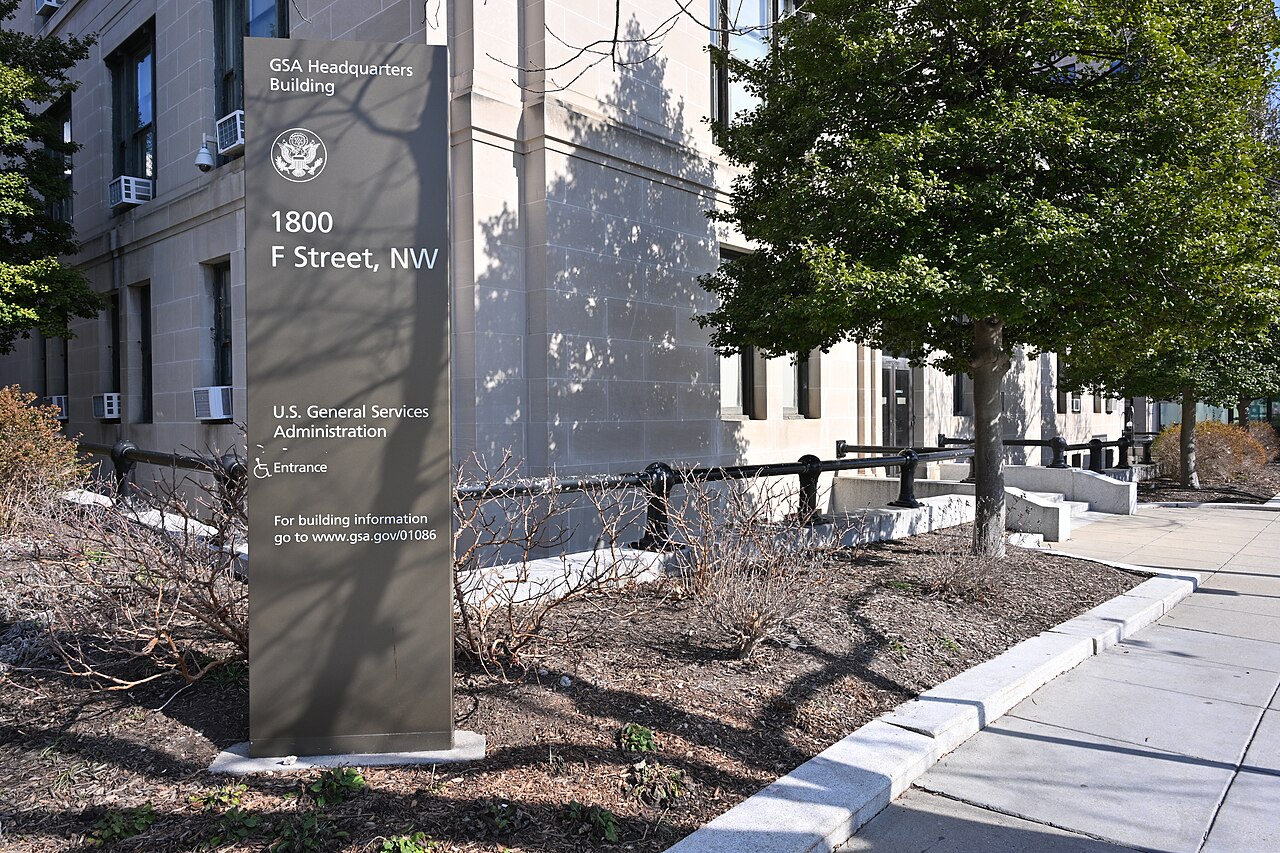
Civilian agencies that buy electricity, gas, water or steam would have to call GSA before they sign anything, under a proposed rule GSA published in the Federal Register on Oct. 5. The rule moves the federal playbook for buying utility services out of the Federal Acquisition Regulation and into a new part 541 of the General Services Administration Acquisition Regulation (GSAR), where GSA alone controls the procedures. Comments are due on or before Nov. 4, 2026, through regulations.gov under GSAR Case 2026-G502.
The document (FR Doc 2026-20317, Docket GSA-GSAR-2026-0595, RIN 3090-AL14) amends 48 CFR parts 541 and 552. GSA frames it as part of implementing Executive Order 14275, Restoring Common Sense to Federal Procurement, and as a conforming companion to the FAR Council's own rewrite of FAR part 41 under the Revolutionary FAR Overhaul (FAR case 2026-002).
Why FAR Part 41 Is Shrinking to DoD and DOE
The FAR Council's part 41 rewrite narrows the governmentwide utility rules to a small audience. According to GSA's notice, the FAR Council proposal revises part 41 "to only include regulations applicable to the Department of Defense and Department of Energy when using their special statutory authorities (see FAR 41.103)." Every other agency, and DoD and DOE when they are not using those special authorities, would follow procedures and guidance provided by GSA.
That shift reflects how authority already flows. The current part 41 text posted on Acquisition.gov's FAR Overhaul Part 41 page states that GSA is authorized by 40 U.S.C. 501 "to contract for utility services for periods not exceeding ten years." It adds that GSA "has delegated its authority to enter into utility service contracts for periods not exceeding ten years to DOD and DOE, and for connection charges only, to the Department of Veteran Affairs." Other agencies that need utility contracts longer than one year but no longer than ten may request a delegation from GSA at [email protected].
The GSAR proposal turns that arrangement into GSA's own regulation. Proposed GSAR 541.501 reads: "In accordance with FAR 41.102(a), agencies must follow GSA procedures and guidance for the acquisition of utilities located on the website available at: gsa.gov/utilities." Proposed GSAR 541.502 says requests for contracting assistance or contracting authority from GSA "are made via email request to GSA at" [email protected].
What 'Call GSA First' Means for Areawide Contracts
The operative change is sequencing. GSA writes: "The proposed rule directs agencies to first contact GSA for assistance prior to acquiring utility services (so that GSA can offer expert advice and direct agencies to the most efficient vehicles for acquiring utility services)."
In practice, GSA expects most of those referrals to land on one vehicle type. The notice says the change further encourages agencies to use GSA's areawide contracts, "which are governmentwide ordering vehicles, to ensure efficient and consolidated procurement to the maximum extent practicable." GSA says routing requests through its experts lets them pick "the most efficient procurement strategy, typically use of GSA areawide contracts."
GSA lists three qualitative benefits: improving agency satisfaction and agency costs such as time spent acquiring utility services, reducing administrative costs for those agencies, and "encouraging the use of consolidated procurement vehicles (namely GSA areawide contracts) in the name of efficient procurement."
The rule also relocates the paperwork. A new subpart 541.6, Solicitation Provision and Contract Clauses, carries the utility solicitation provisions, clauses and their prescriptions over from the FAR. GSA describes the clauses as "substantially the same as" their FAR counterparts, including an Electric Service Territory Compliance Representation that implements Section 8093 of Public Law 100-202, which generally requires federal electricity purchases to be consistent with state law on utility franchises and service territories.
How GSA Gets to a $5,000 Familiarization Bill
GSA argues the move costs almost nothing. "This proposed rule creates no significant new or additional costs. The rule moves the procedures from the FAR to GSA and streamlines the language," the notice states.
Its estimates are limited to the one-time cost of reading the new rule. For ordering activities, GSA multiplies 0.25 hours by a $66.23 hourly rate (based on GS-12 Step 5 pay) across about 300 impacted ordering entities, for roughly $5,000. For industry, GSA counts about 92 active vendors selling utility services and assumes half an hour each at the same rate, for $3,047. About 12 of those vendors, or 13 percent, are small businesses; for them GSA assumes 0.25 hours each at the same rate, which comes to $199.
On that basis GSA says the rule is not an E.O. 14192 regulatory action "because it does not impose any more than de minimis regulatory costs." It also identifies the proposal as a significant regulatory action under section 3(f) of E.O. 12866, which subjected it to review under that order. GSA does not expect a significant economic impact on a substantial number of small entities, "because this rule is simply removing the existing procedures from the FAR and placing them into the GSAR," but it prepared an Initial Regulatory Flexibility Analysis anyway.
Where This Fits in the FAR Overhaul Timeline
The GSAR case is the agency-supplement follow-through on a governmentwide rewrite that is still in motion. Federal News Network reported Oct. 1 that the first set of FAR updates came out in June and that "the FAR overhaul has a long way to go as the council released the second tranche of changes for comments in September with comments due Oct.19."
Because GSA's proposal is built to align with FAR case 2026-002, the final shape of GSAR part 541 depends on what the FAR Council does with part 41. Companies tracking both dockets will see the same policy expressed twice: once as the FAR narrowing its scope, and once as GSA claiming the procedures the FAR gives up.
What It Means for Contractors
For the roughly 92 utility suppliers GSA counts in the market, the main effect is where agency demand gets routed. If agencies must consult GSA before buying, more orders are likely to flow through GSA areawide contracts rather than through standalone agency-level utility contracts. Suppliers that already hold areawide contracts may see more ordering activity; suppliers that sell directly to individual installations or field offices outside DoD and DOE's special authorities may see fewer independent solicitations.
Contract language should change little. GSA says the relocated clauses are substantially the same as the FAR versions, but they will sit in the GSAR, with the rule amending both part 541 and part 552. Utility firms and their counsel should check that representations, such as the electric service territory compliance representation, carry over without substantive edits.
The procedures themselves would live largely on gsa.gov/utilities rather than in regulatory text, so changes to that guidance may not go through the same comment process as a rule change. Firms that want to shape how GSA steers agencies should file comments on GSAR Case 2026-G502 by Nov. 4, and watch the FAR part 41 docket alongside it.
Sources
- General Services Administration Acquisition Regulation; GSAR Implementation of Executive Order 14275, Acquisition of Utility Services (Federal Register, Oct. 5, 2026, via govinfo)
- FAR Overhaul - Part 41, Acquisition of Utility Services (Acquisition.gov)
- In 'unusual arrangement,' Rhodes continues to drive FAR overhaul (Federal News Network, Oct. 1, 2026)

