
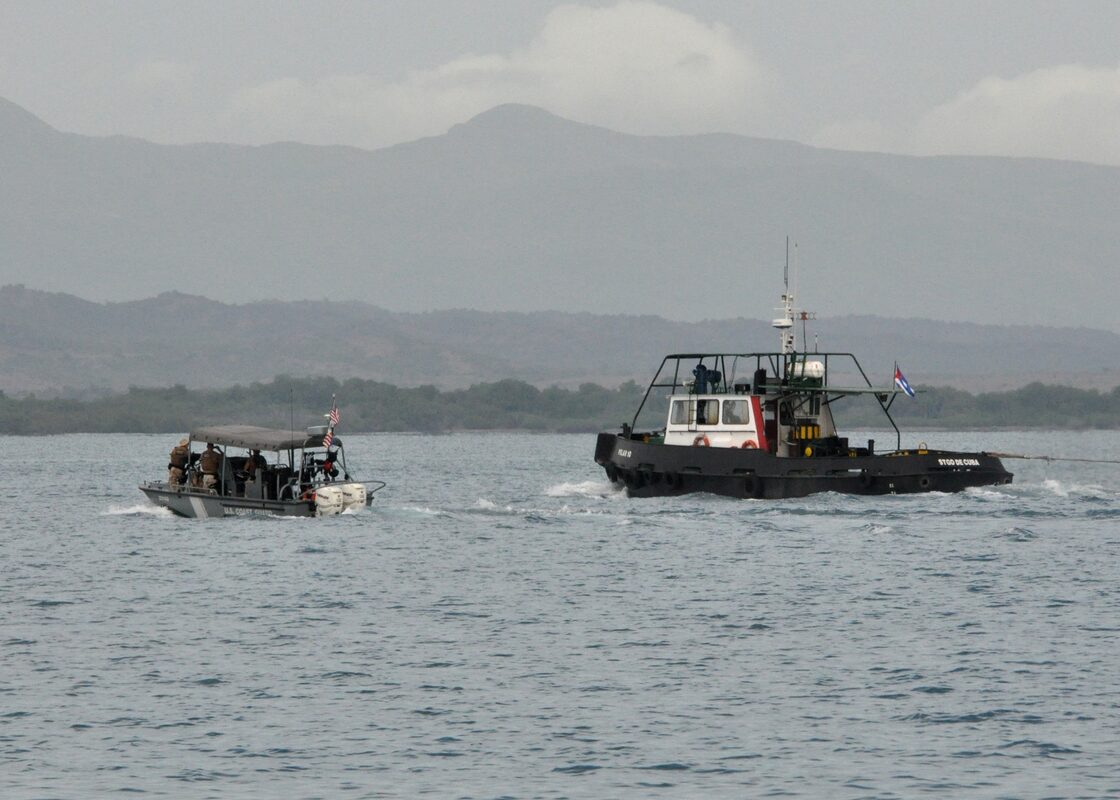
The Navy has locked in its salvage-towing contractor for the next five years, awarding Donjon Marine Co. LLC a $180,000,000 indefinite-delivery/indefinite-quantity contract covering harbor clearance, ocean engineering, and point-to-point towing along the Atlantic coasts of North and South America.
Background
The Navy relies on commercial salvage contractors to move disabled vessels, clear wrecks and debris from harbors, and provide emergency towing assistance in waters where its own fleet lacks the specialized equipment or standing capacity to respond. These missions range from routine point-to-point tows of decommissioned hulls to on-call emergency response after groundings or collisions, and they fall outside what the Navy's organic salvage units can cover on their own around the clock. Ports along the Atlantic seaboard see a steady mix of commercial shipping casualties, decommissioned-hull tows, and occasional emergency responses, all of which can require rapid mobilization of heavy marine equipment that most contractors do not keep on permanent standby.
Donjon Marine, based in Hillside, New Jersey, operates tugs, barges, cranes and salvage gear used for wreck removal, inshore and ocean towage, and emergency assistance work. Marine Log reports that Donjon runs a fleet of more than 70 specialized vessels and points to the company's expertise in dredging, salvage operations and emergency response, heavy-lift and towing capabilities, and environmental remediation.
The new award, issued under contract number N00024-26-D-4306, is a freshly competed indefinite-delivery/indefinite-quantity vehicle. Naval Sea Systems Command in Washington, D.C., which oversees ship maintenance, salvage and diving programs across the fleet, is the contracting activity responsible for managing task orders issued under the new IDIQ.
Salvage-support IDIQs of this kind matter to the Navy well beyond routine harbor housekeeping. When a vessel runs aground, collides with another ship, or sinks in a channel the Navy needs cleared, the service typically cannot wait for a new procurement to run its course — it needs a contractor already under contract who can mobilize tugs, barges and cranes on short notice. Structuring the relationship as a standing IDIQ rather than a series of one-off spot contracts lets NAVSEA issue a task order the moment a need arises, without re-running source selection each time.
Key Details
The Department of War listed the award in its July 9, 2026 daily contracts announcement, describing it as a cost-plus-award-fee and cost-plus-fixed-fee IDIQ. That structure lets the Navy fund Donjon's actual costs plus a fee tied partly to performance and partly to a fixed amount, a common approach for work whose scope and timing are hard to predict years in advance — exactly the case with salvage response, where the Navy cannot know today which vessel might need clearing from a harbor next year.
The contract covers salvage-related towing, harbor clearance, ocean engineering projects, and point-to-point towing services. Work will be performed along the North and South American east coast, and the period of performance runs through June 2031, giving Donjon roughly five years to draw task orders against the $180 million ceiling.
NAVSEA competed the requirement through the System for Award Management website and received five offers before selecting Donjon, according to the GlobalSecurity.org mirror of the same contract announcement. As is typical for IDIQ vehicles of this kind, the award itself obligates almost no money up front — just $5,000 in fiscal 2026 operations and maintenance (Navy) funds — with the bulk of the $180 million ceiling to be committed only as NAVSEA issues individual task orders over the life of the contract.
Marine Log, a trade publication covering the maritime industry, separately reported the award, confirming the $180 million figure and the same scope description covering salvage-related towing, harbor clearance, ocean engineering projects, and point-to-point towing services, according to a Marine Log report on the award. Neither the Department of War announcement nor the GlobalSecurity.org mirror named the other four offerors that competed for the requirement, and neither disclosed the value of Donjon's proposal relative to the ceiling figure ultimately negotiated into the contract.
What It Means for Contractors
For marine services firms watching the government salvage-and-towing niche, the award confirms that NAVSEA is running this requirement as a single-award IDIQ rather than splitting it among multiple vendors, concentrating five years of task-order flow with one contractor. That structure rewards firms with the specialized fleet — tugs, barges, cranes, and salvage-rated crews — needed to bid competitively, and it explains why the field narrowed to five offerors on a requirement this specialized rather than drawing a broader crowd of general marine contractors.
The near-zero funding obligated at award is a reminder that IDIQ ceiling values do not equal guaranteed revenue. Donjon's actual take from this vehicle will depend entirely on how many task orders NAVSEA issues and at what value, which in turn depends on how much salvage and towing work the Navy actually needs over the next five years. Subcontractors and suppliers evaluating whether to pursue work under this vehicle should track task-order notices as they are issued rather than treating the $180 million figure as money already on the table, since the actual pace and size of task orders will only become clear over the life of the contract.
The single-award structure also raises the bar for smaller or newer entrants to this market segment: without a comparable fleet of tugs, barges and cranes and the salvage-rated crews to operate them, such firms are unlikely to be competitive as prime bidders against an operator able to mobilize across the full North and South American east coast on short notice. For many, a more realistic path into this vehicle is subcontracting or pursuing task-order-specific work once NAVSEA begins issuing orders, rather than bidding to unseat the prime.
Finally, the five-year period of performance running to June 2031 gives Donjon a long runway to plan fleet maintenance and crew staffing around a predictable, if lumpy, stream of Navy task orders — a stability that smaller or newer entrants to this market segment typically cannot offer until they build a comparable track record with the contracting activity. Prime contractors on adjacent NAVSEA vessel-maintenance and fleet-support vehicles should also note the award as a marker of how the command structures its recurring maritime-services requirements, since a single-award, cost-reimbursement IDIQ with a multi-year ceiling is a template NAVSEA is likely to reuse the next time this or a comparable salvage-support requirement comes up for recompete.
