
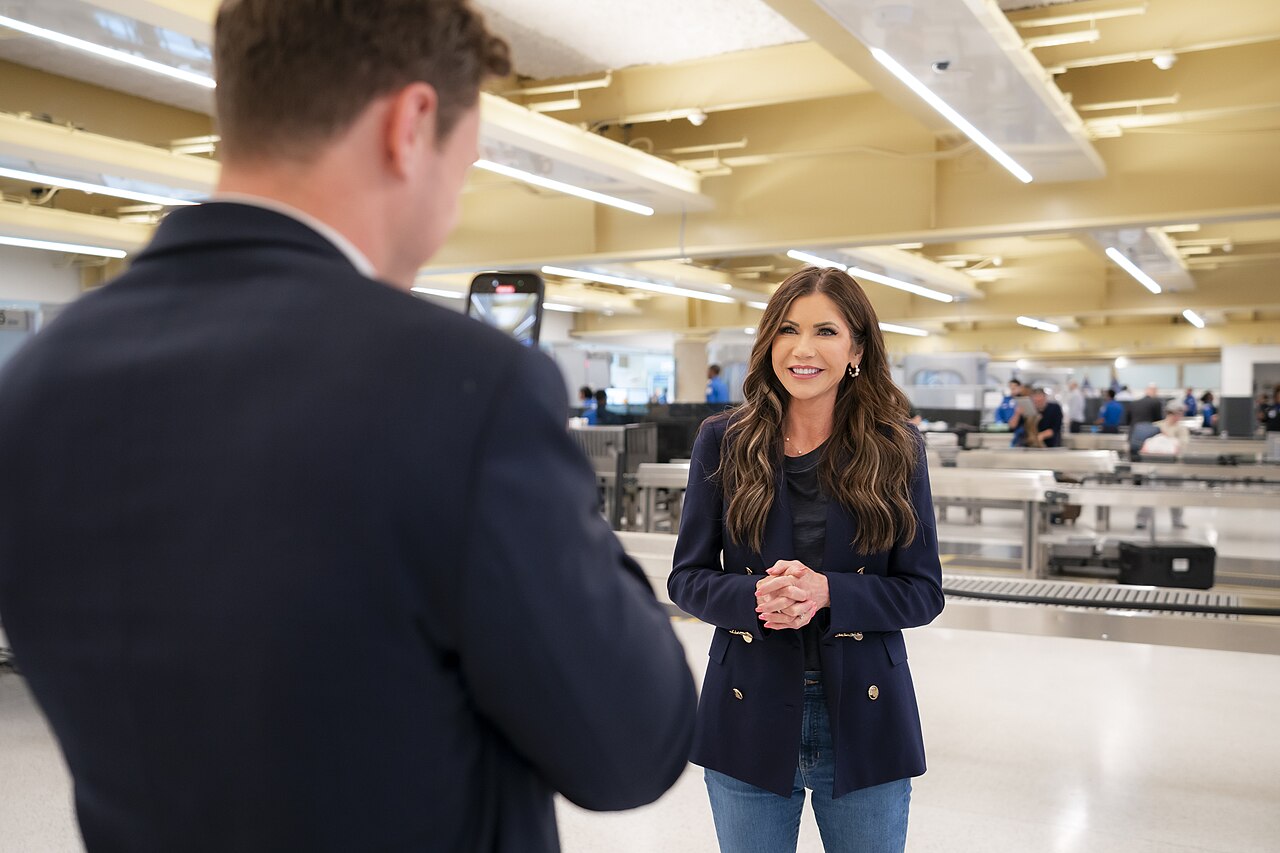
Leidos will keep moving, installing and retiring the screening machines that passengers walk through at U.S. airport checkpoints for up to eight more years. The Transportation Security Administration picked the Reston, Virginia, company as the single awardee on a recompete worth up to $672.5 million, Washington Technology reported, extending a role the outlet describes as "lead deployer of checkpoint security equipment at airports" for the agency.
TSA issued the award Sept. 28 and posted a notice on SAM.gov Sept. 30, according to GovConWire. The vehicle is a single-award indefinite-delivery/indefinite-quantity contract with a $1 million minimum guarantee, and task orders will be firm-fixed-price or time-and-materials.
Competition was thin. "TSA awarded this second iteration of the Security Equipment Deployment Services Checkpoint contract on Monday and received three bids in total, according to Sam.gov records," Washington Technology reported.
What the $672.5M SEDS Checkpoint Contract Covers
The contract pays for the physical logistics behind TSA's screening technology rather than the technology itself. GovConWire laid out the work plainly: "The contractor will handle shipping, rigging, installation, relocation and decommissioning of checkpoint equipment at airports, TSA laboratories and other government sites, including locations outside the continental U.S."
Specific services span site surveys, design, site preparation, electrical installation, logistics and equipment testing, according to GovConWire. Washington Technology adds that the contract tasks Leidos with coordinating, installing, removing and relocating passenger screening systems at airport security checkpoints.
The equipment list covers nearly every box a traveler meets in the security line. GovConWire lists advanced imaging technology, walk-through metal detectors, advanced technology X-ray, explosive trace detection, bottled liquid scanners, computed tomography, credential authentication technology and chemical analysis devices. Washington Technology says TSA uses the contract to acquire support "across the full lifecycle of screening equipment."
That lifecycle framing matters. When TSA buys a new generation of computed tomography scanners or credential readers, the purchase does not put a single unit into service by itself. Someone has to survey the checkpoint, prepare the floor and electrical feeds, rig the machine into place, test it and haul away what it replaces. Under this contract, that someone remains Leidos.
How the Recompete Compares With the 2021 Award
Leidos won the first iteration in 2021 at a potential $470.7 million over five years, covering the same scope across federalized airports in the U.S. and its territories, according to GovConWire. That earlier work also included support for special events, such as presidential inaugurations, and for international deployments.
The new ceiling is about 43% higher than the 2021 figure, but it also stretches across a longer window: one base year plus up to seven option years, per Washington Technology, against five years on the predecessor. Spread evenly, the 2021 ceiling works out to roughly $94 million a year, while the new one works out to roughly $84 million a year. The sources do not explain how TSA set the new ceiling, and an IDIQ ceiling caps spending rather than forecasting it.
Actual spending on the first contract gives a better gauge. Leidos has received $435 million in order volume since the 2021 award, according to GovTribe data cited by Washington Technology. That is about 92% of the predecessor's $470.7 million ceiling, a sign TSA used nearly all of the capacity it set aside.
The relationship runs deeper than one contract. GovConWire reports that Leidos has supported TSA equipment deployment for more than a decade through earlier contracts and separately maintains screening equipment at federalized airports under an integrated logistics support award. The same company that installs a scanner can also be the one keeping it running afterward.
Why Only Three Bidders Chased the Checkpoint Work
Three offers on a contract of this size points to a narrow field. Work of this kind plausibly demands a nationwide field workforce able to operate inside active airports, coordinate with airport authorities and TSA staff, and handle electrical and rigging jobs on sensitive security equipment. The sources do not name the other two bidders or say whether any challenge has been filed.
The incumbent's order history and decade of TSA deployment work, described above, likely gave it an edge. Challengers would have needed to show TSA they could match that footprint from day one, with no gap in deployments while airports continue to swap equipment.
What It Means for Contractors
For the companies that lost, the single-award structure closes the door on prime work for as long as eight years, and the $1 million minimum guarantee means the government's firm commitment is small relative to the ceiling. Any further competition on this scope would most likely come only at the next recompete.
For subcontractors, the opportunity likely sits inside Leidos's delivery chain. Site preparation, electrical installation, rigging and logistics at airports across the country, plus sites outside the continental U.S., require local labor and specialty trades. Firms with airport access credentials and electrical or heavy-equipment experience look like the natural fit, and the time-and-materials task order option leaves room for work that is hard to price in advance.
Equipment makers have a stake too. The contract's scope includes computed tomography, credential authentication technology and chemical analysis devices, so new units in those categories would likely move through this deployment pipeline before reaching a checkpoint. Manufacturers selling to TSA should expect to coordinate installation schedules with Leidos.
For the broader DHS market, the award shows TSA keeping continuity on a mission-critical service rather than switching providers. Contractors pursuing other TSA recompetes should expect incumbents with long order histories and adjacent maintenance contracts to carry weight, and should plan teaming strategies accordingly.
Watch for any bid protest from the two losing offerors, and for the first task orders under the new vehicle, which will show how quickly TSA moves to put the larger ceiling to use.
