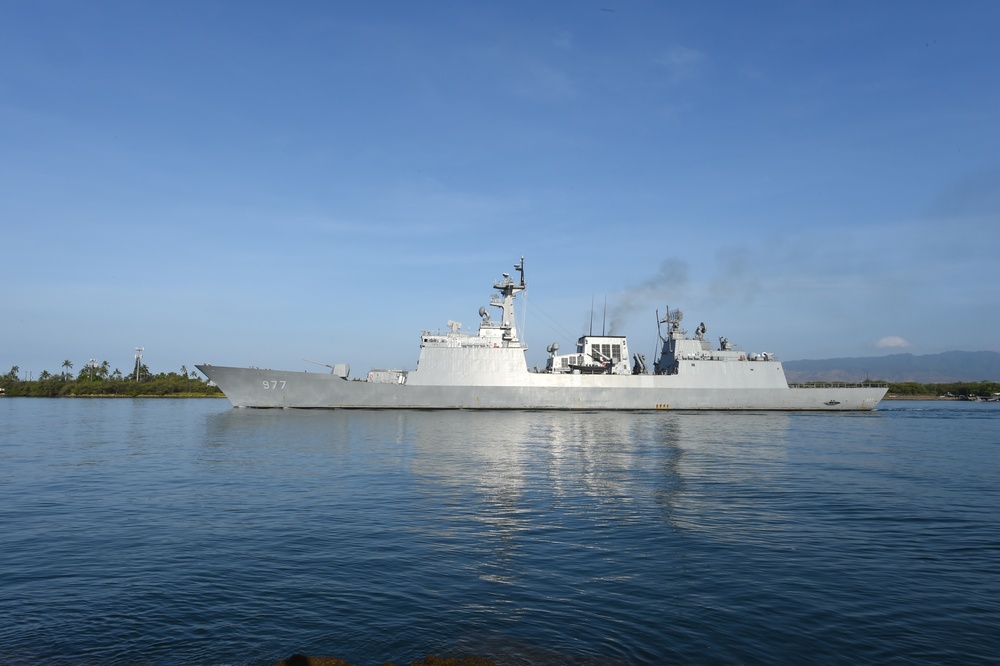
South Korea's next destroyer class will run on an all-electric propulsion system built around American-made engines, locking GE Aerospace into a South Korean shipbuilding program that will not deliver its first hull until 2032. The Republic of Korea Navy has
selected a full-electric propulsion configuration for its KDDX destroyer class, and GE Aerospace will supply 12 LM2500+G4 marine gas turbine engines, two per ship, across the six-vessel program. The lead-ship construction contract was signed July 31, 2026, with Hanwha Ocean as the Defense Acquisition Program Administration's preferred bidder to build the ships.
The KDDX class is designed to slot between
the Navy's existing KDX-II and KDX-III destroyers, displacing roughly 6,500 to 7,000 tonnes and carrying anti-air, anti-surface, and anti-submarine warfare missions. Positioning the class between two established destroyer types signals that Seoul intends KDDX to fill a specific capability gap in its surface fleet rather than simply replace an aging design outright. Unlike a conventional mechanical-drive warship, a full-electric configuration routes turbine power through electric generators and motors rather than a direct shaft-to-propeller connection, a design choice the Korean navy is making as it modernizes its surface fleet architecture.
Why Seoul Chose Full-Electric Propulsion
Janes, which first reported the propulsion selection, described KDDX as a new class built to slot between the navy's existing KDX-II and KDX-III surface combatants. GE Aerospace, in its own announcement of the award, said the LM2500+G4's integration with the full-electric configuration offers the ships "superior operational flexibility and fuel economy, power for future growth, and optimal survivability/redundancy" compared with a conventional mechanical drivetrain — an architecture in which turbines generate electricity for motors to drive the shaft rather than turning it directly. GE Aerospace's LM2500+G4, an uprated version of a marine gas turbine family the U.S. Navy and dozens of allied fleets already operate, is being integrated into that electric architecture rather than replacing it outright.
The choice extends a propulsion lineage GE Aerospace has built with Seoul over decades. The company's LM2500 family has already powered 163 gas turbines across 95 Republic of Korea Navy ships, according to GE Aerospace, making the KDDX award less a market entry than a continuation of an existing industrial relationship between the U.S. engine maker and Korea's naval fleet. That installed base gives the Korean navy decades of operational and maintenance data on the LM2500 line, a track record that likely factored into the decision to build a new, more electrically integrated destroyer class around a familiar turbine rather than an unproven propulsion supplier.
Hanwha's Role Building the Turbines in Korea
GE Aerospace is not building the KDDX engines alone. Hanwha Aerospace will handle local component manufacturing, final assembly, testing, and in-country service support for the LM2500+G4 units, while Busan-based NRTEC will produce a lightweight composite enclosure for the engines. That division of labor mirrors a pattern common in South Korean defense procurement, where foreign primes pair proven hardware with domestic production requirements that keep manufacturing and sustainment jobs inside the country.
"We are honored to be a part of this project incorporating the latest advancements in shipbuilding. The selection of GE Aerospace's LM2500+G4 technology strengthens our strong collaborations in Korea and demonstrates our commitment to local manufacturing," said Asha Belarski, vice president and general manager of GE Aerospace's Marine Engines and Systems Division, according to Breaking Defense.
Neither GE Aerospace's announcement nor the trade press coverage disclosed a total dollar value for the turbine package, and GovConFeed found no figure in a September 1, 2026, GE Aerospace release on the award. That omission is not unusual for foreign military sales tied to a still-developing shipbuilding program: the lead vessel is not scheduled for delivery until 2032, and pricing for the remaining five hulls in the class will likely firm up as Hanwha Ocean's construction contracts for those ships move forward.
A Program Still Years From Its First Delivery
The gap between the July 31 lead-ship contract signature and the 2032 delivery date underscores how early the KDDX program remains in its execution timeline. GE Aerospace and its Korean partners now have roughly six years to complete engine production, local assembly, and testing before the first hull needs its propulsion system installed and validated. That runway also gives DAPA and Hanwha Ocean time to finalize construction contracts for the remaining five ships in the class, none of which have been announced with the same specificity as the lead vessel.
For GE Aerospace, the award reinforces the LM2500 family's position as the default marine gas turbine for allied navies pursuing modernized surface combatants, even as those navies adopt newer propulsion architectures like full-electric drive. The engine itself is not new — variants of the LM2500 line have powered U.S. Navy cruisers, destroyers, and frigates for decades — but its integration into a full-electric Korean warship shows the platform still has room to move into next-generation designs rather than being confined to legacy hulls. It also gives GE Aerospace a multi-year presence inside a Korean shipbuilding program built around Hanwha Ocean, the yard selected as preferred bidder to construct the ships.
What It Means for Contractors
The KDDX award is a reminder that foreign military sales and international industrial partnerships remain a durable revenue channel for U.S. propulsion and engine manufacturers, even absent a disclosed contract value. Contractors competing for naval propulsion, power-generation, or shipboard electrical work should note the localization pattern here: GE Aerospace retained the core engine technology and design authority while ceding component manufacturing, assembly, and sustainment to Hanwha Aerospace and NRTEC. That structure is increasingly the price of entry for U.S. suppliers pursuing allied shipbuilding programs that carry domestic-content expectations, and companies without an established local-manufacturing partner in target markets may find themselves at a disadvantage against primes willing to cede that ground.
The six-year runway to first delivery also matters for subcontractors and suppliers further down the chain. Engine enclosures, electrical integration hardware, and testing services tied to the KDDX program will likely see solicitation activity well before the lead ship's 2032 delivery date, giving companies with relevant naval propulsion or composite-manufacturing capabilities a multi-year window to position for follow-on work as Hanwha Ocean's construction contracts for the remaining five hulls take shape.
Sources