
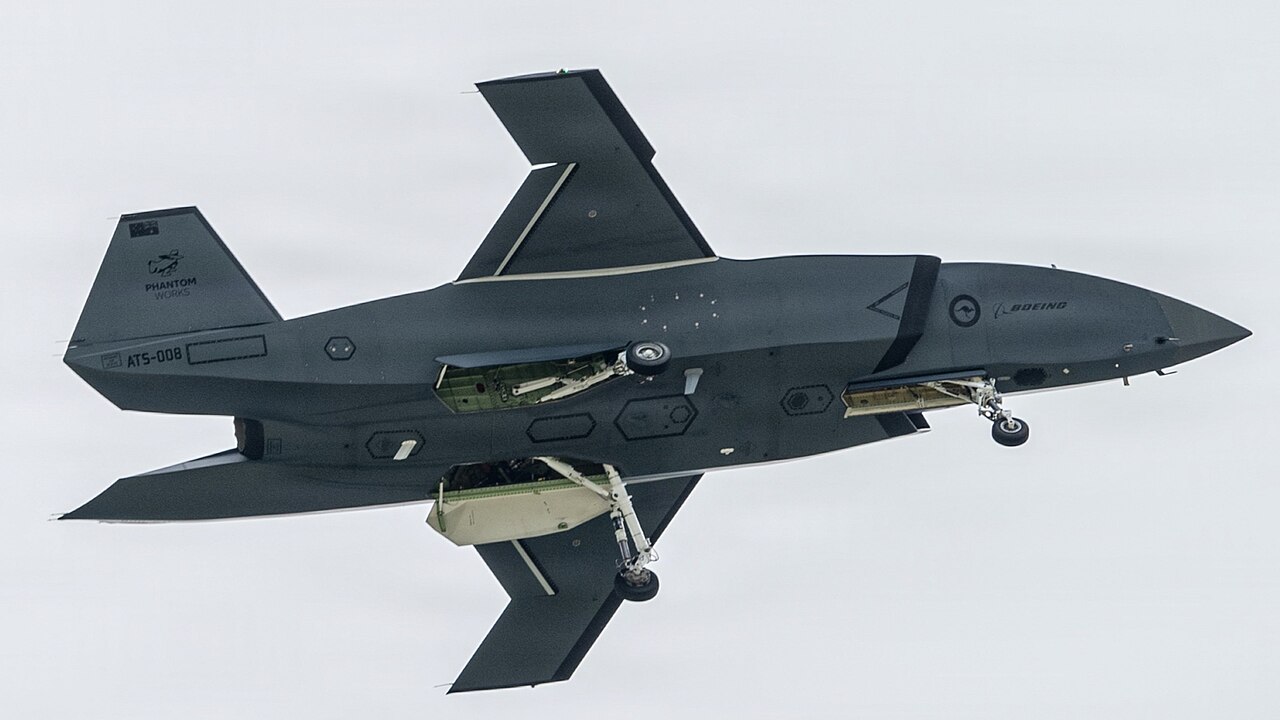
Germany's push to put uncrewed combat aircraft beside its fighter jets before the decade ends just got slower, and its door just opened wider for industry. Berlin has dropped plans to directly procure the larger Block 3 version of Boeing's MQ-28 Ghost Bat, TWZ reported on Oct. 19, leaving its collaborative combat aircraft (CCA) requirement open to a competition that now looks likely to run into the early 2030s.
Boeing confirmed to Breaking Defense that Germany's Ministry of Defense told the company it would not proceed with a direct acquisition of the drone, according to TWZ. Politico's Chris Lunday reported the decision first. The shift turns what had been a direct-purchase path toward a single proven aircraft into a contest among several American and European designs, some of which have only just flown.
Why Berlin Walked Away From a Direct Ghost Bat Buy
The internal debate came down to speed versus competition. Citing Politico, Defense Express reported that some German officials wanted to purchase at least 12 Ghost Bats directly, while opponents argued that a competition was needed to give other bidders a chance. The competition camp prevailed.
The German ministry has said little in public. It declined to discuss the specific procurement with Breaking Defense, citing regulations governing public contracting and the need for parliament to address such matters. "[As a] matter of principle — and regardless of the specific case in question — we cannot provide information regarding potential procurement projects," a ministry spokesperson told the outlet, as quoted by TWZ.
Boeing kept its response short. A company spokesperson said Boeing "stands ready to support" its German customer on next steps and referred questions about the decision to the ministry. TWZ notes the move does not necessarily knock the MQ-28 out of Germany's wider program; Berlin instead appears headed toward an approach in which competing designs could demonstrate their capabilities before a selection.
What Happens to Rheinmetall's Ghost Bat Partnership?
The decision is a setback for an industrial arrangement built specifically around a German Ghost Bat. In March 2026, Rheinmetall, Germany's largest arms manufacturer, announced a partnership with Boeing to adapt the aircraft for the Bundeswehr.
"With Boeing Defense Australia as a partner, we are laying the groundwork to optimally tailor the MQ-28 to the Bundeswehr’s requirements," Rheinmetall CEO Armin Papperger said at the time, as quoted by TWZ. Papperger added that Rheinmetall, acting as system integrator, would strengthen "industrial value creation in the form of an industrial hub in Germany and Europe," and said the company saw "revenue potential for Rheinmetall in the range of three-digit millions of euros."
That revenue now depends on winning a contest rather than executing a direct buy. Defense Express adds that in August 2026, Rheinmetall said German officials were dragging their feet on such drones and that the MQ-28 was already proven and met all requirements, which Defense Express reads as a possible sign that a direct purchase was still being pursued late in the summer.
The 2029 Fielding Goal Slides Toward the Early 2030s
Germany had set a goal of fielding CCAs by 2029. According to Politico, as relayed by TWZ, Berlin now looks to the early 2030s for the capability to arrive, with flight testing expected to begin in 2027. TWZ reads that change as suggesting the original deadline was built around the MQ-28, which has already undergone extensive testing, rather than a newer design.
Defense Express, again citing Politico, reports a harder judgment from inside the German government: according to German officials, none of the candidate aircraft will be able to meet the stated project requirements by 2029.
Fielding is more than delivering airframes. TWZ points out that putting a CCA into meaningful frontline service requires integration with crewed fighters, communications systems, mission-planning networks, weapons and sensors, followed by testing, certification, training and supporting infrastructure. Clearing a military drone, let alone an armed one, to operate routinely in German commercial airspace has long been a problem of its own.
Who Is Now Competing for Germany's Combat Drone?
The field is crowded. Airbus and Kratos announced the first flight of the U740 Valkyrie, a Europeanized version of the XQ-58A Valkyrie, on Oct. 12, 2026. Airbus is also developing the larger U760 Ravenstorm, intended for service in the early 2030s. Helsing and Hensoldt are pursuing the homegrown CA-1 Europa, which TWZ describes as "very much an MQ-28 lookalike." TWZ lists Anduril, General Atomics partnered with Germany's INTEC, and Lockheed Martin as other entrants.
Germany has not publicly clarified what it wants the aircraft to do. Media reports describe the requirement as a Jagdbomberdrohne, or fighter-bomber drone, and TWZ says Berlin has yet to state whether the Luftwaffe envisions an uncrewed wingman, an independent long-range strike platform, or a system that does both. TWZ sees signs that the strike mission is being prioritized, at least initially, with less emphasis on air-to-air work. That is essentially the reverse of the U.S. Air Force's CCA effort. Defense Express, for its part, says the aircraft must be able both to fight in the air alongside crewed platforms and to strike ground targets.
The CCA question also sits beside larger German airpower decisions. Germany is receiving the F-35, and TWZ notes an argument that Berlin could order more of the crewed jet to cover both the gap left by the collapse of the Future Combat Air System's sixth-generation crewed fighter and a delayed CCA debut. Germany also expects more Eurofighters.
What It Means for Contractors
For U.S. primes, the decision cuts both ways. Boeing loses a near-term direct-purchase path for its most mature CCA, but TWZ says the Ghost Bat could still compete, depending on how the acquisition is structured and what requirements Berlin sets. Anduril, General Atomics and Lockheed Martin are named as entrants in a program that is now open to competing designs. European industrial ties already shape the field: Boeing teamed with Rheinmetall, General Atomics with INTEC, and Airbus with Kratos on the Valkyrie.
Three practical points follow. First, demonstration will count: with flight testing expected from 2027, bidders who can fly representative aircraft early look better placed. Second, the requirement is still forming, and a strike-first concept would favor different payload, range and weapons-integration investments than the air-to-air emphasis of the U.S. Air Force effort. Third, the ministry itself cited public-contracting regulations and the role of parliament; suppliers and their subcontractors should plan for a deliberate, documented process rather than a fast-track buy.
Component and integration suppliers should also watch the integration work TWZ lists, including links to crewed fighters, mission planning, sensors, weapons and airspace certification. That work will be needed whichever airframe wins.
